FINTRAC
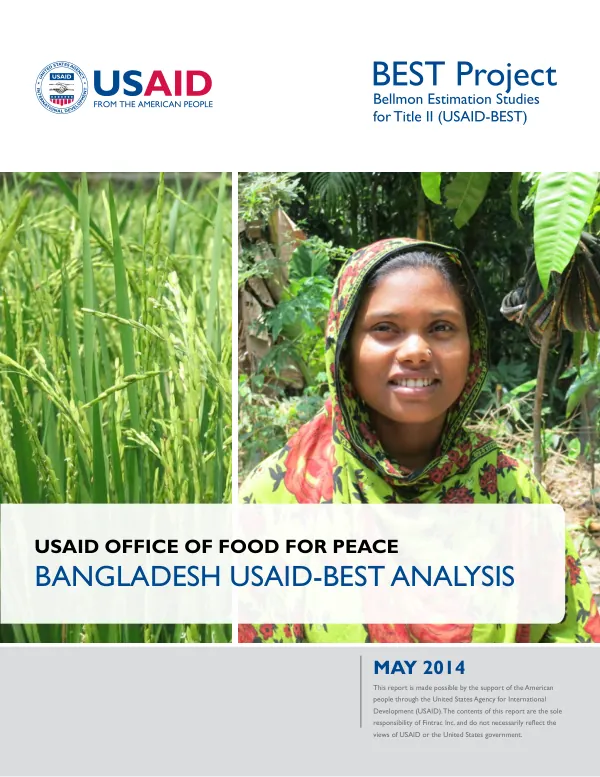
BANGLADESH USAID-BEST ANALYSIS
The agricultural markets in Bangladesh are a critical component of the country's food security.
2014 · 153 pages
Sign in to readA free account is required to download.
Abstract
The Bellmon Estimation Studies for Title II (USAID-BEST) team conducted a study of the current state of these markets in Bangladesh from February to May 2014 to inform USAID food assistance programming decisions. The study aimed to provide an overview of local markets, local food initiatives to improve nutrition, and food security programs in the country. Local markets in Bangladesh are characterized by structural food deficits, with the majority of the population relying on rice as their main staple food. The country is nearly self-sufficient in rice production, but other food commodities are often in short supply. Commodity markets in Bangladesh are dominated by rice, wheat, and pulses, with the majority of these commodities being imported. Market sites in Bangladesh are typically small, informal, and lack adequate infrastructure, making it difficult for farmers to access markets and for consumers to access a variety of food commodities. Local food initiatives to improve nutrition in Bangladesh focus on fortifying rice, providing complementary food supplements, and distributing ready-to-use therapeutic foods and micronutrient powders. Fortified rice is a key initiative, with the goal of improving the nutritional content of the staple food. Complementary food supplements are designed to provide essential nutrients to vulnerable populations, including children and pregnant women. Ready-to-use therapeutic foods and micronutrient powders are used to treat malnutrition in children and pregnant women. Food security programs in Bangladesh are implemented by various organizations, including USAID, USDA, WFP, and government social safety net programs. These programs aim to improve food security and nutrition outcomes for vulnerable populations, including the poor and marginalized. The programs focus on providing food assistance, improving agricultural productivity, and enhancing market access for smallholder farmers. Recommendations for program design in Bangladesh emphasize the importance of household food security, activity type, and geographic targeting. Household food security is a critical component of food security programming, and programs should focus on improving access to a diverse range of food commodities. Activity type is also important, with programs focusing on agricultural productivity, market access, and nutrition education. Geographic targeting is critical, with programs focusing on areas with high levels of poverty and food insecurity. The study highlights the need for a more nuanced understanding of the complex relationships between local markets, food initiatives, and food security programs in Bangladesh. It emphasizes the importance of a coordinated approach to food security programming, with a focus on improving household food security, agricultural productivity, and market access for smallholder farmers.