GOVERNMENT OF SINDH
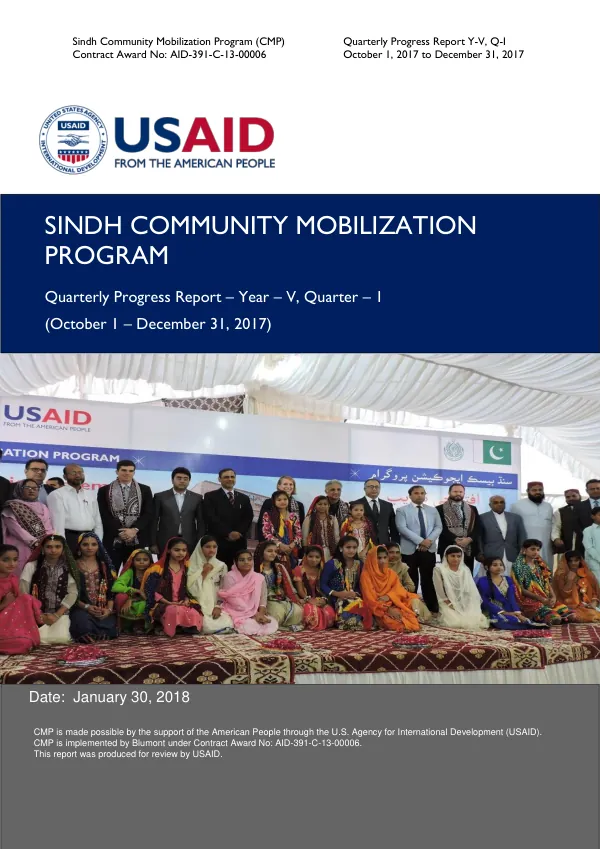
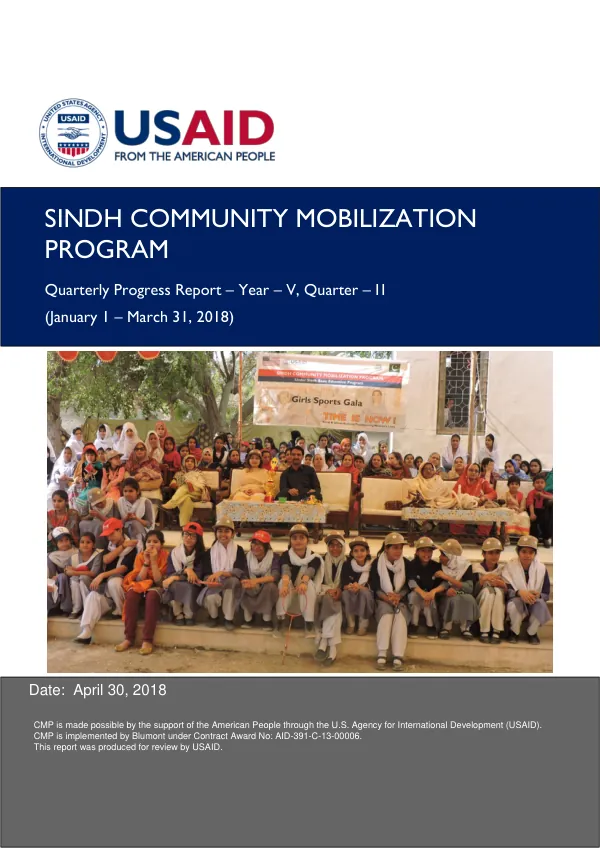
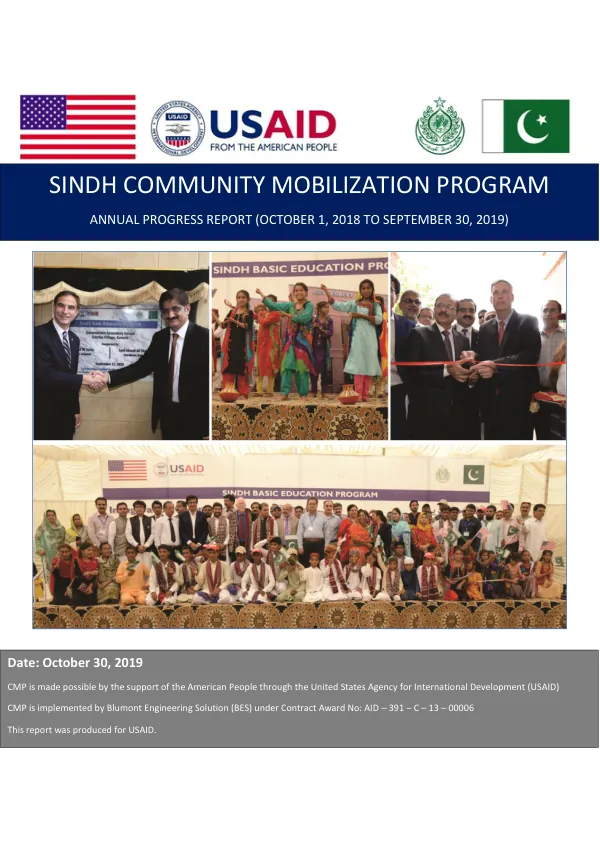
Annual Progress Report: Sindh Community Mobilization Program, Year – VI
The Sindh Community Mobilization Program (CMP) is a comprehensive initiative aimed at improving education in Sindh province, Pakistan.
2019 · 76 pages
Sign in to readA free account is required to download.
Abstract
The program is a key component of the Sindh Basic Education Program (SBEP), a five-year bi-lateral initiative between the United States Agency for International Development (USAID) and the Government of Sindh (GOS). The program's primary objective is to increase and sustain students' enrollment in primary, elementary, and secondary grades in 29 districts of Sindh province. CMP has four key components: 1) increasing communities' involvement in the GOS reform of merging, consolidating, and upgrading schools; 2) improving community and district administrations' coordination for increased girls' enrollment; 3) improving child nutrition in selected communities and government schools through research that informs innovation and good practice; and 4) piloting the launch of Education Management Organizations (EMOs). The program also has three Cross-Cutting Themes: gender mainstreaming, water and sanitation (WATSAN), and Disaster Risk Reduction (DRR). During the reporting period, October 1, 2018 to September 30, 2019, CMP achieved significant milestones. The program expanded its geographic boundaries from seven districts and five towns to all 29 districts of Sindh province. CMP provided small grants to 300 neighboring schools to address needs identified and prioritized in school improvement plans (SIPs). The program also empowered communities by facilitating coordination among community and other stakeholders in aspects related to construction, merging, consolidation, and upgrading of SBEP schools. CMP's inclusive community activities are designed to make educational improvements sustainable by increasing communities' support for their local schools and advocacy for better educational provisions. The program's key objectives are to facilitate coordination among the community and other stakeholders and empower communities. The initial scope focused on 409 schools, but under the revised scope of work, CMP will work in 750 schools, including existing SBEP targeted schools and an additional 350 GOS identified priority model schools. The program's success has attracted attention to its model and methodology, resulting in an extension of project tenure for three more years. With the cost extension, CMP expanded its geographic boundaries and increased its scope of work. The program's achievements demonstrate its commitment to improving education in Sindh province and its ability to adapt to changing circumstances. CMP's Cross-Cutting Themes, including gender mainstreaming, WATSAN, and DRR, add significant value to the program's objectives. The program's focus on community involvement and empowerment has led to increased students' enrollment, particularly girls' enrollment, and retention in selected schools. The program's inclusive community activities have made educational improvements sustainable by increasing communities' support for their local schools and advocacy for better educational provisions. The program's achievements during the reporting period demonstrate its commitment to improving education in Sindh province. CMP's success has set a precedent for future education initiatives in the region, and its model and methodology have been recognized as best practices in the field of education development.