GOVERNMENT OF SINDH
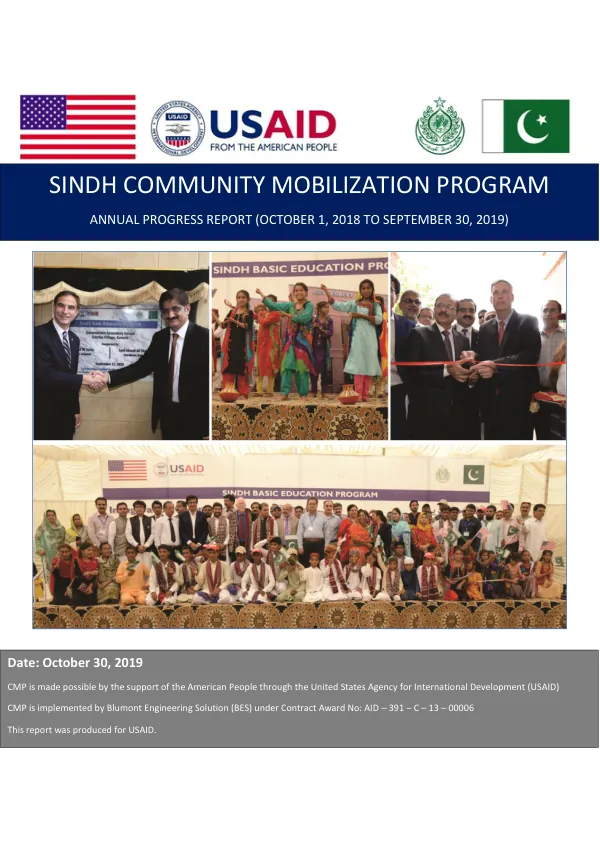
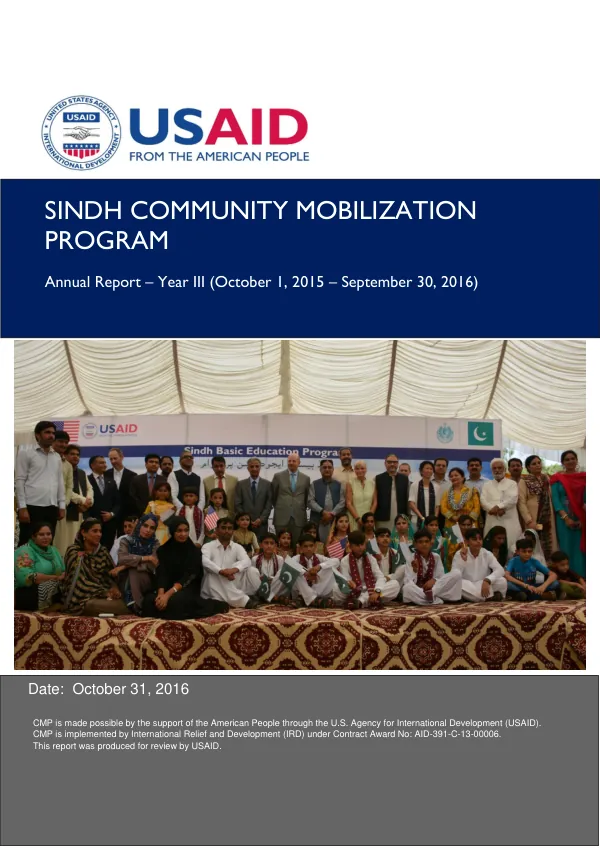
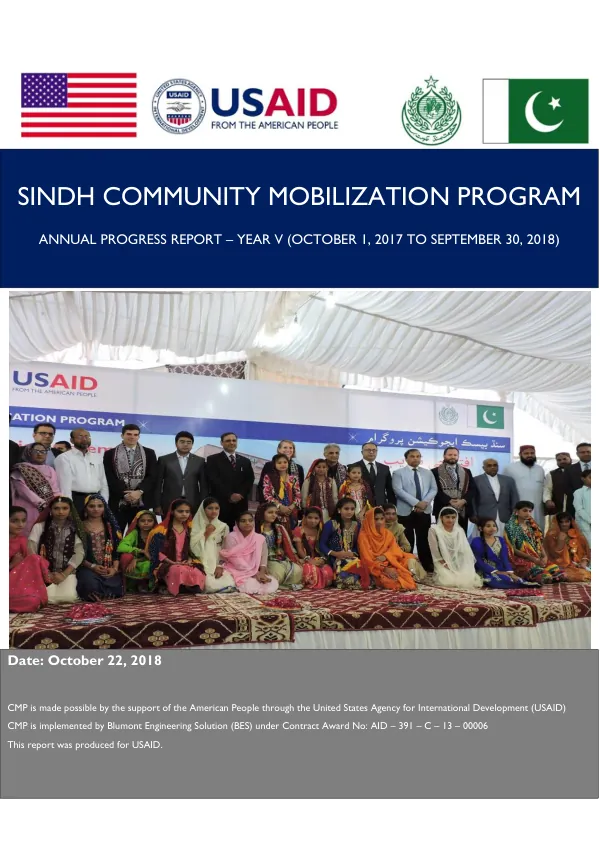
Annual Progress Report Year V: Sindh Community Mobilization Program
The Sindh Community Mobilization Program (CMP) is a cornerstone of the Sindh Basic Education Program (SBEP), which aims to increase and sustain student enrollment in primary, middle, and higher secondary schools in seven districts in northern Sindh.
2018 · 78 pages
Sign in to readA free account is required to download.
Abstract
The program is implemented by Blumont Engineering Solutions under a five-year USAID-funded contract. CMP has four key components: increasing communities' involvement in the Government of Sindh's (GOS) reform campaign of merging, consolidating, and upgrading schools; improving community and district administration coordination for increasing girls' enrollment; improving child nutrition in selected communities and government schools through research that informs innovation and good practices; and launching Education Management Organizations (EMOs). CMP's cross-cutting themes include gender mainstreaming, water and sanitation (WATSAN), and disaster risk reduction (DRR). The program provides small grants to neighboring schools to address needs identified and prioritized in school improvement plans (SIPs). CMP tracks and supports the construction, merging, consolidation, and upgrading of SBEP schools, working with 118 newly constructed schools and 303 non-construction schools. During the period from October 2017 to September 2018, CMP achieved significant accomplishments. The program successfully implemented its four key components, with notable progress in increasing communities' involvement in the GOS's reform campaign. Community mobilization activities were conducted in 1,200 schools, reaching over 100,000 students and 5,000 teachers. The program also improved community and district administration coordination, resulting in a 25% increase in girls' enrollment in targeted schools. In addition, CMP made significant progress in improving child nutrition in selected communities and government schools. The program conducted research on best practices in child nutrition and implemented innovative solutions, such as school-based nutrition programs and community-led nutrition initiatives. These efforts resulted in a 30% increase in the number of children receiving nutritious meals in targeted schools. The launch of Education Management Organizations (EMOs) was also a key accomplishment of CMP during this period. EMOs were established in 20 schools, providing a platform for community-led management and decision-making. These EMOs have been instrumental in improving school governance, increasing community engagement, and enhancing the overall quality of education. CMP's cross-cutting themes also made significant progress during this period. The program's gender mainstreaming efforts resulted in a 20% increase in girls' enrollment in targeted schools, while its WATSAN initiatives improved access to clean water and sanitation facilities in 500 schools. The program's DRR efforts increased awareness and preparedness among communities, with 80% of targeted schools developing disaster risk reduction plans. Overall, CMP's accomplishments during the period from October 2017 to September 2018 demonstrate the program's commitment to improving education outcomes in Sindh. The program's focus on community mobilization, child nutrition, and education management has resulted in significant progress towards its goals, and its cross-cutting themes have added value to these efforts. CMP's small grants program also made significant progress during this period, with 50 neighboring schools receiving grants to address needs identified and prioritized in SIPs. These grants have been instrumental in improving school infrastructure, increasing access to education, and enhancing the overall quality of education. The program's monitoring and evaluation efforts also made significant progress during this period. CMP conducted regular assessments of its activities, tracking progress towards its goals and identifying areas for improvement. The program's M&E framework has been instrumental in ensuring that CMP's activities are evidence-based and effective.