USAID
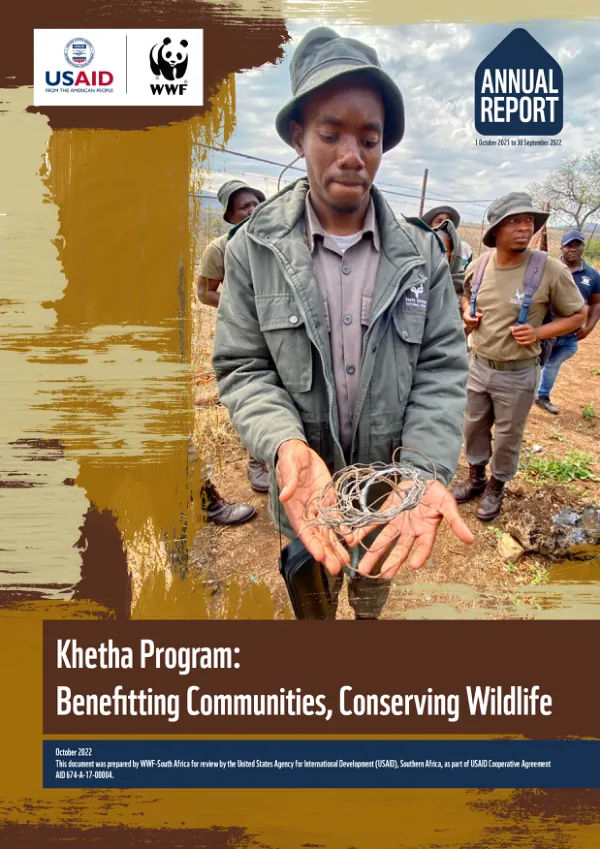
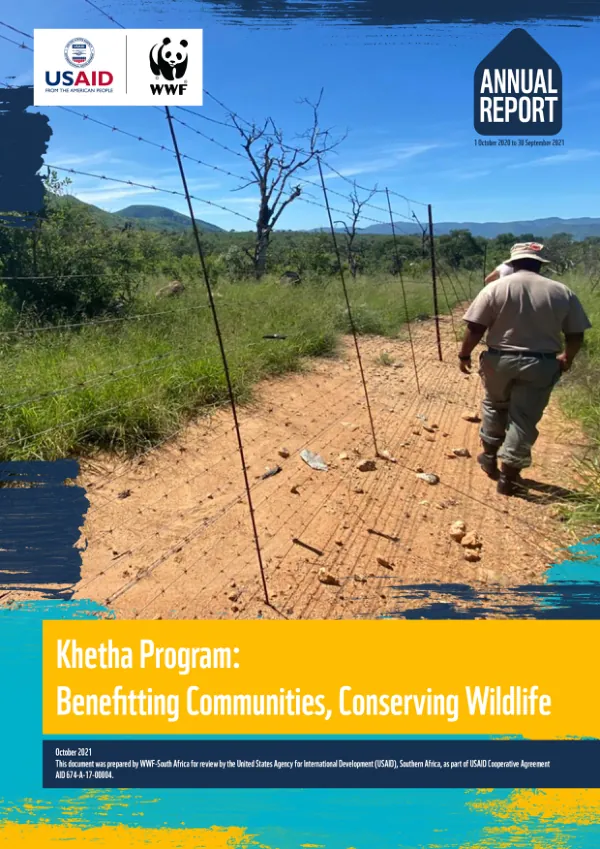
Annual Report
The Khetha program began in 2020, with a focus on adapting to the challenges posed by the COVID-19 pandemic.
2021 · 84 pages
Sign in to readA free account is required to download.
Abstract
The program recognized that conservation is deeply rooted in socio-economic drivers and that the safety and security of wildlife depends on the safety and security and socio-economic wellbeing of local communities. The pandemic highlighted the need for alternative and innovative sources of income and benefits from wildlife for local communities, moving beyond an over-reliance on tourism. In Mozambique, the Khetha team supported Community Natural Resource Management Committees (CNRMCs) and District Natural Resource Management Committees (DNRMCs), structures through which wildlife management and resources and benefits between communities and protected areas are shared. As a result of this support, several communities in Mozambique received financial benefits from sustainable wildlife resource use, creating a mutually beneficial relationship and partnership between communities and neighboring protected areas. Communities will continue to receive annual payments. In South Africa, the work of Community Liaison Officers and other community practitioners in the Khetha landscape remains invaluable but under-recognized. The Khetha team hosted its annual Community Practitioners Conference to encourage learning and celebrate the work undertaken by community practitioners. A new project was also initiated to enable environmental monitors in the Greater Kruger area to build their reporting and data collection skills. Discussions were facilitated between environmental monitors and conservation managers to make sense of the data and their experiences, informing support to their work. Human-wildlife conflict (HWC) is a major concern for both communities and conservation agencies in the Khetha landscape. Unaddressed HWC can have significant impacts on the relationship between people and protected areas. The Khetha team deepened its understanding of the causes, drivers, and current responses to HWC around the Great Limpopo Transfrontier Conservation Area (GLTFCA) to inform interventions to support the management of HWC. This included strengthening mutually beneficial relationships between communities and protected areas, enhancing law enforcement response to wildlife trafficking, and communicating about the drivers of wildlife crime and issues affecting community-protected area relations. The Khetha team also improved collaboration on localized, regional, and transboundary wildlife management. This involved working with various stakeholders, including government agencies, non-governmental organizations, and local communities, to develop and implement effective conservation strategies. The team's efforts aimed to promote the coexistence of humans and wildlife, while also addressing the socio-economic needs of local communities. In terms of administrative progress, the Khetha team made significant strides in 2021. The team strengthened its capacity to support community-led conservation initiatives, including the establishment of Community Natural Resource Management Committees (CNRMCs) and District Natural Resource Management Committees (DNRMCs). The team also improved its monitoring and evaluation systems, enabling more effective tracking of progress and outcomes. The Khetha team's program and technical progress in 2021 was marked by several notable achievements. The team strengthened its law enforcement response to wildlife trafficking, including the establishment of a specialized unit to combat wildlife crime. The team also improved its communication and outreach efforts, including the development of a new website and social media platforms to engage with stakeholders and communities. In terms of learning and reflection, the Khetha team recognized the importance of continuous learning and improvement. The team conducted a thorough review of its activities and outcomes, identifying areas for improvement and developing strategies to address these challenges. The team also engaged in various learning and capacity-building activities, including training programs and workshops, to enhance its skills and knowledge. The Khetha team's upcoming activities in 2022 include the continuation of its community-led conservation initiatives, including the establishment of new CNRMCs and DNRMCs. The team will also continue to strengthen its law enforcement response to wildlife trafficking and improve its communication and outreach efforts. Additionally, the team will engage in various learning and capacity-building activities to enhance its skills and knowledge. In conclusion, the Khetha program made significant progress in 2021, despite the challenges posed by the COVID-19 pandemic. The team's efforts aimed to promote the coexistence of humans and wildlife, while also addressing the socio-economic needs of local communities. The team's administrative progress, program and technical progress, and learning and reflection activities all contributed to its success in 2021.
Related documents