FHI 360
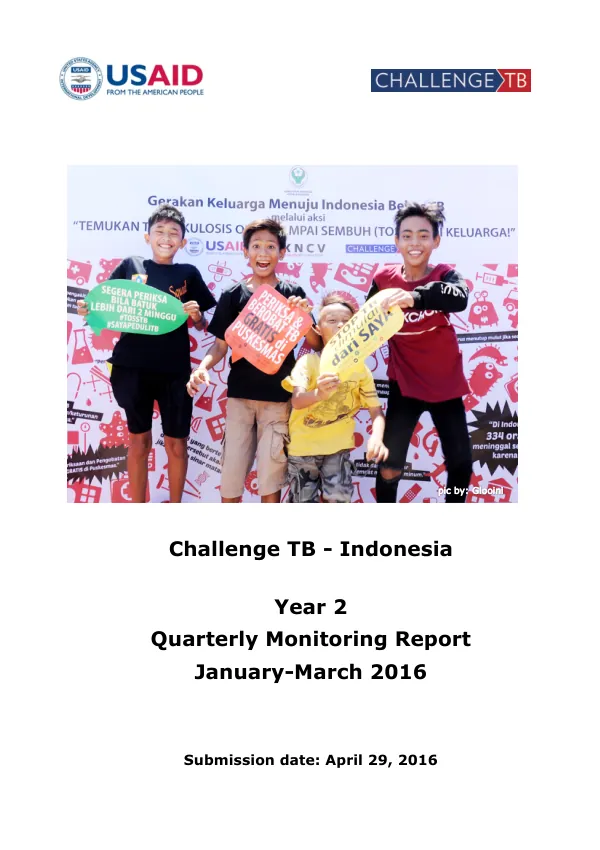
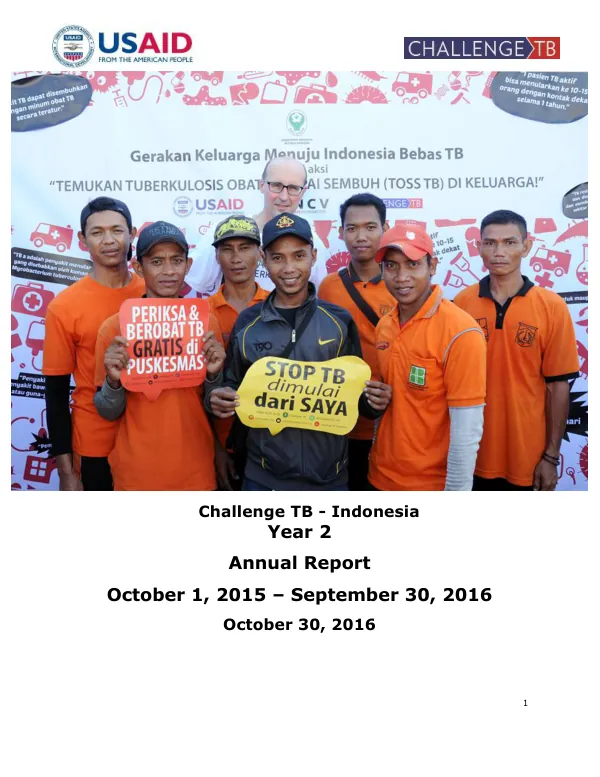
Annual Report: Challenge TB - Indonesia Year 2
The Challenge TB Indonesia program, a collaborative effort between the Indonesian government and international partners, aimed to improve tuberculosis (TB) control and prevention in the country.
2016 · 74 pages
Sign in to readA free account is required to download.
Abstract
The program's geographic focus was on 10 districts in Indonesia, with a primary objective of reducing TB prevalence and mortality rates. Key achievements during the second year of the program (2015-2016) included the establishment of 10 intensified districts, which demonstrated significant improvements in TB case detection and treatment outcomes. The program also supported the implementation of the Global Fund's TB-HIV joint planning document, which aimed to enhance collaboration between TB and HIV/AIDS programs. The Challenge TB Indonesia program implemented various interventions to improve TB control, including the expansion of GeneXpert testing, which enabled faster diagnosis of TB and drug-resistant TB. The program also supported the development of a TB-HIV national action plan, which aimed to improve collaboration between TB and HIV/AIDS programs. In terms of TB-HIV collaboration, the program supported the implementation of TB-HIV joint planning documents in 10 districts, which aimed to enhance collaboration between TB and HIV/AIDS programs. The program also supported the development of a TB-HIV national action plan, which aimed to improve collaboration between TB and HIV/AIDS programs. The program's operations research component aimed to identify effective interventions for TB control and prevention. One study found that the use of GeneXpert testing led to a significant increase in TB case detection and treatment outcomes. Another study found that the implementation of TB-HIV joint planning documents led to improved collaboration between TB and HIV/AIDS programs. The program's success was also attributed to its strong partnerships with various stakeholders, including the Indonesian government, international partners, and civil society organizations. The program's geographic focus on 10 districts allowed for targeted interventions and improved outcomes. In terms of implementation, the program supported the development of district action plans, which aimed to improve TB control and prevention at the district level. The program also supported the implementation of TB-HIV joint planning documents, which aimed to enhance collaboration between TB and HIV/AIDS programs. The program's midterm evaluation revealed a significant increase in TB case detection and treatment outcomes in the 10 intensified districts. The evaluation also found that the program's interventions had a positive impact on TB-HIV collaboration, with improved collaboration between TB and HIV/AIDS programs. The program's lessons learned and next steps included the need for continued support for TB-HIV collaboration, the expansion of GeneXpert testing, and the development of district action plans. The program also recommended the continuation of operations research to identify effective interventions for TB control and prevention. In conclusion, the Challenge TB Indonesia program made significant progress in improving TB control and prevention in the country. The program's interventions, including the expansion of GeneXpert testing and the implementation of TB-HIV joint planning documents, led to improved TB case detection and treatment outcomes. The program's strong partnerships with various stakeholders and its geographic focus on 10 districts allowed for targeted interventions and improved outcomes.