KNCV TUBERCULOSIS FOUNDATION
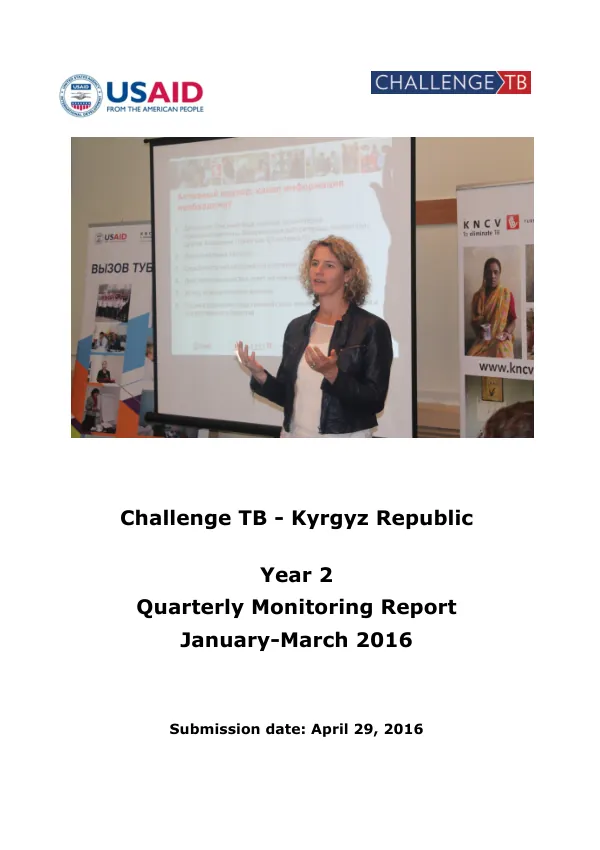
Annual Report: Challenge TB - Kyrgyz Republic Year 2
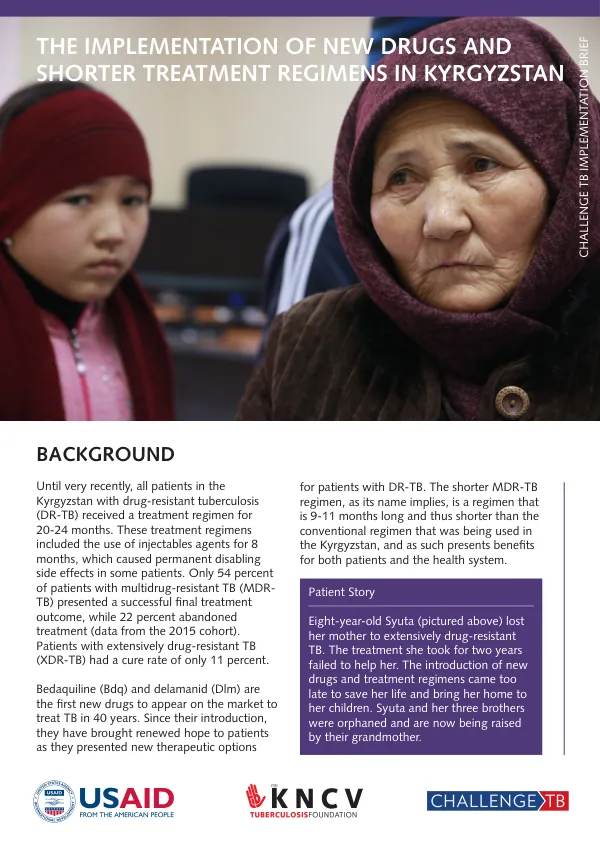
The Challenge TB project in Kyrgyzstan aims to reduce the TB burden by improving management of drug-resistant TB through the implementation of new anti-TB drugs and shorter treatment regimens.
2016 · 33 pages
Sign in to readA free account is required to download.
Abstract
The project is implemented by KNCV Tuberculosis Foundation in close collaboration with national and international partners, including the Ministry of Health, World Health Organization, and USAID Defeat TB. In the first two years, the project focused on preparation for programmatic implementation of shorter regimens and new anti-drugs for treatment of DR-TB. Key achievements in Year 2 include the development and approval of a plan for the introduction of new drugs and short regimens by the Ministry of Health in April 2016. The plan requires the National TB Program to implement a comprehensive strategy for diagnosis, selection, enrollment, and support of patients on new treatment regimens. A protocol on the introduction of new drugs and short regimens with standard operating procedures was developed, agreed upon with the National TB Program, and submitted to the ethical committee in September 2016. The protocol includes an optimized diagnostic algorithm to ensure rapid diagnosis of rifampicin resistance and resistance to second-line injectable drugs and fluoroquinolones. Training was provided to key NTP, DDP, and Karabalta MDR TB hospital staff on pharmacovigilance in December 2015 and on the introduction of new drugs and short regimens in July 2016. A database for registration of patients enrolled on treatment with new drugs and short regimens was developed and installed on six local computers, and 11 NTP and Karabalta MDR TB hospital staff were trained on its use in July 2016. The overall goal of the project is to reduce the TB burden in Kyrgyzstan by improving management of drug-resistant TB through the implementation of new anti-TB drugs and shorter treatment regimens. The project aims to achieve several results, including developing a national policy framework for the proper implementation of new drugs and shortened regimens for M(XDR)TB treatment, adjusting diagnostic algorithms and clinical monitoring to enable proper diagnosis and M/XDR-TB treatment follow-up, and creating a model of good clinical management practice in the use of new drugs and shorter regimens. The project will be implemented in close collaboration with the Ministry of Health, National TB Program, and other partners. The project's results will contribute to the reduction of the TB burden in Kyrgyzstan and improve the management of drug-resistant TB in the country. The project's budget for Year 2 was $310,000, and it was implemented in close collaboration with national and international partners. The project's achievements in Year 2 demonstrate progress towards its overall goal of reducing the TB burden in Kyrgyzstan by improving management of drug-resistant TB through the implementation of new anti-TB drugs and shorter treatment regimens. The project's success will depend on the continued collaboration and support of national and international partners, as well as the effective implementation of the project's activities and results. The project's achievements in Year 2 provide a solid foundation for the continued progress towards its overall goal and the reduction of the TB burden in Kyrgyzstan. The project's results will be monitored and evaluated through the use of various indicators, including the number of patients enrolled on treatment with new drugs and short regimens, the number of patients cured or completed treatment, and the number of patients who experience adverse events. The project's results will be used to inform the development of national policies and guidelines for the management of drug-resistant TB in Kyrgyzstan. The project's success will also depend on the effective management of drug-resistant TB in the community, including the prevention of transmission of drug-resistant TB from patients for whom no effective treatment is available. The project's results will contribute to the reduction of the TB burden in Kyrgyzstan and improve the management of drug-resistant TB in the country.