DAI GLOBAL, LLC
Annual Report FY2021: Guatemala Local Governance / Nexos Locales Project
The Nexos Locales Project is a local governance initiative implemented in Guatemala, with the primary goal of strengthening municipal capacities and promoting sustainable development.
2021 · 147 pages
Sign in to readA free account is required to download.
Abstract
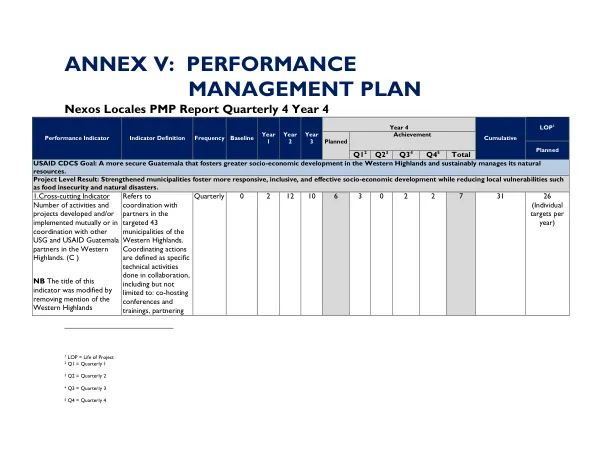
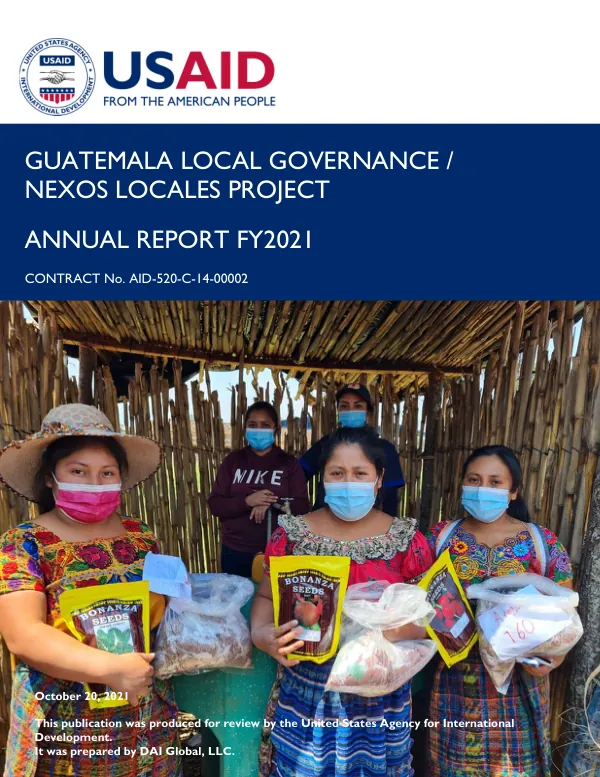
The project is funded by the United States Agency for International Development (USAID) and is being implemented by DAI Global, LLC. The project's coverage area includes 15 municipalities in the departments of San Marcos, Quiché, Huehuetenango, and Totonicapán. The project's annual report for FY2021 highlights several key achievements and challenges faced during the reporting period. One of the notable achievements is the implementation of COVID-19 prevention measures in the project's coverage area. According to Table 4, COVID-19 prevention measures were implemented in the department of San Marcos, including the distribution of personal protective equipment (PPE) and the establishment of isolation centers. Similar measures were implemented in the departments of Quiché, Huehuetenango, and Totonicapán, as shown in Tables 5, 6, and 7, respectively. The project also made significant progress in promoting local economic development (LED) and improving public financial management (PFM). According to Figure 2, the project's DEMIN performance improved significantly during the reporting period, indicating a positive impact on municipal capacities. The project also supported the development of municipal plans and budgets, as shown in Table 1, which summarizes municipal investments made during the reporting period. In addition to these achievements, the project also faced several challenges, including the COVID-19 pandemic, which had a significant impact on project activities. Despite these challenges, the project continued to make progress in promoting sustainable development and improving municipal capacities. The project's quarterly progress results, as shown in Section VI, indicate a steady improvement in project outcomes, with significant gains in areas such as LED and PFM. The project also made significant progress in promoting social inclusion and gender equality. According to Photo 18, women in Totonicapán received vegetable seedling donations coordinated by the project, which aimed to improve food security and promote women's empowerment. The project also supported the development of a citizen charter on water service, as shown in Photo 12, which aimed to improve access to safe drinking water and promote community engagement. Overall, the Nexos Locales Project made significant progress in promoting sustainable development and improving municipal capacities in Guatemala during FY2021. Despite the challenges posed by the COVID-19 pandemic, the project continued to make progress in areas such as LED, PFM, and social inclusion, and is well-positioned to continue making a positive impact in the coming years. The project's performance management plan, as shown in Annex IV, outlines the project's goals, objectives, and indicators, as well as the strategies and activities that will be implemented to achieve these goals. The plan also includes a detailed budget and a timeline for project implementation. The project's glossary of key terms, as shown in Annex 1, provides a list of acronyms and definitions used throughout the report. The glossary is an essential resource for readers who may be unfamiliar with the project's terminology and concepts. The project's work plan activity, as shown in Annex II, provides a detailed description of the project's activities and tasks, as well as the responsible personnel and timelines for completion. The work plan is an essential tool for project implementation and monitoring, and provides a clear roadmap for achieving the project's goals and objectives. The project's municipality tracker, as shown in Annex III, provides a list of the project's coverage area, including the 15 municipalities in the departments of San Marcos, Quiché, Huehuetenango, and Totonicapán. The tracker is an essential resource for readers who may be interested in learning more about the project's coverage area and the municipalities that are participating in the project.
Related documents