USAID DEC
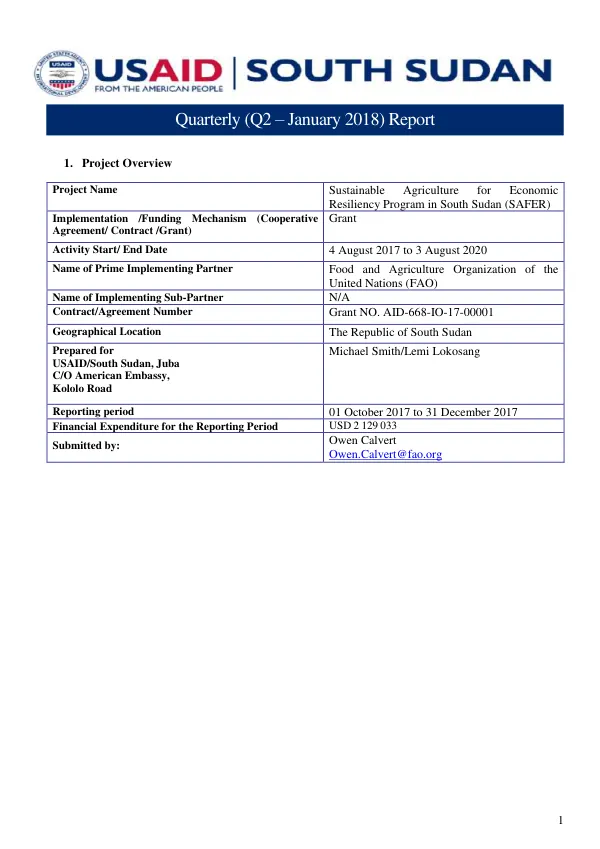
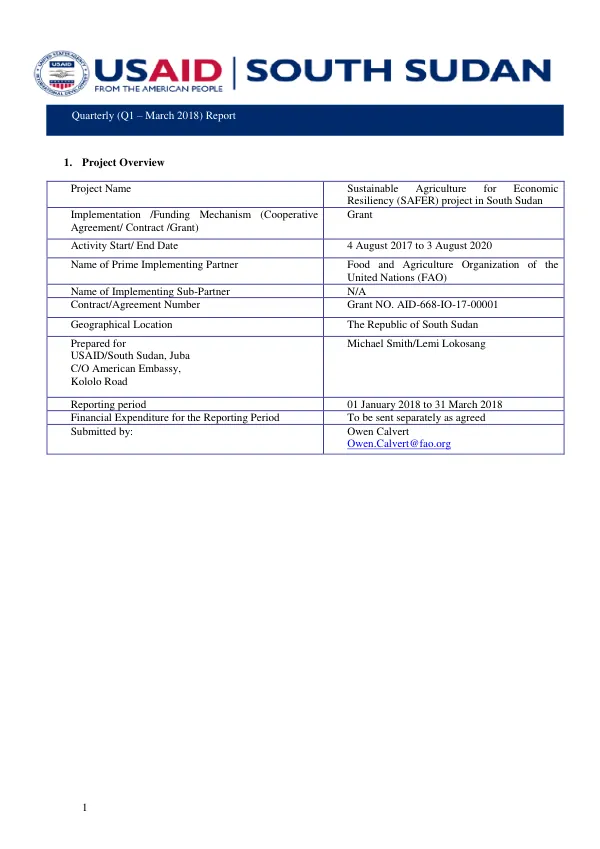
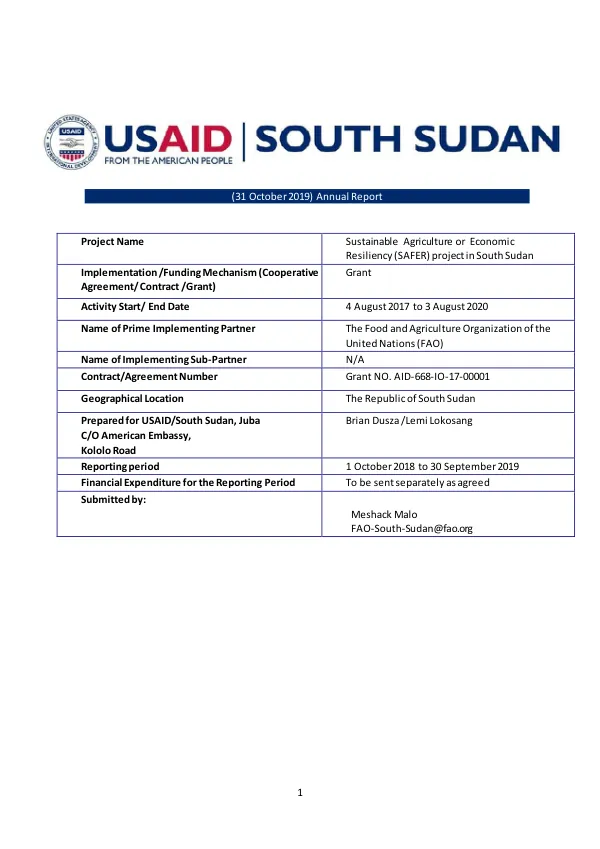
Annual Report: Sustainable Agriculture for Economic Resiliency (SAFER) project in South Sudan
Sign inFOOD AND AGRICULTURE ORGANIZATION OF THE UNITED NATIONS IN GEORGIA
Annual Report: Sustainable Agriculture for Economic Resiliency (SAFER) project in South Sudan
The agricultural development initiative in South Sudan began in 2017 with funding from USAID's Grant No.
2019 · 46 pages
Sign in to readA free account is required to download.
Abstract
AID-668-IO-17-00001. The project, known as the Sustainable Agriculture for Economic Resiliency (SAFER) project, aimed to improve agricultural productivity and improve the livelihoods of smallholder farmers in the region. The project was implemented by the Food and Agriculture Organization of the United Nations (FAO) in partnership with the Sudan Peace and Development Program (SPEDP). The project's key interventions included farmer field schools, where farmers received training in sustainable agriculture practices, and the establishment of community-based animal health workers to provide animal health services to farmers. The project also focused on improving access to water and promoting market linkages for farmers to sell their produce. During the reporting period, which spanned from October 1, 2018, to September 30, 2019, the project achieved several key milestones. The project mobilized 1,500 smallholder farmers in Western Equatoria State, who received training in sustainable agriculture practices. The project also established 10 community-based animal health workers, who provided animal health services to farmers. The project's operational achievements included the distribution of inputs and seeds to farmers, as well as the establishment of groups to promote market linkages. The project also implemented innovative approaches and practices, such as the use of climate-smart technologies to improve water access. However, the project faced several challenges, including the lack of inputs and seeds, as well as the need to promote market linkages. The project also encountered challenges in implementing its activities, particularly in terms of creating an enabling environment for farmers to access markets. The project's recommendations included the need to improve access to inputs and seeds, as well as the promotion of market linkages. The project also recommended the use of climate-smart technologies to improve water access. The project's way forward included changes in the implementation environment, including the need to create an enabling environment for farmers to access markets. The project's impact was evident in the improved production of smallholder farmers, who saw a significant increase in their yields. The project also improved access to water, which was a major challenge for farmers in the region. The project's success was also attributed to its innovative approaches and practices, which were tailored to the needs of smallholder farmers in the region. Overall, the SAFER project was a success, and its impact was felt by smallholder farmers in Western Equatoria State. The project's achievements were a testament to the power of sustainable agriculture practices and the importance of creating an enabling environment for farmers to access markets.
Related documents