USAID
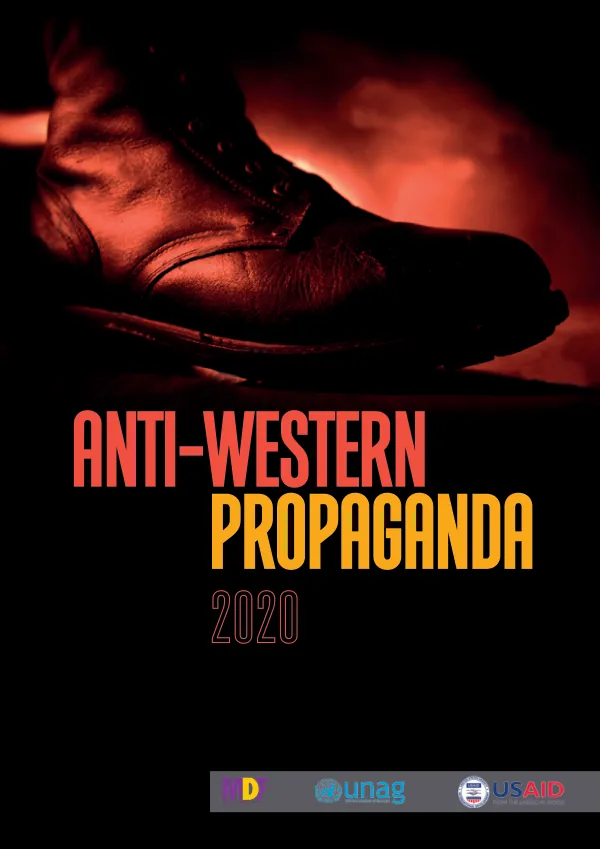
Anti-Western Propaganda: Sixth Annual Report
The Anti-Western Propaganda report by the Media Development Foundation (MDF) reflects the results of media monitoring conducted in 2020.
2021 · 60 pages
Sign in to readA free account is required to download.
Abstract
The report provides an overview of anti-Western messages spread by various sources in traditional media, including a discourse analysis section that discusses the structure of narratives and modification of narratives over time. The monitoring was conducted on media outlets, as well as various sources, including the political class, clergy, civil organizations, and individual representatives of society. The report covers the period from January 1 to December 31, 2020, and provides key findings, methodology, and total quantitative data by sources. The report identifies three main influence strategies used to spread anti-Western messages: sowing fears, instilling despair and skepticism, and portraying Russia as the alternative to the West. The sowing fears strategy includes messages that create fear of provoking Russia, resuming hostilities, and instability, as well as fear of losing territorial integrity, biological terrorism, and global control. The instilling despair and skepticism strategy includes messages that claim the West cannot defend against military threats, protect territorial integrity, or protect against the threat of pandemic. This strategy also includes messages that claim the liberal order is losing ground, democracy is a fiction, and association agreements with the EU are useless. The report also identifies the use of the false dilemma method and terminology, which involves presenting a situation as if there are only two possible solutions, when in fact there are more options available. This method is used to manipulate public opinion and create a sense of urgency. The report further discusses disinformation and manipulative content, including fake news stories posted by Facebook pages and groups, as well as content supplied by readers. The monitoring was conducted using the CrowdTangle analytics tool, which identifies fake news stories and verifies them based on open sources and relevant tools. The report also provides information about actors of external influence, including Russian media outlets and their role in spreading anti-Western messages in Georgia. The report concludes that the spread of anti-Western propaganda in Georgia is a significant challenge to the country's integration into the Western community. The report includes several figures that illustrate the topics of anti-Western messages in 2020, including messages concerning the United States, the West, identity, Russia, authoritarian systems, NATO, the EU, NGOs, and George Soros. The figures also show the sources of anti-Western messages by media outlets and their respondents. Overall, the report provides a comprehensive analysis of the spread of anti-Western propaganda in Georgia and highlights the need for continued monitoring and fact-checking to counter the spread of disinformation and manipulative content.