ADRA
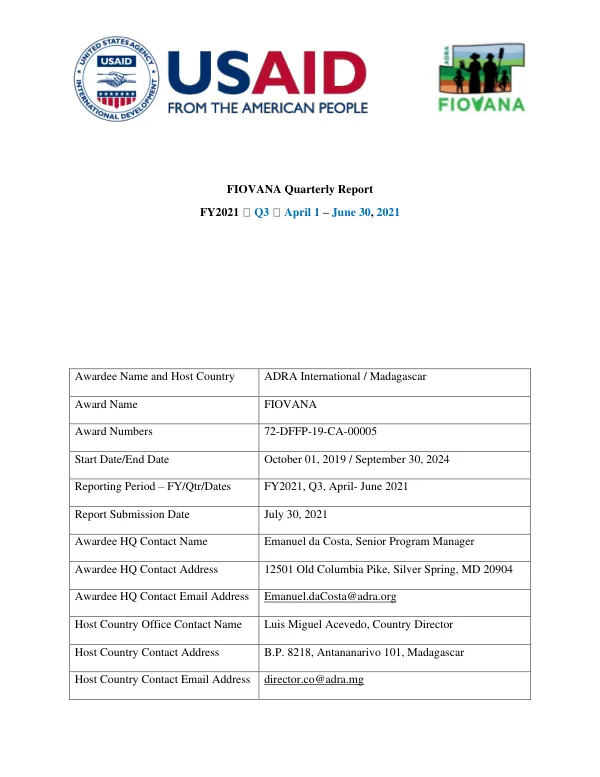
Quarterly Report 1 - FY2021: FIOVANA Project in Madagascar
The FIOVANA project is a USAID-funded initiative implemented by a consortium of organizations, including ADRA International, in Madagascar.
2021 · 9 pages
Sign in to readA free account is required to download.
Abstract
The project aims to improve food and nutrition security and resilience of vulnerable populations in the Atsimo Atsinanana and Vatovavy-Fitovinany regions of southeastern Madagascar. The geographic focus of the project includes the districts of Atsimo Atsinanana, Vatovavy-Fitovinany, Farafangana, Vangaindrano, Vondrozo, Manakara, Mananjary, and Vohipeno. The project has three main purposes: Purpose 1, which focuses on sustained improvement in health and nutritional status of Women of Reproductive Age (WRA), adolescent girls, and Children Under Five (CU5); Purpose 2, which aims to increase household incomes and production to access food and non-food essentials and build savings; and Purpose 3, which seeks to enhance social and ecological risk management. The project's target beneficiaries include 428,800 participants, representing 71,467 households. The project is implemented by a consortium of organizations, with ADRA International as the prime awardee and sub-awardees including FIANTSO, AVSF, TANGO International, and FHI 360. ADRA leads in technical areas, including health, nutrition, WASH, agricultural production, and disaster risk reduction, while ensuring approaches for gender integration, social and behavior change, and governance. FIANTSO focuses on governance strategies and rights-based approaches, and supports advocacy campaigns on critical issues such as land rights. AVSF provides technical support for market strengthening and livestock interventions, develops linkages and opportunities for local private sector engagement, and supports development and strengthening of local institutions. During the reporting period of October 1 to December 31, 2020, the project made significant progress in various areas. In terms of health and nutrition, the project implemented activities under Purpose 1, including the distribution of micronutrient supplements to pregnant and lactating women, and the establishment of health and nutrition committees in target communities. The project also implemented activities under Purpose 2, including the provision of training and support to farmers on improved agricultural practices, and the establishment of village savings and loan associations to promote financial inclusion. In terms of social and ecological risk management, the project implemented activities under Purpose 3, including the establishment of disaster risk reduction committees in target communities, and the provision of training and support to farmers on climate-resilient agricultural practices. The project also implemented cross-cutting components, including gender equity and integration, youth empowerment, collaborating, learning, and adapting, environment and disaster risk management, and social and behavior change. The project faced several challenges during the reporting period, including the COVID-19 pandemic, which affected the implementation of some activities. However, the project was able to adapt and respond to the challenges, and made significant progress in achieving its objectives. The project plans to continue implementing activities in the next reporting quarter, January to March 2021, and to build on the progress made during the current reporting period.
Related documents