USAID DEC
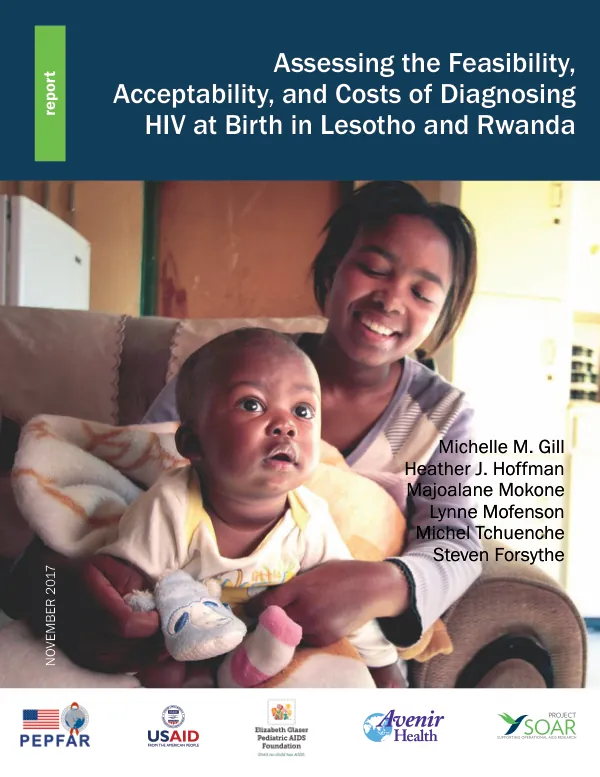
Assessing the feasibility, acceptability, and costs of diagnosing HIV at birth in Lesotho and Rwanda
Sign inAVENIR HEALTH
Assessing the feasibility, acceptability, and costs of diagnosing HIV at birth in Lesotho and Rwanda
The feasibility, acceptability, and costs of diagnosing HIV at birth in Lesotho and Rwanda were assessed through a study conducted by the Elizabeth Glaser Pediatric AIDS Foundation in collaboration with the George Washington University and Avenir Health.
2018 · 56 pages
Sign in to readA free account is required to download.
Abstract
The study aimed to evaluate the effectiveness of viral load testing for early infant diagnosis (EID) in these countries. The study design involved semi-structured interviews with women, healthcare providers, and laboratory personnel to gather qualitative data on the acceptability and feasibility of EID. The interviews were conducted in Lesotho and Rwanda, and the participants were selected based on their experience with EID. The study also collected quantitative data on the turnaround times for EID and the costs associated with the process. The qualitative findings from the interviews indicated that the acceptability of EID was high among the participants, with many expressing a desire to know their HIV status and to receive treatment for themselves and their infants. However, some participants reported challenges with accessing EID services, including long waiting times and lack of awareness about the availability of EID. The quantitative data on turnaround times for EID showed that the median time from specimen collection to result was 14 days in Lesotho and 10 days in Rwanda. The costs associated with EID were also evaluated, and the study found that the average cost per test was $10.50 in Lesotho and $8.50 in Rwanda. The study's findings have implications for the implementation of EID programs in Lesotho and Rwanda. The results suggest that EID is acceptable and feasible in these countries, but that challenges remain with accessing EID services. The study's recommendations include increasing awareness about EID, improving access to EID services, and reducing the costs associated with EID. The study's methodology involved a combination of qualitative and quantitative data collection methods, including semi-structured interviews and laboratory surveys. The study's data analysis was conducted using a thematic analysis approach, which involved identifying and coding themes from the interview data. The study's limitations include the small sample size and the limited generalizability of the findings to other countries. However, the study's results provide valuable insights into the feasibility, acceptability, and costs of EID in Lesotho and Rwanda, and can inform the development of EID programs in these countries. The study's conclusions highlight the importance of EID in preventing mother-to-child transmission of HIV and improving the health outcomes of infants and children. The study's recommendations emphasize the need for increased awareness, improved access, and reduced costs to ensure the successful implementation of EID programs in Lesotho and Rwanda. The study's authors acknowledge the contributions of several individuals and organizations, including the Lesotho Ministry of Health, Riders for Health, and DHL Lesotho, as well as the Kabeho Study investigators in Rwanda. The study's authors also thank USAID and the Population Council for their support throughout the study. The study's findings have implications for the development of EID programs in other countries, and highlight the need for increased investment in EID services to prevent mother-to-child transmission of HIV and improve the health outcomes of infants and children.
Related documents