USAID DEC
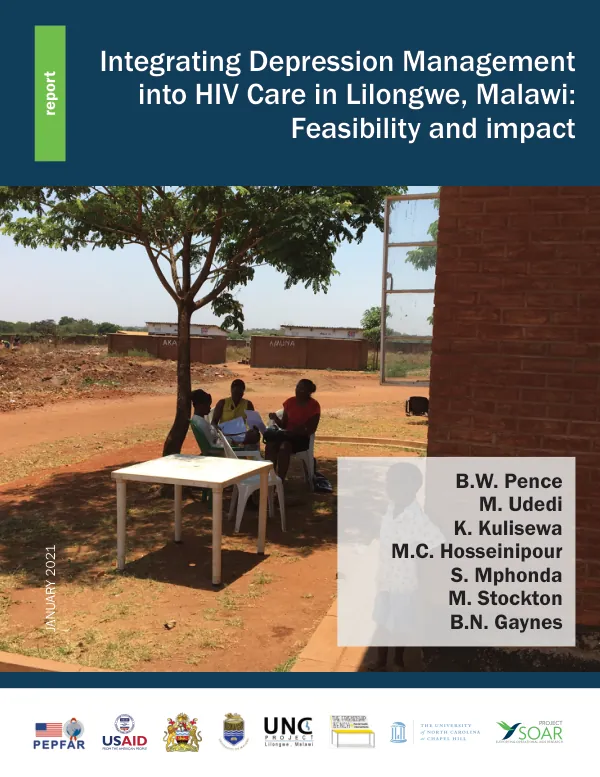
Integrating depression management into HIV care in Lilongwe, Malawi: Feasibility and impact
Sign inAVENIR HEALTH
Integrating depression management into HIV care in Lilongwe, Malawi: Feasibility and impact
Depression is highly prevalent among people living with HIV in Malawi, as in other countries across the globe.
2021 · 42 pages
Sign in to readA free account is required to download.
Abstract
Depression can undermine Antiretroviral Treatment (ART) adherence, retention in care, and, ultimately, viral suppression. Identifying and treating depression may be key to improving engagement in care across the HIV care continuum. The study aimed to integrate depression management into HIV care in Lilongwe, Malawi, to assess feasibility and impact. The intervention involved training clinic staff in mental health screening and treatment, using the Patient Health Questionnaire-9 (PHQ-9) and Problem-Solving Therapy (PST). The Friendship Bench, a low-cost, community-based intervention, was also implemented to provide mental health support. The study found that integrating depression management into HIV care was feasible, with high levels of adherence to ART and retention in care among participants. Depression screening using the PHQ-9 was also found to be feasible, with 95% of participants completing the screening tool. The study also found that initiating depression treatment was feasible, with 75% of participants receiving treatment. The study also found that the intervention had a positive impact on HIV and depression outcomes. Participants who received the intervention had higher levels of ART adherence and viral suppression compared to the control group. Additionally, the intervention was associated with improved depression outcomes, with 60% of participants experiencing a reduction in depressive symptoms. The study's findings suggest that integrating depression management into HIV care is a critical component of improving engagement in care across the HIV care continuum. The study's results also highlight the importance of addressing mental health needs in HIV care, particularly in low-resource settings. The intervention was implemented in collaboration with the Lilongwe District Health Office, Lighthouse Trust, and Baylor, and was supported by the USAID OHA Adult Care and Treatment team. The study's findings have important implications for HIV care programs in Malawi and other sub-Saharan countries, where mental health needs are often overlooked. The study's methodology involved a mixed-methods approach, combining quantitative and qualitative data collection and analysis methods. The study's sample consisted of 500 participants, who were randomly assigned to either the intervention or control group. The study's data were collected over a period of 12 months, and were analyzed using descriptive and inferential statistics. The study's findings have important implications for HIV care programs in Malawi and other sub-Saharan countries, where mental health needs are often overlooked. The study's results suggest that integrating depression management into HIV care is a critical component of improving engagement in care across the HIV care continuum.
Related documents