USAID DEC
Association between maternal dental periapical infections and pregnancy outcomes: results from a cross-sectional study in Malawi
Sign inFHI360
Association between maternal dental periapical infections and pregnancy outcomes: results from a cross-sectional study in Malawi
The study on maternal dental periapical infections and pregnancy outcomes was conducted in Malawi, a rural sub-Saharan African population.
2015 · 10 pages
Sign in to readA free account is required to download.
Abstract
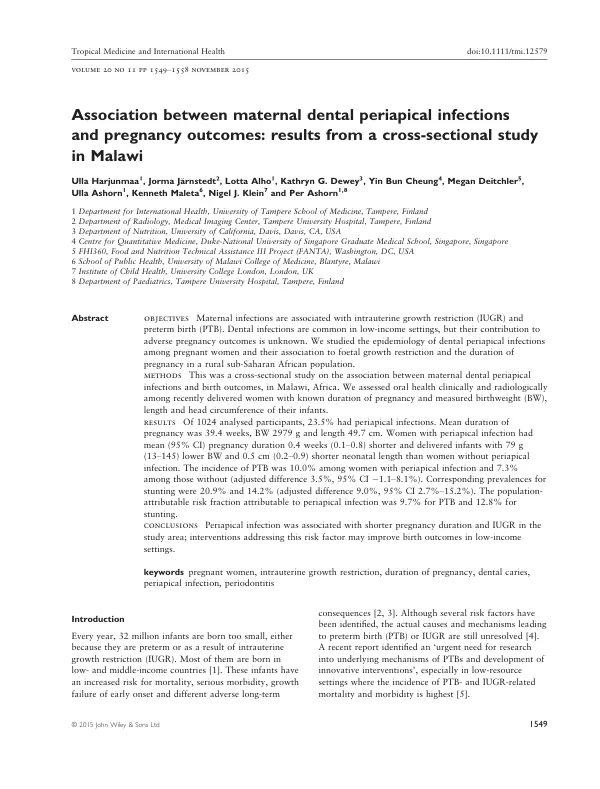
The research aimed to investigate the association between maternal dental periapical infections and intrauterine growth restriction (IUGR) and preterm birth (PTB). The study found that 23.5% of the 1024 analysed participants had periapical infections. Women with periapical infection had a mean pregnancy duration 0.4 weeks shorter and delivered infants with 79 g lower birthweight and 0.5 cm shorter neonatal length than women without periapical infection. The incidence of preterm birth was 10.0% among women with periapical infection and 7.3% among those without, indicating an adjusted difference of 3.5%. The prevalence of stunting was 20.9% among women with periapical infection and 14.2% among those without, with an adjusted difference of 9.0%. The population-attributable risk fraction attributable to periapical infection was 9.7% for PTB and 12.8% for stunting. The study was nested as a cross-sectional study in the controlled iLiNS-DYAD-M trial in Malawi. The primary outcome measures were duration of pregnancy, birthweight, and neonatal length. The secondary outcomes were neonatal weight and head circumference. The study was conducted according to Good Clinical Practice guidelines and the ethical standards of the Helsinki Declaration. The protocol was approved by the College of Medicine Research and Ethics Committee, University of Malawi, and the Ethics Committee of Pirkanmaa Hospital District, Finland. Between February 2011 and August 2012, 1391 pregnant women were enrolled in the study. The participants were eligible if they were pregnant less than 20 weeks, at least 15 years old, had no chronic illnesses requiring frequent medical care, no allergies, no evident pregnancy complications, and no earlier participation in the trial. The enrolled participants who had singleton pregnancies and completed the oral health examination were eligible for the oral health substudy. The data collection involved research personnel recording delivery events within 48 hours after delivery and measuring infant's birthweight with an electronic scale. The birthweight measured within 48 hours after delivery was used as such. If the weight was first measured within 2-5 days after delivery, an age-dependent multiplicative factor was applied to the measured weight to estimate birthweight. If the weight was first measured between 6 and 13 days after delivery, birthweight was back-calculated from the measured weight using the WHO z-scores. Two dental therapists conducted full-mouth examinations of the mothers and took digital panoramic radiographs as soon as possible after delivery at Mangochi hospital. The examination was conducted after delivery for three reasons: to assess the oral health situation after the full duration of the pregnancy, to avoid taking X-rays routinely during pregnancy, and to treat diagnosed diseases before delivery would have been difficult. The study found that periapical infection was associated with shorter pregnancy duration and IUGR in the study area. The results suggest that interventions addressing this risk factor may improve birth outcomes in low-income settings. The study highlights the importance of considering maternal oral health as a potential risk factor for adverse pregnancy outcomes.
Related documents