FHI 360
jn207225 1345..135
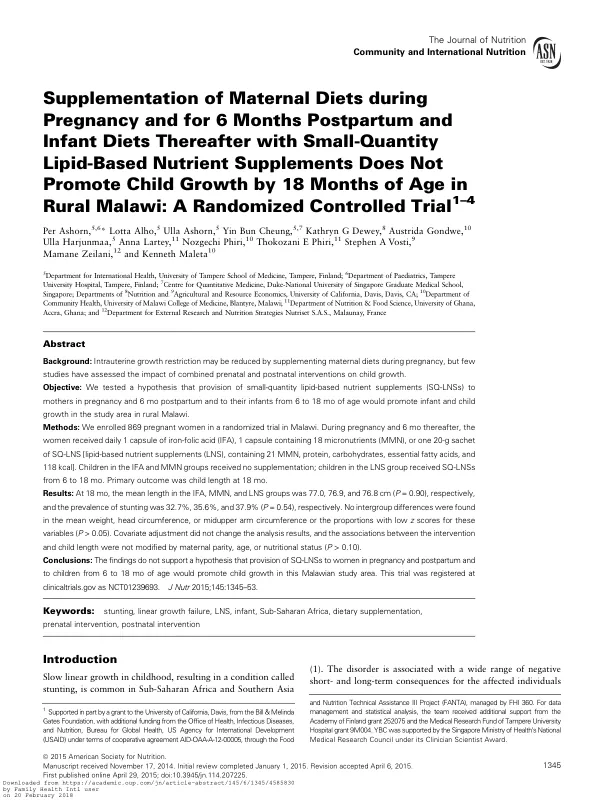
The Journal of Nutrition published a study on the supplementation of maternal diets during pregnancy and for 6 months postpartum with small-quantity lipid-based nutrient supplements (SQ-LNSs) and infant diets thereafter.
2015 · 9 pages
Sign in to readA free account is required to download.
Abstract
The study aimed to determine whether this supplementation would promote child growth by 18 months of age in rural Malawi. A randomized controlled trial was conducted, enrolling 869 pregnant women in rural Malawi. The women were randomly assigned to receive daily capsules of iron-folic acid (IFA), 18 micronutrients (MMN), or 20-g sachets of SQ-LNSs. The primary outcome was child length at 18 months, and secondary outcomes included weight, head circumference, and midupper arm circumference. The results showed no intergroup differences in mean length, weight, head circumference, or midupper arm circumference at 18 months. The prevalence of stunting was also similar across the three groups. Covariate adjustment did not change the analysis results, and the associations between the intervention and child length were not modified by maternal parity, age, or nutritional status. The study was conducted according to Good Clinical Practice guidelines and the ethical standards of the Helsinki Declaration. The protocol was approved by the College of Medicine Research and Ethics Committee, University of Malawi, and the Ethics Committee of Pirkanmaa Hospital District, Finland. The study site was in rural Malawi, with a total catchment population of 160,000. The target population was composed of pregnant women who came for antenatal care at any of the study clinics and met the inclusion criteria. The study design was an individually randomized, controlled, outcome assessor-blinded trial. The main study hypothesis was that children whose mothers were provided with LNSs during pregnancy and for 6 months after delivery and who themselves received LNSs from 6 to 18 months of age would have a higher mean length at 18 months than children whose mothers received either IFA during pregnancy only or MMN supplementation during pregnancy and lactation and who themselves received no LNSs. The study was registered at clinicaltrials.gov as NCT01239693.