DAI GLOBAL, LLC
AVANSE I 3rd QUARTERLY REPORT - FY 2018
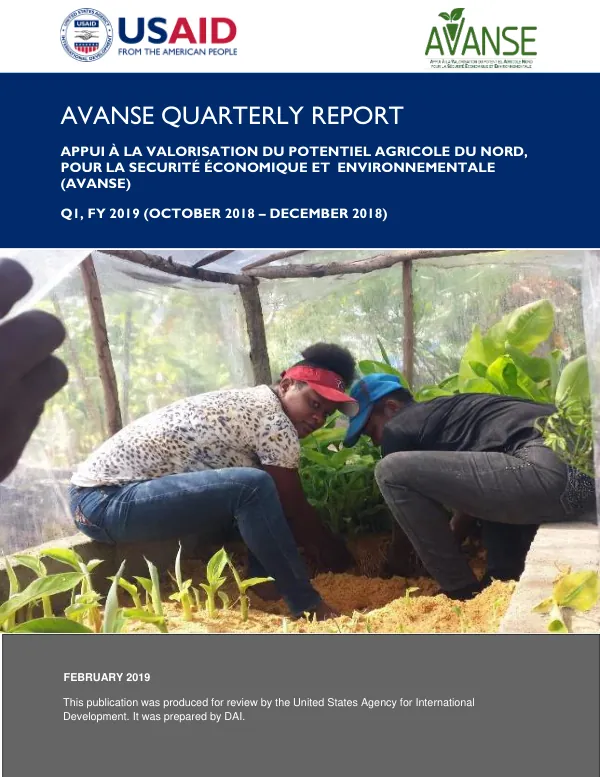
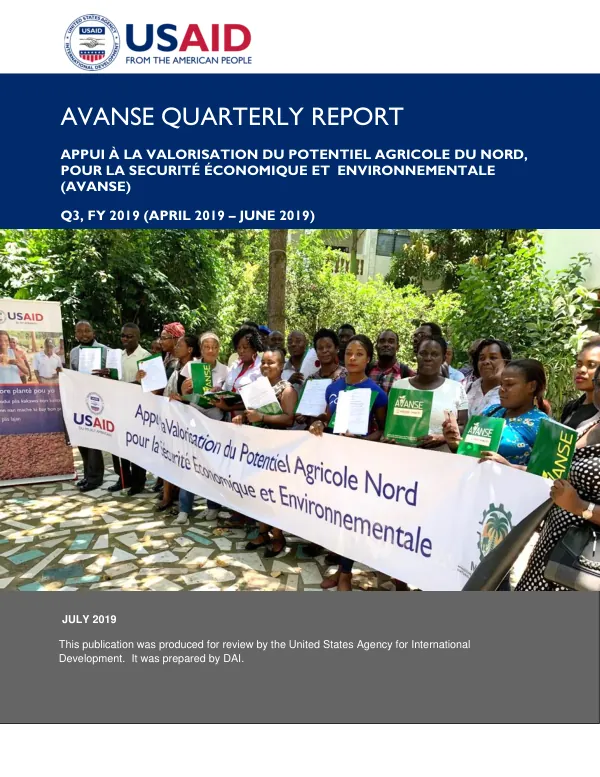
The agricultural development initiative in AVANSE, Northern Haiti, continued to focus on sustainability during the third quarter of fiscal year 2018.
2018 · 120 pages
Sign in to readA free account is required to download.
Abstract
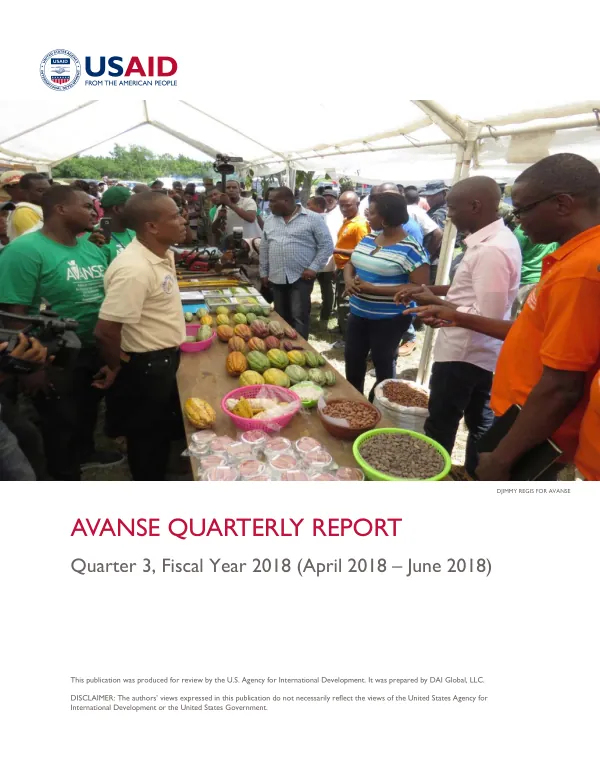
The team engaged in various activities to ensure that changes in farmer behavior outlast the project. In the area of orchard maintenance, 441 cacao producers received training on organic pest and disease control methods. An action plan was prepared to address pest damage, and growers were assisted in applying better pruning methods for older cacao orchards. The AVANSE team also supported Community-Based Organizations (CBOs) grantees in developing their administrative and organizational plans. This will enable them to continue protecting fragile hillside agroforestry systems after the project ends. Economic data from the rice value chain was collected, processed, and analyzed by the AVANSE team. The results will provide details of producers' expenses, incomes, and revenues, and offer insights for improving future interventions. AVANSE's ongoing engagement with Farmer Field Schools (FFS) continued during the third quarter. The FFS program aims to improve agricultural productivity and promote sustainable farming practices among smallholder farmers. The program focuses on training farmers in good agricultural practices, integrated pest management, and soil conservation techniques. The AVANSE team worked closely with FFS facilitators to develop training materials and provide technical support to farmers. Irrigation and drainage system upgrades were also a key focus area during the third quarter. The AVANSE team worked with local communities to identify areas where irrigation systems were needed and developed plans for upgrading existing systems. The team also provided training to farmers on irrigation management and water conservation techniques. The upgrades aimed to improve crop yields and reduce water waste, ultimately benefiting smallholder farmers in Northern Haiti. The AVANSE team strengthened its engagement with the Government of Haiti and the private sector during the third quarter. The team worked closely with government agencies to ensure that project activities aligned with national priorities and policies. The team also collaborated with private sector partners to leverage resources and expertise, ultimately benefiting smallholder farmers in Northern Haiti.
Related documents