USAID DEC
Avian Influenza: How to Protect Yourself and Prevent Outbreaks if You Sell Poultry, Other Birds, or Eggs at the Marketplace
Sign inUSAID
Avian Influenza: How to Protect Yourself and Prevent Outbreaks if You Sell Poultry, Other Birds, or Eggs at the Marketplace
Avian influenza, also known as bird flu, is a highly contagious and potentially deadly virus that affects birds.
2009 · 4 pages
Sign in to readA free account is required to download.
Abstract
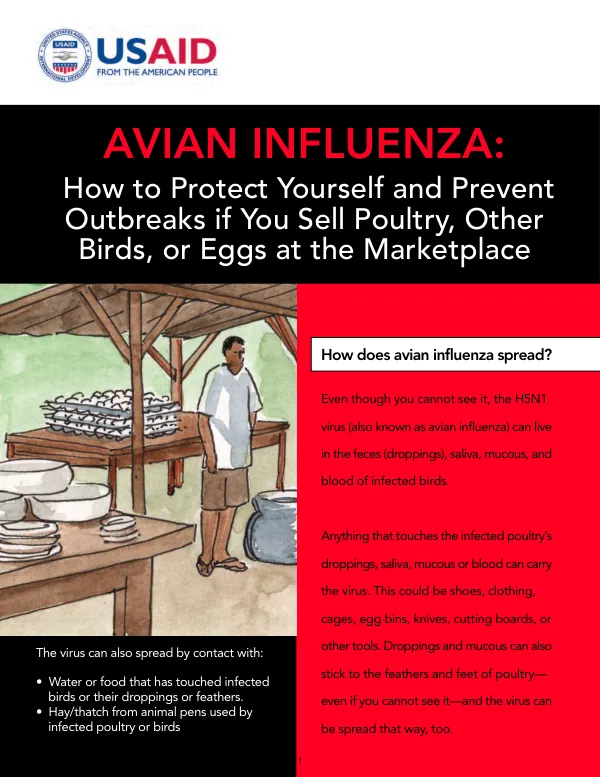
The virus can spread quickly and can cause sudden death in large numbers of birds. Chickens, ducks, turkeys, quails, geese, and swans are all susceptible to the virus. The virus can be spread through contact with infected birds, their droppings, saliva, mucous, and blood. This can occur through direct contact with the birds, their feathers, or their living environment. The virus can also be spread through contaminated food and water that has come into contact with infected birds. To prevent the spread of avian influenza, it is essential to follow proper hygiene practices. This includes washing hands with soap and water before and after handling birds, their equipment, or their living environment. It is also crucial to avoid slaughtering or slaughtering birds in public places, as this can increase the risk of transmission. When selling poultry or other birds at the marketplace, it is essential to follow specific guidelines to prevent the spread of avian influenza. These guidelines include: - Washing areas that may have come into contact with infected birds or equipment from other farms or markets with soap and water. - Not allowing birds to mingle with other birds, especially ducks, which can be infected with avian influenza. - Selling and slaughtering only healthy birds. - Following regulations for labeling and stamping uncooked food to confirm its origin. In addition to these guidelines, it is crucial to properly dispose of waste from birds, including droppings, feathers, and blood. This can be done by burying, burning, or placing the waste in a bag and disposing of it in a trash bin with a lid. If you have come into contact with sick or dead birds, it is essential to monitor your health for at least 7 days. If you experience any symptoms, such as a fever over 38° C, sore throat, or trouble breathing, you should seek medical attention immediately. Overall, preventing the spread of avian influenza requires a combination of proper hygiene practices, proper hygiene practices, and following specific guidelines for handling and selling poultry or other birds.