USAID DEC
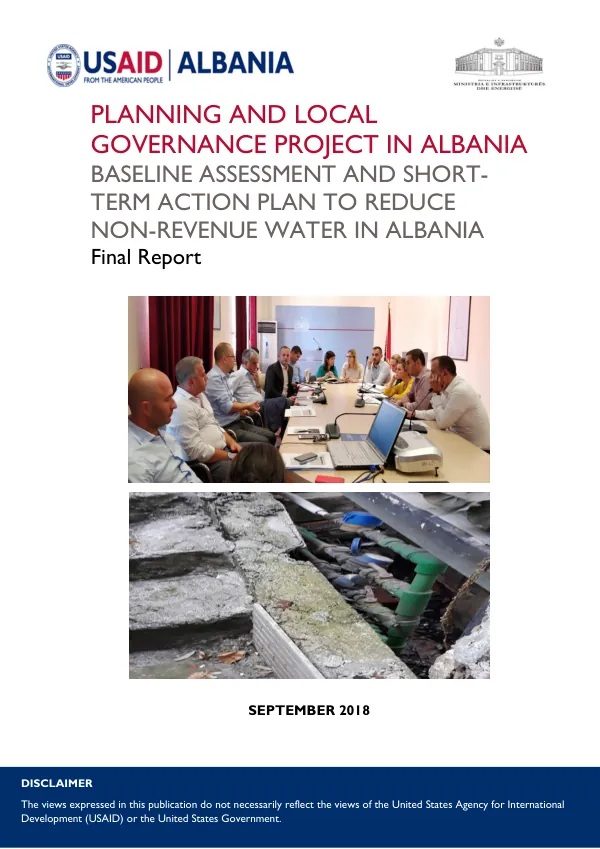
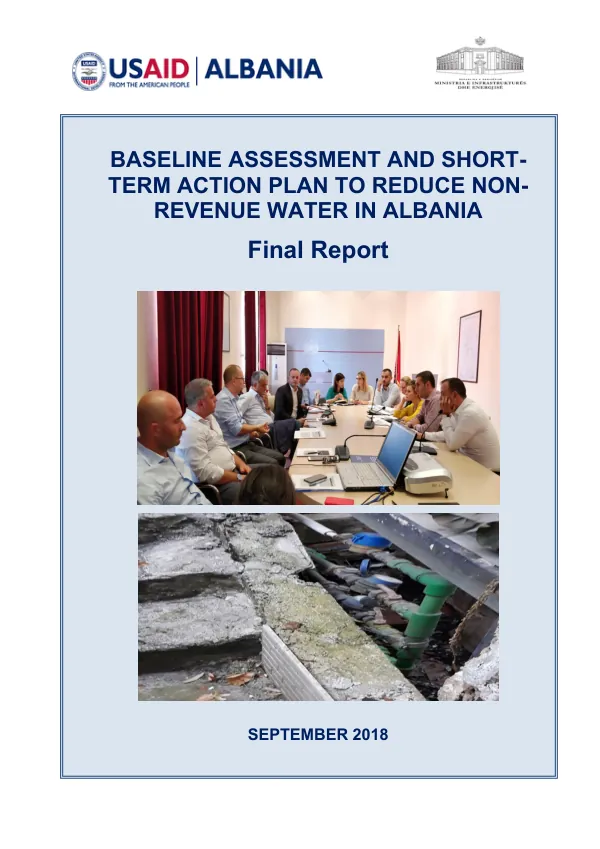
Baseline Assessment and Short-Term Action Plan to Reduce Non-Revenue Water in Albania: Final Report
Sign inUSAID DEC
Baseline Assessment and Short-Term Action Plan to Reduce Non-Revenue Water in Albania: Final Report
The water supply sector in Albania is characterized by a high level of non-revenue water (NRW) losses.
2020 · 146 pages
Sign in to readA free account is required to download.
Abstract
According to the data, the country's water supply and sewerage companies have a significant number of leaks and unauthorized connections, resulting in substantial financial losses. The main causes of NRW losses are attributed to aging infrastructure, inadequate maintenance, and inadequate metering and billing systems. The baseline assessment and short-term action plan to reduce NRW in Albania aim to address these issues by implementing a comprehensive strategy to improve the efficiency of water supply and sewerage services. The plan focuses on reducing real losses, which account for approximately 40% of total NRW, and apparent losses, which account for around 60%. The strategy involves the implementation of a water audit and benchmarking system to identify and address leaks and unauthorized connections. The plan also includes the development of a NRW reduction action plan, which outlines the specific steps to be taken to reduce NRW losses. The action plan includes the implementation of a district metering system, the replacement of old infrastructure, and the improvement of metering and billing systems. The plan also involves the establishment of a monitoring and benchmarking unit to track progress and identify areas for improvement. The short-term action plan for NRW reduction includes the following activities: 1. Conducting a water balance study to identify the main causes of NRW losses. 2. Implementing a district metering system to monitor water consumption. 3. Replacing old infrastructure to reduce leaks and unauthorized connections. 4. Improving metering and billing systems to ensure accurate billing. 5. Establishing a monitoring and benchmarking unit to track progress and identify areas for improvement. The plan also includes the development of a cost-benefit analysis to evaluate the financial impact of the proposed actions. The analysis shows that the implementation of the NRW reduction action plan will result in significant financial savings for the water supply and sewerage companies. The plan also includes the development of a communication strategy to raise awareness among the public and stakeholders about the importance of reducing NRW losses. The strategy involves the use of various media channels, including social media, to disseminate information and promote the plan. The plan also includes the development of a monitoring and evaluation framework to track progress and identify areas for improvement. The framework involves the use of key performance indicators (KPIs) to measure the effectiveness of the plan. The plan also includes the development of a capacity-building program to enhance the skills and knowledge of water supply and sewerage staff. The program involves the provision of training and technical assistance to staff to ensure that they have the necessary skills and knowledge to implement the plan. The plan also includes the development of a budget and financing plan to ensure that the necessary resources are available to implement the plan. The plan involves the allocation of funds to support the implementation of the NRW reduction action plan. The plan also includes the development of a stakeholder engagement plan to ensure that all stakeholders are informed and involved in the implementation of the plan. The plan involves the use of various stakeholder engagement tools, including public consultations and stakeholder meetings, to ensure that all stakeholders are informed and involved in the implementation of the plan. The plan also includes the development of a risk management plan to identify and mitigate potential risks associated with the implementation of the plan. The plan involves the use of various risk management tools, including risk assessments and risk mitigation strategies, to identify and mitigate potential risks associated with the implementation of the plan. The plan also includes the development of a contingency plan to address any unexpected events or circumstances that may arise during the implementation of the plan. The plan involves the use of various contingency planning tools, including scenario planning and contingency planning strategies, to address any unexpected events or circumstances that may arise during the implementation of the plan. The plan also includes the development of a sustainability plan to ensure that the plan is sustainable and can be sustained over time. The plan involves the use of various sustainability planning tools, including sustainability assessments and sustainability planning strategies, to ensure that the plan is sustainable and can be sustained over time. The plan also includes the development of a monitoring and evaluation plan to track progress and identify areas for improvement. The plan involves the use of various monitoring and evaluation tools, including KPIs, to track progress and identify areas for improvement. The plan also includes the development of a communication plan to raise awareness among the public and stakeholders about the importance of reducing NRW losses. The plan involves the use of various communication tools, including social media, to disseminate information and promote the plan.
Related documents