USAID DEC
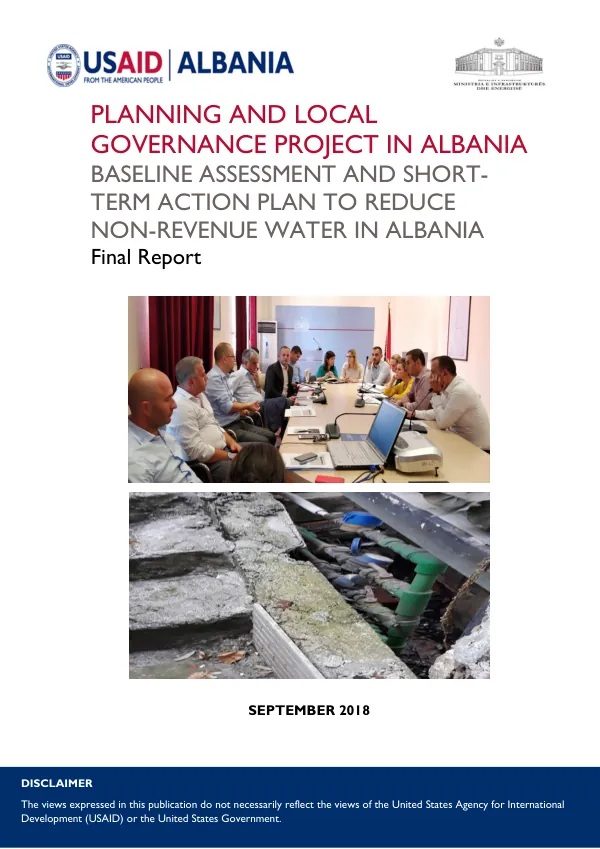
Baseline Assessment and Short-term Action Plan to Reduce NRW in Albania
The water supply sector in Albania is characterized by a complex institutional framework, with multiple stakeholders involved in the management of water utilities.
2018 · 133 pages
Sign in to readA free account is required to download.
Abstract
The country's water supply and sewerage code, established in 2008, outlines the regulatory framework for the sector. However, the code has been criticized for being inadequate in addressing the challenges faced by the sector. Non-revenue water (NRW) is a significant issue in Albania, with estimates suggesting that up to 40% of the country's water supply is lost due to leaks, theft, and other factors. The IWA water balance is a widely accepted method for measuring NRW, which involves tracking the water supply from source to consumer. Albania's water utilities have been slow to adopt this approach, with many relying on outdated methods for measuring water losses. The importance of NRW in company performance cannot be overstated. High levels of NRW can lead to significant financial losses for water utilities, as well as decreased customer satisfaction. International best practices in managing water losses emphasize the need for a holistic approach, involving the use of advanced technologies, such as smart meters and leak detection systems, as well as the implementation of water-saving measures. A review of the current NRW situation in Albania reveals that the country's water supply and sewerage companies are struggling to manage water losses. Key data on water supply services, including water production, distribution, and consumption, highlights the need for improved management practices. Data quality and reliability are also major concerns, with many water utilities relying on outdated and inaccurate data. A holistic NRW strategic plan has been developed to address the challenges faced by Albania's water sector. The plan aims to reduce NRW by 20% within the next three years, through a combination of short-term and long-term interventions. The plan involves the implementation of a water audit and benchmarking program, as well as the development of an organizational structure for NRW management. The short-term intervention plan for NRW reduction involves the implementation of a series of measures, including the installation of smart meters, the use of leak detection systems, and the implementation of water-saving measures. The plan also includes the development of a water balance for eight selected companies, as well as cost estimates for the short-term action plans. The implementation of the NRW reduction action plan will require significant investment and resources. However, the benefits of reducing NRW are clear, including improved financial performance, increased customer satisfaction, and a reduced environmental impact. The plan is expected to have a positive impact on the country's water sector, and will contribute to the achievement of the country's development goals.
Related documents