FHI 360
Baseline Findings from the Masculinité, Famille et Foi Study in Kinshasa, DRC
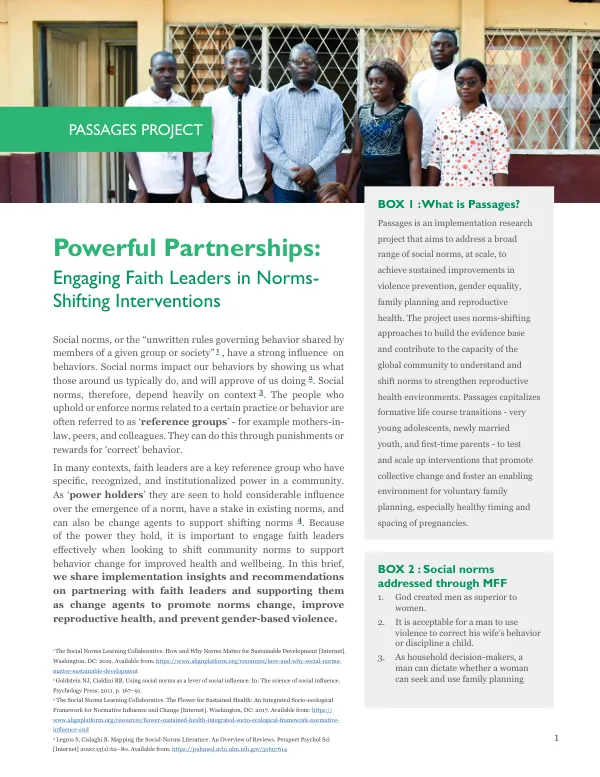
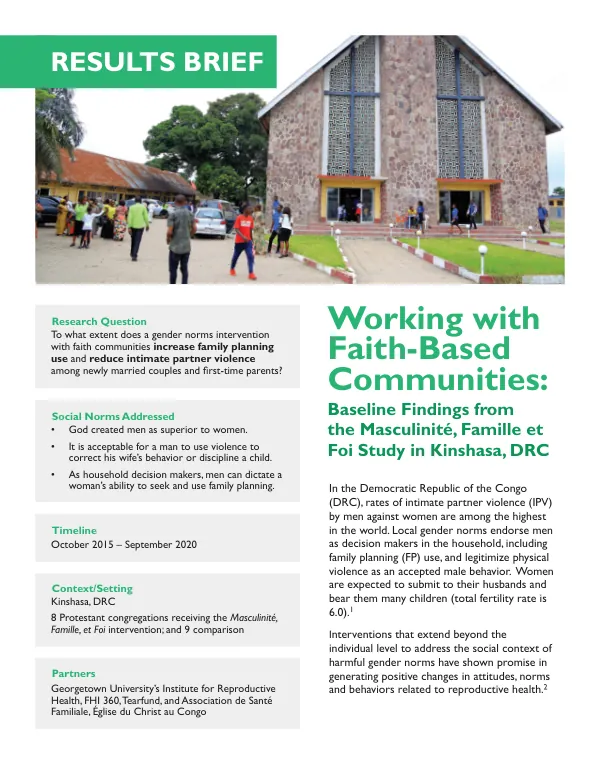
The Masculinité, Famille, et Foi (MFF) intervention targets young couples who are newly married or first-time parents, church congregation members, faith leaders, and gender champions in Kinshasa, Democratic Republic of the Congo.
2020 · 8 pages
Sign in to readA free account is required to download.
Abstract
The intervention aims to transform masculinities and promote gender equality, reducing intimate partner violence (IPV) and increasing family planning (FP) use. The baseline findings from the MFF study indicate that local gender norms endorse men as decision makers in the household, including family planning, and legitimize physical violence as an accepted male behavior. Women are expected to submit to their husbands and bear them many children. Approximately one-quarter of women reported experiencing IPV, and one-third of men reported perpetrating some form of IPV in the previous 12 months. The majority of survey respondents agreed that male partners should have a role in bringing up children beyond financial providers. However, in-depth interviews indicated less supportive personal attitudes toward male partners contributing to household work. The large majority of survey respondents perceived that it was not typical behavior in their congregation for husbands to share household work responsibilities with their wives. Regarding IPV, very few survey respondents expressed the attitude that IPV was appropriate behavior. However, if justifications were given for IPV, about one-third of women and one-quarter of men believed IPV to be justified. About one-quarter of male and female survey respondents perceived that it was typical behavior in their congregation for husbands to perpetrate IPV on their wives. The study also found that nearly two-thirds of men and women survey respondents believed that religious scripture dictates that a husband should discipline, including using violence, his wife. Despite this belief, very few perceived that faith leaders or other members of the congregation approved of IPV. In terms of FP, around 40 percent of women reported that they themselves or their partner currently used a modern FP method, while over 80 percent of men and women desired to use modern FP in the future. While a large majority of respondents believed modern FP effective for avoiding unwanted pregnancies, half or more men and women believed that this came at a cost, specifically future difficulty getting pregnant and/or negative side effects. The MFF intervention aims to address these social norms and promote positive changes in attitudes, norms, and behaviors related to reproductive health. The study's findings provide a baseline understanding of the social context in which the intervention will operate, highlighting the need for a comprehensive approach that addresses the root causes of IPV and promotes gender equality.