MANAGEMENT SYSTEMS INTERNATIONAL
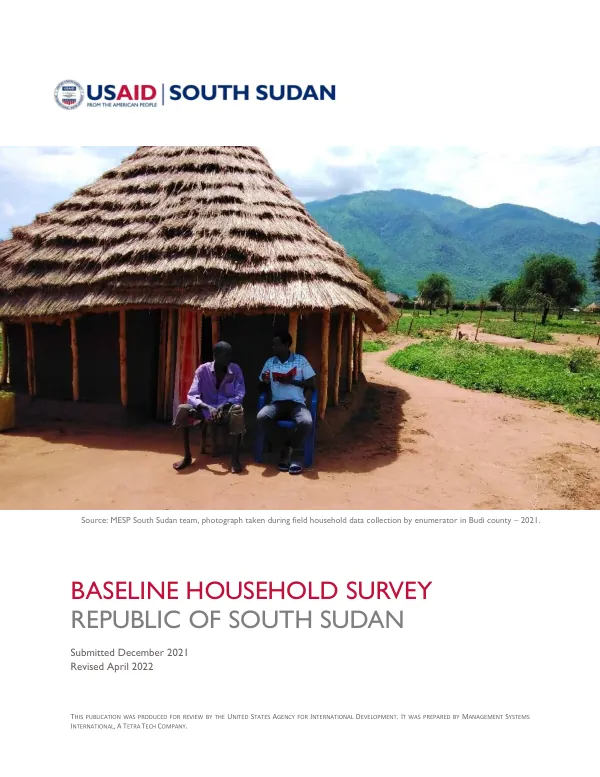
Baseline Household Survey Report: Republic of South Sudan
The Baseline Household Survey in the Republic of South Sudan was conducted in 2021 and revised in 2022.
2021 · 140 pages
Sign in to readA free account is required to download.
Abstract
The survey aimed to assess the resilience of households in the face of shocks and stresses. The study used a mixed-methods approach, combining both quantitative and qualitative data collection methods. The survey covered 13 counties in South Sudan, with a total sample size of 2,400 households. The survey found that food security was a major concern for households in South Sudan, with 63% of households experiencing food insecurity. The most common shocks faced by households included conflict, cattle raiding, and early marriage. Social norms also played a significant role in household resilience, with 71% of households accepting negative social norms such as sexual and gender-based violence. The study also found that households with higher levels of social capital and bonding social capital were more resilient to shocks and stresses. Additionally, households with higher levels of aspirations and locus of control were more likely to engage in risk management practices. The study concluded that household resilience in South Sudan is influenced by a range of factors, including food security, social norms, and social capital. The survey's findings have implications for programming and policy in South Sudan. The study recommends that programs focus on improving food security, promoting positive social norms, and enhancing social capital. Additionally, the study suggests that programs should target households with lower levels of aspirations and locus of control to improve their risk management practices.