USAID
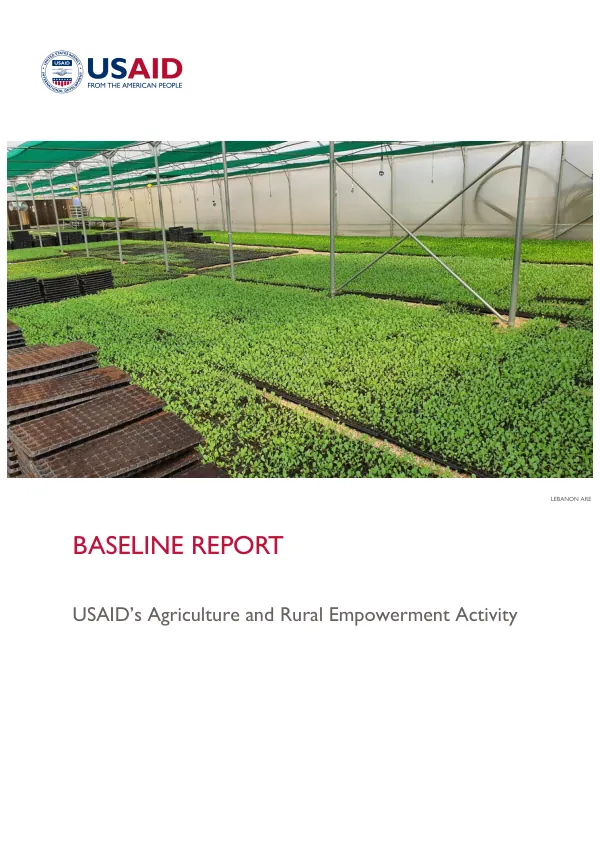
Baseline Report: USAID’s Agriculture and Rural Empowerment Activity in Lebanon
The Agriculture and Rural Empowerment Activity in Lebanon is a USAID-funded initiative aimed at improving the agricultural sector in the country.
2021 · 266 pages
Sign in to readA free account is required to download.
Abstract
The activity focuses on enhancing the productivity and competitiveness of small ruminant dairy, fresh and processed vegetables, fresh and dried herbs, grapes, stone fruit, and citrus, as well as potatoes, alliums, and fodder crops. Small ruminant dairy is a key sector in Lebanon, with over 1.3 million small ruminants raised in the country. The majority of these animals are raised in the Bekaa and Mount Lebanon regions. Farmers in these regions face challenges related to feed and pasture management, as well as access to markets and value-added products. The activity aims to improve the productivity and profitability of small ruminant dairy by providing training and support to farmers, as well as promoting the development of value-added products such as cheese and yogurt. Fresh and processed vegetables are another important sector in Lebanon, with the country producing a wide range of vegetables including tomatoes, cucumbers, and bell peppers. The activity aims to improve the productivity and competitiveness of this sector by providing training and support to farmers, as well as promoting the development of value-added products such as pickled vegetables and sauces. Fresh and dried herbs are also an important sector in Lebanon, with the country producing a wide range of herbs including parsley, mint, and thyme. The activity aims to improve the productivity and competitiveness of this sector by providing training and support to farmers, as well as promoting the development of value-added products such as herbal teas and essential oils. Grapes, stone fruit, and citrus are also important sectors in Lebanon, with the country producing a wide range of fruits including grapes, apples, and oranges. The activity aims to improve the productivity and competitiveness of these sectors by providing training and support to farmers, as well as promoting the development of value-added products such as wine and juice. Potatoes, alliums, and fodder crops are also important sectors in Lebanon, with the country producing a wide range of crops including potatoes, onions, and garlic. The activity aims to improve the productivity and competitiveness of these sectors by providing training and support to farmers, as well as promoting the development of value-added products such as potato chips and onion powder. The activity uses a variety of methods to achieve its goals, including training and support to farmers, as well as promoting the development of value-added products. The activity also conducts surveys and assessments to identify the needs and challenges of farmers and the agricultural sector as a whole. The activity has several key findings, including the fact that small ruminant dairy is a significant sector in Lebanon, with over 1.3 million small ruminants raised in the country. The activity also found that farmers in the Bekaa and Mount Lebanon regions face challenges related to feed and pasture management, as well as access to markets and value-added products. The activity also found that fresh and processed vegetables are an important sector in Lebanon, with the country producing a wide range of vegetables including tomatoes, cucumbers, and bell peppers. The activity also found that farmers in this sector face challenges related to access to markets and value-added products. The activity also found that fresh and dried herbs are an important sector in Lebanon, with the country producing a wide range of herbs including parsley, mint, and thyme. The activity also found that farmers in this sector face challenges related to access to markets and value-added products. The activity also found that grapes, stone fruit, and citrus are important sectors in Lebanon, with the country producing a wide range of fruits including grapes, apples, and oranges. The activity also found that farmers in these sectors face challenges related to access to markets and value-added products. The activity also found that potatoes, alliums, and fodder crops are important sectors in Lebanon, with the country producing a wide range of crops including potatoes, onions, and garlic. The activity also found that farmers in these sectors face challenges related to access to markets and value-added products. The activity has several recommendations for improving the productivity and competitiveness of the agricultural sector in Lebanon. These recommendations include providing training and support to farmers, promoting the development of value-added products, and improving access to markets and value-added products. The activity also recommends that the government of Lebanon provide support to the agricultural sector, including providing funding for research and development, as well as providing support for the development of value-added products. The activity also recommends that the private sector play a more active role in the development of the agricultural sector, including providing funding for research and development, as well as providing support for the development of value-added products. Overall, the Agriculture and Rural Empowerment Activity in Lebanon is an important initiative aimed at improving the productivity and competitiveness of the agricultural sector in the country. The activity has several key findings and recommendations for improving the sector, and is an important step towards achieving the goals of the activity.