USAID DEC
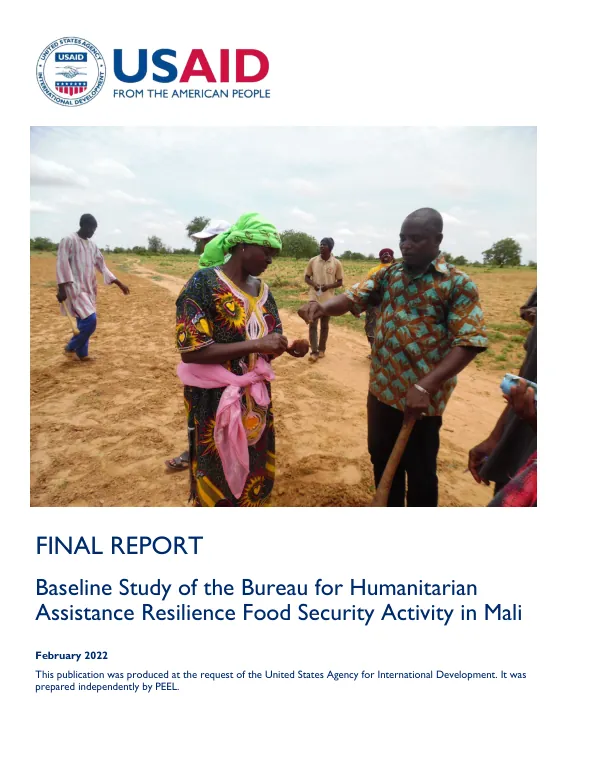
Baseline Study of the Bureau for Humanitarian Assistance Resilience Food Security Activity in Mali
Sign inUSAID DEC
Baseline Study of the Bureau for Humanitarian Assistance Resilience Food Security Activity in Mali
The Bureau for Humanitarian Assistance Resilience Food Security Activity in Mali was initiated to address food insecurity and promote resilience among vulnerable populations.
2022 · 196 pages
Sign in to readA free account is required to download.
Abstract
The activity focuses on improving agricultural productivity, enhancing access to markets, and increasing household income. The baseline study, conducted in February 2022, aimed to assess the current situation and identify areas for intervention. Household demographics in the study area reveal a high proportion of households with limited access to education, clean water, and sanitation facilities. The majority of households are headed by women, and a significant portion of the population relies on agriculture as their primary source of income. The study population is characterized by a high level of poverty, with many households struggling to meet their basic needs. Food security and resilience indicators suggest that the study population is highly vulnerable to shocks and stresses. The Household Hunger Scale indicates that a significant proportion of households experience hunger, and the Food Consumption Score reveals that many households have limited access to nutritious food. The Ability to Recover from Shocks and Stresses Index suggests that households are struggling to recover from recent shocks, and the Resilience Capacities index indicates that households have limited capacity to absorb and recover from future shocks. Agricultural practices and technologies in the study area are characterized by low levels of adoption of modern agricultural practices and limited access to inputs such as fertilizers and seeds. The yield of staple crops is below regional benchmarks, and many households rely on subsistence farming. The study highlights the need for interventions that improve agricultural productivity, enhance access to markets, and increase household income. Health and nutrition indicators suggest that the study population is highly vulnerable to malnutrition. Women's antenatal care and contraceptive prevalence rates are low, and women's dietary diversity is limited. Children's nutritional status is also a concern, with high rates of stunting and wasting. The study recommends interventions that improve access to nutrition services, promote healthy behaviors, and enhance women's empowerment. Gender indicators suggest that women play a critical role in household decision-making, particularly in relation to cash and modern contraception. However, women's empowerment is limited, and many women face barriers to accessing education, healthcare, and economic opportunities. The study recommends interventions that promote women's empowerment, enhance access to education and healthcare, and increase women's economic opportunities. Based on the findings of the baseline study, the following recommendations are made: 1. Apply best practices for sanitation and hygiene interventions to improve access to clean water and sanitation facilities. 2. Work toward supported community-based water and other asset management to enhance access to water and other essential services. 3. Expand nutrition services and promote service uptake to improve access to nutrition services and enhance women's empowerment. 4. Use digital tools to support access to financial services and impact across the market system to enhance household income and economic opportunities. The implementation of these recommendations has the potential to improve food security and resilience among vulnerable populations in Mali, and to enhance household income and economic opportunities.
Related documents