USAID DEC
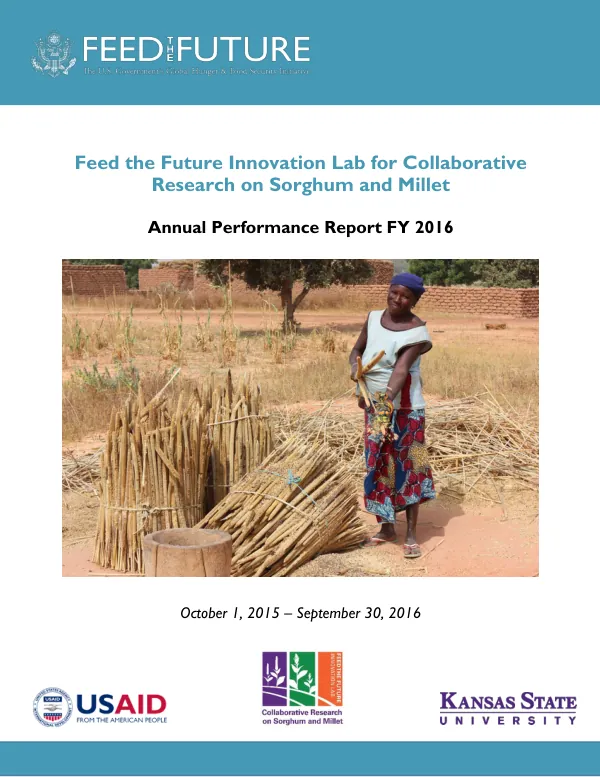
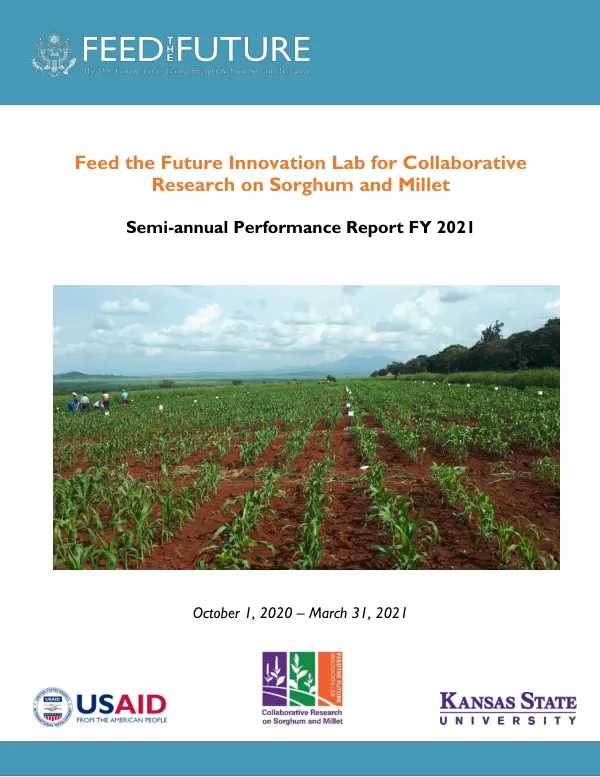
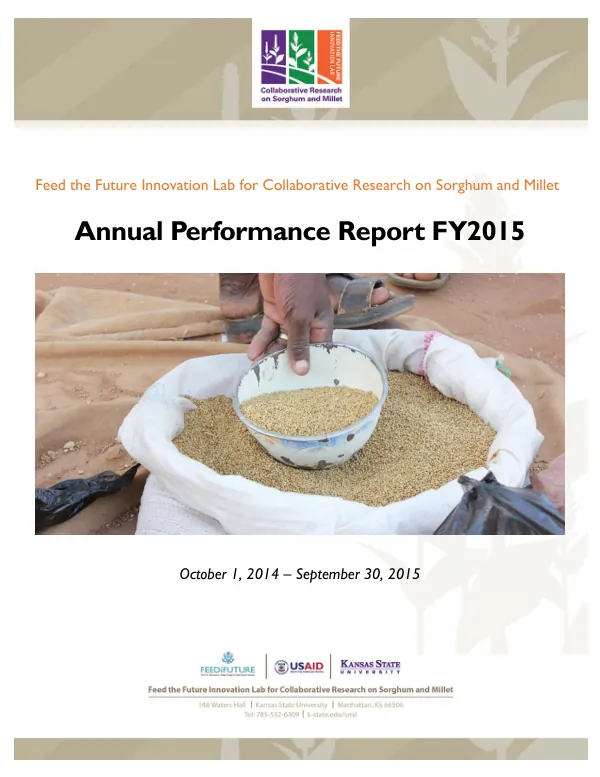
Final Report: Feed the Future Innovation Lab for Collaborative Research on Sorghum and Millet
Sign inCORNELL UNIVARSITY INTERNATIONAL
Final Report: Feed the Future Innovation Lab for Collaborative Research on Sorghum and Millet
The Sorghum and Millet Innovation Lab completed its first five-year phase from 2013 to 2018 and launched activities for a second phase that will end in 2023.
2018 · 24 pages
Sign in to readA free account is required to download.
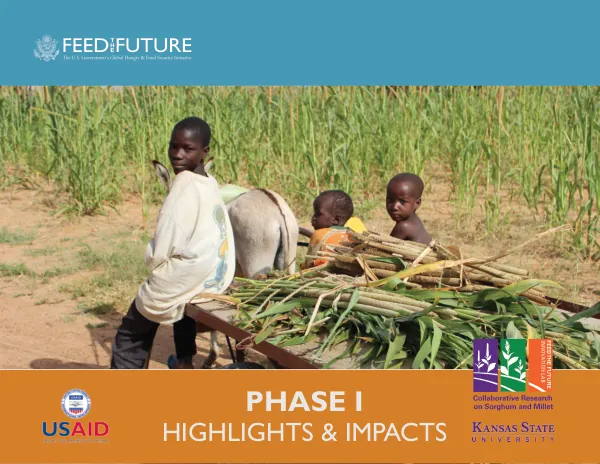
Abstract
The program's objectives have remained constant, with a focus on improving food security and resilience in Ethiopia, Niger, and Senegal. The lab's research portfolio includes activities to build human and institutional capacity, with a goal of developing the research and development systems in the target countries. Significant advances were made in the first phase, including the release of improved sorghum varieties and hybrids, the establishment of proof-of-concept on agronomic interventions to reduce yield loss due to pests and poor seedling establishment for pearl millet, and the development of value-added food products with highly nutritious properties. Consumer acceptance studies on new food products and the publication of gender-differentiated technology priorities in Ethiopia were also notable achievements. In Ethiopia, strategic and applied advances were made, including the discovery of genes conferring anthracnose resistance to sorghum, the release of a hybrid sorghum variety, and hedonic testing of new sorghum hybrids with superior functionality and nutritional properties for food products. In West Africa, breeding programs advanced new sorghum varieties with drought and heat resistance, new materials with superior food and forage quality properties, and identified lines with resistance to sorghum midge and storage pests. The Sorghum and Millet Innovation Lab has a strong network of partners, including universities, research institutions, and organizations from the United States, Haiti, Germany, France, Senegal, Ethiopia, South Africa, Mali, Burkina Faso, Niger, and other countries. The lab's research results are employed to identify practical technological and management solutions to address key challenges identified by end users and target groups. The lab's defining objective is to lead research for development with the overarching goal of identifying improved techniques and technologies for greater food security and resilience. By setting key priorities that drive real solutions to real challenges in collaboration with strategic partners and end users, the lab is contributing to agricultural development on a global scale. The lab's research focuses on three areas of inquiry: genetic enhancement, production systems management, and value-added products and market development. In the genetic enhancement area, the lab is developing innovative approaches to integrate genomics-assisted breeding, regional phenotyping, and farmer participation to improve resistance against important yield-robbing stresses while enhancing the functionality for food, feed, and forage of both sorghum and millet. In the production systems management area, the lab is developing a novel innovation to improve seedling establishment and eventual yield through the adaptation of seedballs to varying agroecological and social environments. The lab has made significant progress in building local human and institutional capacity in the target countries, with nearly 10,000 trainees participating in outreach programming targeted at new cereal production techniques, crop protection, storage management, marketing, and added-value products. The lab's trainings have helped sorghum- and millet-producing communities become more resilient to emerging threats and better positioned to take advantage of new technologies, crop management practices, and entrepreneurial opportunities.