USAID. MISSION TO ZAIRE
Basic rural health II
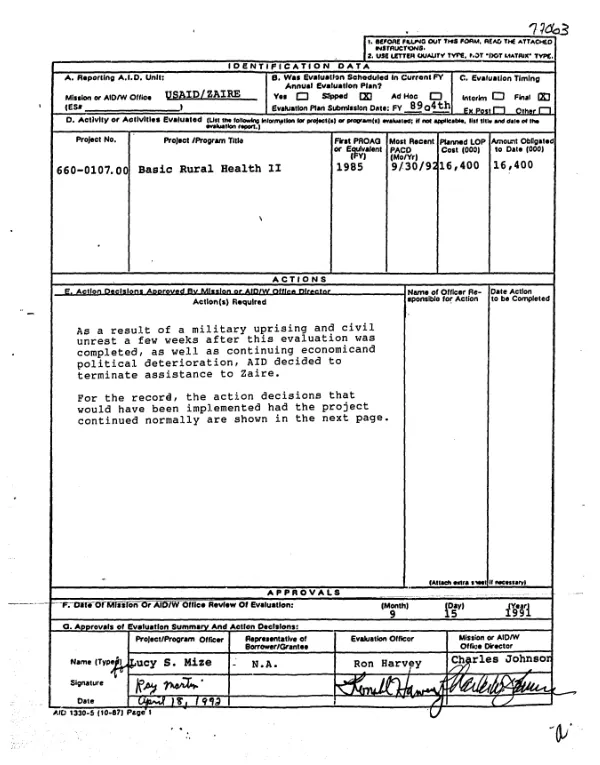
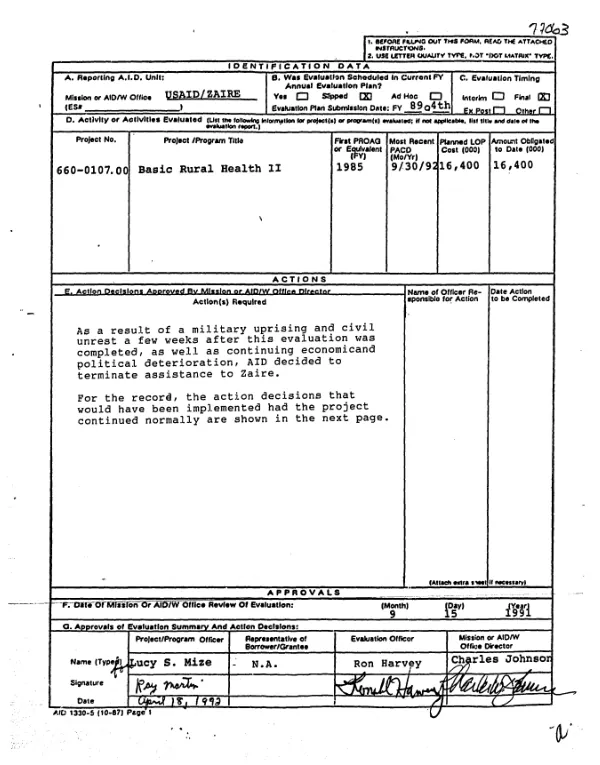
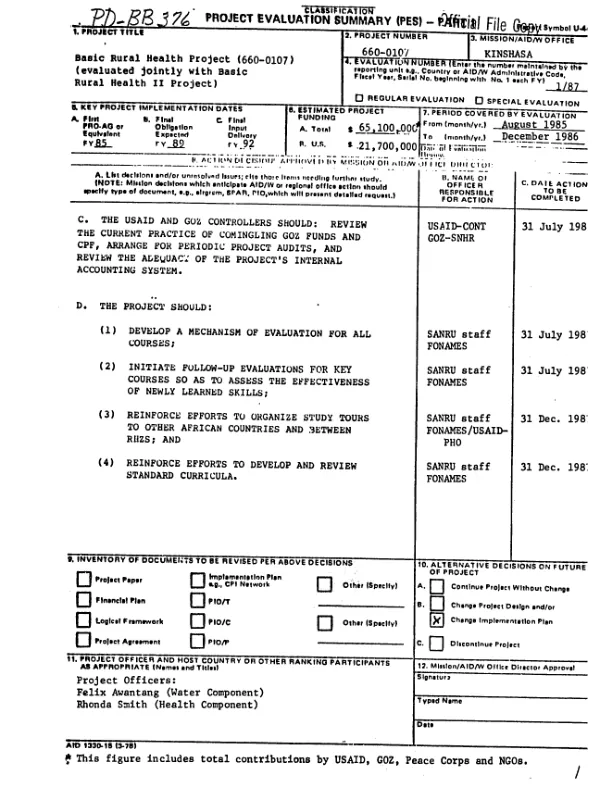
Summarizes final evaluation (XD-ABE-094-A) of a project to help Zaire to expand its primary health care (PHC) system.
1992
Sign in to readA free account is required to download.
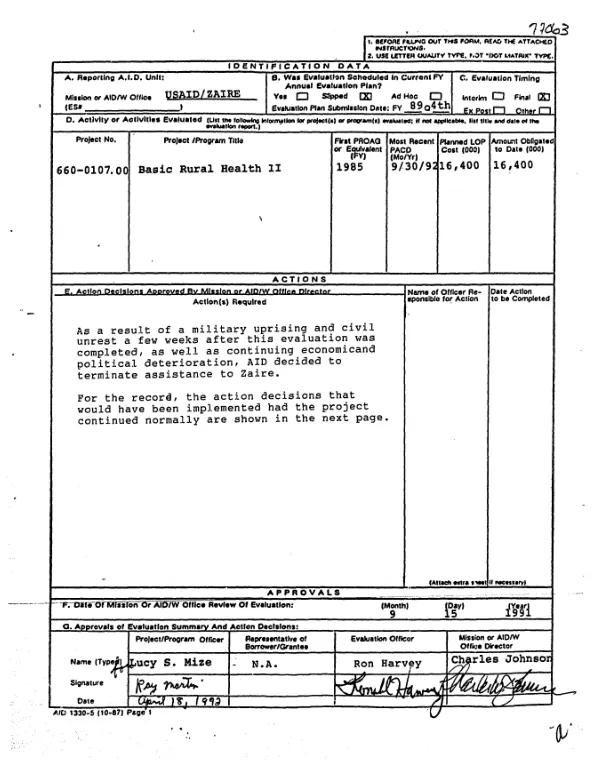
Abstract
The evaluation covered the period FY85-9/91. The project has been dramatically successful in initiating or extending PHC activities in 42 of the targeted 50 rural health zones. In addition, support has been continued to 49 of the 50 zones assisted during a predecessor project. Project assistance has included: training; vehicles and spare parts; physical rehabilitation of health centers, offices, and hospitals; infrastructure improvements; medical and office furnishings and supplies; and operating subsidies. Due to the country"s current economic and political crisis, project assistance is insufficient to enable many health zones to expand operations and achieve sustainable PHC systems. In the zones which receive only government assistance (mainly in the form of salary payments or program subsidies), the project is in effect acting as a shadow Ministry of Health, but this is at best a holding action that enables the zones to maintain minimal levels of service. In the zones served by religious NGO"s, the project generally provides complementary assistance, especially in the areas of training and supervision. Several lessons were learned. (1) Community participation is essential, beginning with an exercise to define local people"s health priorities. (2) When counterpart support is not forthcoming, projects should pursue alternative implementation strategies. (3) A decentralized project allows for community differences and ensures that implementation will be focused on the actual needs of the community and not on academic ideals. However, supervision from headquarters is essential to prevent sites from straying too far from project goals. (4) To be effective, management training -- an essential component of all development programs -- must deal with local realities (e.g., customs, religions, etc.). (5) Computer systems and questionnaires are effective planning tools and a good feedback system for evaluating whether project interventions are actually resolving the problems described. (6) Procurement should be the first priority when implementing a project. In the present project, the delay in procuring commodities, notably solar equipment, significantly delayed implementation of vaccination activities. (7) Family planning activities, which have not been a project priority, have no momentum of their own and must be pushed constantly. In 9/91, shortly after the evaluation, USAID/Z personnel were evacuated due to the worsening political situation. Finally, A.I.D. decided to terminate assistance to Zaire. Currently (4/92), the project exists in a much diminished form, with funding from UNICEF and the remaining USAID/Z dollar obligation. The fact that the project continues, despite anarchy, hyper-inflation, and limited external support, is testimony to how well it was implemented in better times.