USAID
Before Discharge, Every Mother and Newborn Needs Counseling and Care
Every mother and newborn requires counseling and care before discharge from a healthcare facility.
2016 · 2 pages
Sign in to readA free account is required to download.
Abstract
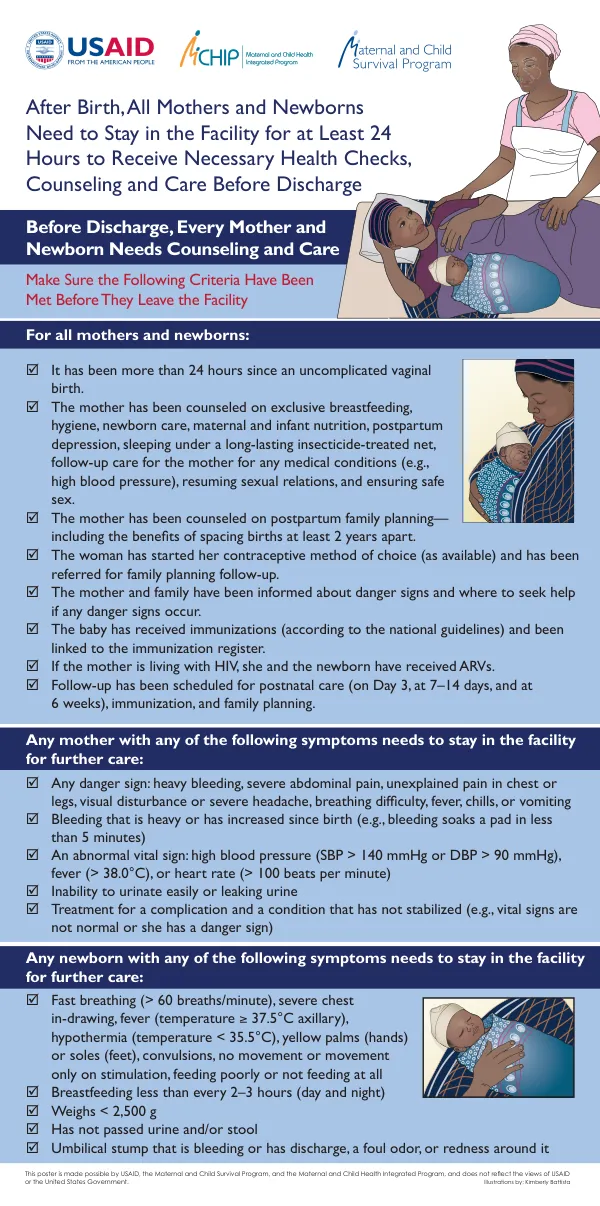
The World Health Organization recommends that all mothers and newborns stay in the facility for at least 24 hours to receive necessary health checks, counseling, and care. This period allows healthcare providers to identify and address any potential complications or concerns. Newborns with certain symptoms or conditions require further care and should not be discharged from the facility. These symptoms include fast breathing, severe chest in-drawing, fever, hypothermia, yellow palms or soles, convulsions, no movement or movement only on stimulation, and feeding poorly or not feeding at all. Additionally, newborns who weigh less than 2,500 grams, have not passed urine and/or stool, or have an umbilical stump with bleeding, discharge, or a foul odor require further care. Mothers with certain symptoms or conditions also require further care and should not be discharged from the facility. These symptoms include heavy bleeding, severe abdominal pain, unexplained pain in the chest or legs, visual disturbance or severe headache, breathing difficulty, fever, chills, or vomiting. Mothers with abnormal vital signs, such as high blood pressure, fever, or an elevated heart rate, or those who are unable to urinate easily or leaking urine also require further care. Before discharge, every mother and newborn needs to meet certain criteria. These criteria include receiving counseling on exclusive breastfeeding, hygiene, newborn care, maternal and infant nutrition, postpartum depression, sleeping under a long-lasting insecticide-treated net, follow-up care for the mother for any medical conditions, resuming sexual relations, and ensuring safe sex. Mothers also need to be counseled on postpartum family planning, including the benefits of spacing births at least 2 years apart. The mother and family need to be informed about danger signs and where to seek help if any danger signs occur. The baby needs to receive immunizations according to national guidelines and be linked to the immunization register. If the mother is living with HIV, she and the newborn need to receive antiretroviral therapy. Follow-up care needs to be scheduled for postnatal care, immunization, and family planning. In addition to these criteria, healthcare providers need to ensure that mothers and newborns have received necessary health checks and care before discharge. This includes monitoring for any danger signs and addressing any potential complications or concerns. By following these guidelines, healthcare providers can ensure that mothers and newborns receive the necessary care and support to promote healthy outcomes and prevent complications.
Related documents