ICAP AT COLUMBIA UNIVERSITY
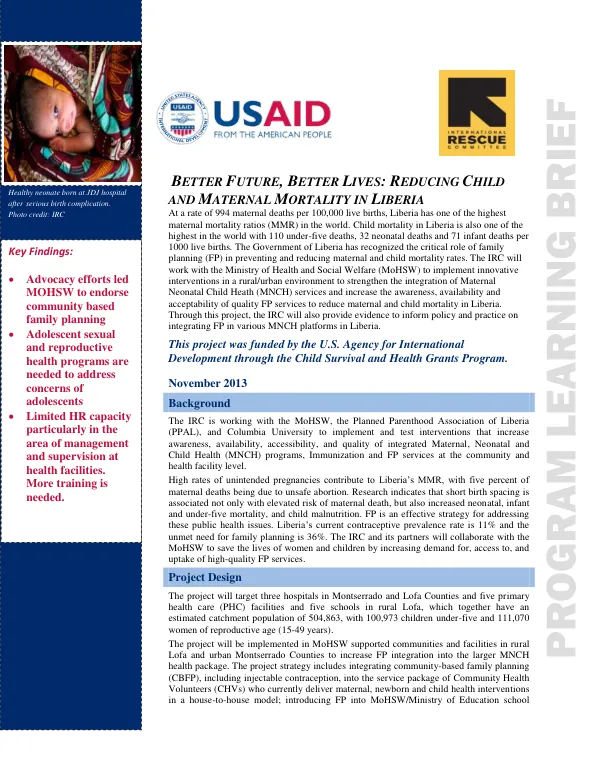
Better Future, Better Lives: Reducing Child and Maternal Mortality in Liberia
In Liberia, maternal mortality rates are among the highest in the world, with 994 maternal deaths per 100,000 live births.
2013 · 3 pages
Sign in to readA free account is required to download.
Abstract
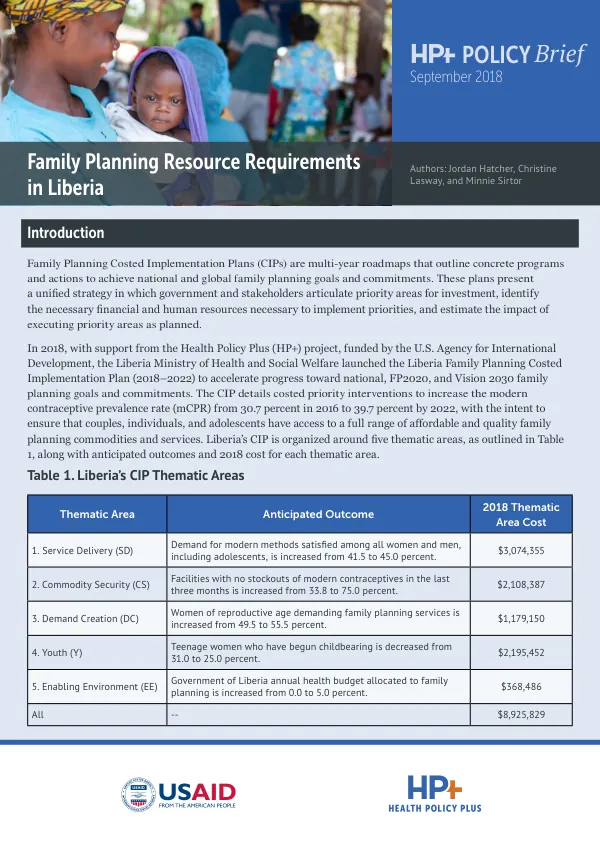
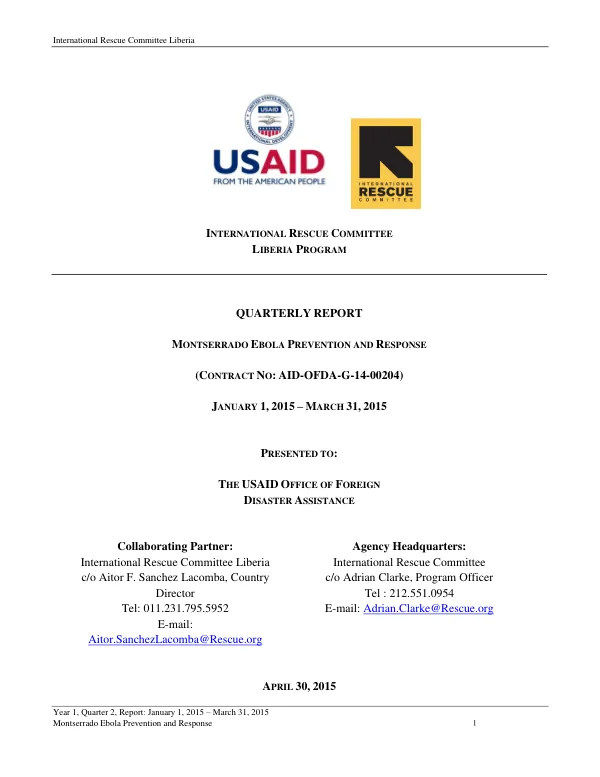
Child mortality in Liberia is also one of the highest in the world, with 110 under-five deaths, 32 neonatal deaths, and 71 infant deaths per 1,000 live births. The Government of Liberia has recognized the critical role of family planning in preventing and reducing maternal and child mortality rates. The IRC will work with the Ministry of Health and Social Welfare (MoHSW) to implement innovative interventions in a rural/urban environment to strengthen the integration of Maternal Neonatal Child Health (MNCH) services and increase the awareness, availability, and acceptability of quality family planning services. The project will target three hospitals in Montserrado and Lofa Counties and five primary health care facilities and five schools in rural Lofa, which together have an estimated catchment population of 504,863. The project will focus on integrating community-based family planning into the service package of Community Health Volunteers (CHVs) who currently deliver maternal, newborn, and child health interventions in a house-to-house model. The project will also introduce family planning into MoHSW/Ministry of Education school health programs and integrate family planning services into the provision of routine MNCH health services, including Extended Program of Immunization (EPI) and antenatal, labor, and delivery care. The project uses multiple methods to monitor and evaluate its findings, including routine program monitoring using the MoHSW Health Management Information System (HMIS), Logistic Management Information System (LMIS), and project reports for five health facilities, three hospitals, and five schools. A baseline survey has been conducted in targeted communities, and preliminary results from the Knowledge, Practice, and Coverage (KPC) survey illustrate that there is a relatively high knowledge of family planning (51%) among the target population. Preliminary findings for the school health component reveal that adolescents are a high-risk group for risky sexual behavior and pregnancy, as evidenced by the high sexuality rates (73%) in adolescents reported by the KPC survey. The IRC conducted an assessment at three hospitals to find out if the Intrauterine Contraceptive Device (IUCD) is acceptable by health workers and patients and to identify key myths and/or misinformation that the project will need to address. The project findings during the first year of implementation revealed that while demand has been created for family planning commodities, limited stocks were not able to meet the increased demand. Focusing on the supply chain and ensuring availability of supplies (RH commodities, vaccines, and antigens, medical supplies) will be a key priority in year two. Continuous advocacy and coordination, integral to the success and sustainability of the program, and advocacy at both the central and county/district level is needed continuously. Coordination between stakeholders and partners regarding progress of the program will demonstrate a positive impact and provide further advocacy opportunities, particularly in order to influence policy change and program design. The IRC is a member of the Commodity Security Working Group and has lobbied for extra supplies for the project. Collaboration between partners and supply chain stakeholders will be essential to minimize commodity stock outs. The project will continue to disseminate results and findings in all technical meetings and other coordination forums.
Related documents