USAID DEC
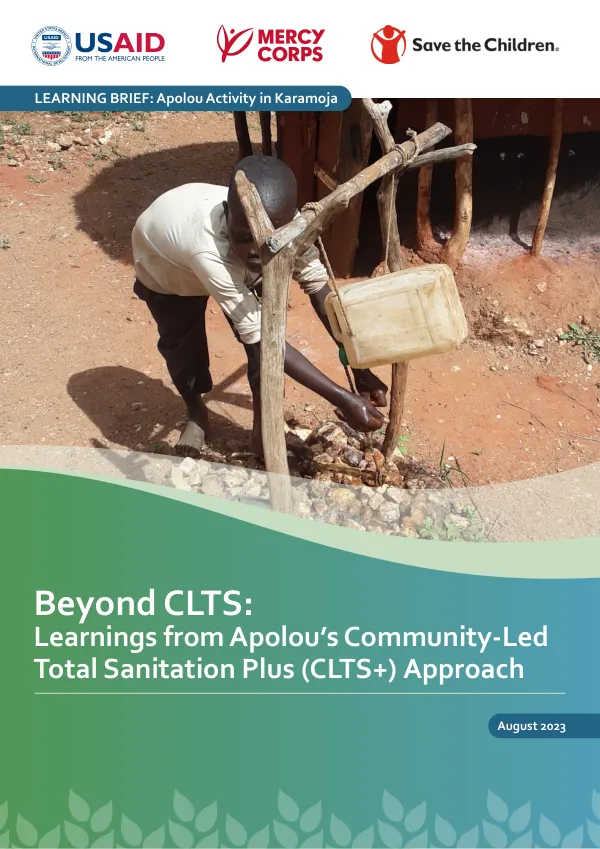
Beyond CLTS: Leveraging Social Mobilization to Address Sanitation and Hygiene in Karamoja through the Home Improvement Campaign (HIC)
Sign inCATHOLIC RELIEF SERVICES ORGANIZATION
Beyond CLTS: Leveraging Social Mobilization to Address Sanitation and Hygiene in Karamoja through the Home Improvement Campaign (HIC)
The Nuyok Resilience Food Security Activity (RFSA) was a 6-year initiative (2017-2023) aimed at building resilience to shocks, enhancing livelihoods, and improving food and nutrition security for at-risk rural families in the Karamoja sub-region of Northeastern Uganda.
2023 · 11 pages
Sign in to readA free account is required to download.
Abstract
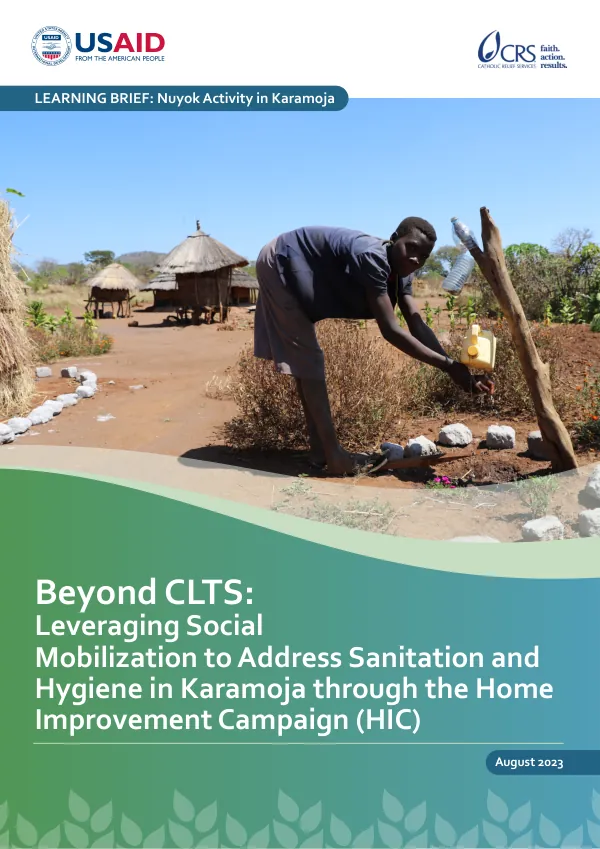
Funded by the United States Agency for International Development (USAID) Bureau for Humanitarian Assistance, the activity operated under a consortium of seven implementing partners led by Catholic Relief Services (CRS). The initiative reached more than 269,000 at-risk people across 524 villages in four Karamoja districts, targeting women, men, and youth. Sanitation and hygiene conditions in Karamoja were found to be poor, with latrine coverage standing at 36%, lower than the national average of 77%. Approximately 70% of communities practiced open defecation, and latrines were often sited close to water sources, in unstable soil, or in non-private settings. In response to these challenges, Nuyok initially implemented Community-Led Total Sanitation (CLTS) triggering, but this approach was poorly received by community members due to its shame-based approach. In 2019, Nuyok shifted its sanitation and hygiene implementation approach to the Home Improvement Campaign (HIC), which aimed to build a cohort of community members to act as sanitation and hygiene advocates. The HIC approach drew on Participatory Hygiene and Sanitation Transformation (PHAST) and Village Health and Sanitation Committee (VHSC) methods to improve sanitation and hygiene facilities and practices at the household level. The ultimate goal was to see 20 villages in each district reach Open Defecation Free (ODF) status. The HIC process involved five steps, including introducing the concept to local leadership, selecting and training cluster members, rolling out HIC within each village, monitoring changing access to latrines and other hygiene facilities, and providing basic construction tools to each village. The approach relied on sanitation champions as social mobilizers to advocate for behavior change and went beyond focusing on ODF to incorporate aspects of an improved home. The HIC approach promoted five key sanitation and hygiene facilities and their related practices, including latrines, handwashing stations, rubbish pits, drying racks, and bathing shelters. Behavior change communication materials also included additional facilities such as granaries for food storage and animal shelters. The roles and responsibilities of HIC stakeholders were summarized in Table 1, highlighting the key differences between the HIC approach and traditional CLTS. The HIC process was led by Nuyok field agents who visited communities to introduce the concept and create buy-in from local leadership. Cluster members were responsible for rolling out HIC within each village, and the project provided each village with basic construction tools. The initiative also monitored changing access to latrines and other hygiene facilities, with the goal of seeing 20 villages in each district reach ODF status. The HIC approach has shown promise in addressing sanitation and hygiene challenges in Karamoja, with a focus on building a cohort of community members to act as sanitation and hygiene advocates. The approach has been adapted to the local context, incorporating aspects of an improved home and promoting behavior change through social mobilization.
Related documents