USAID DEC
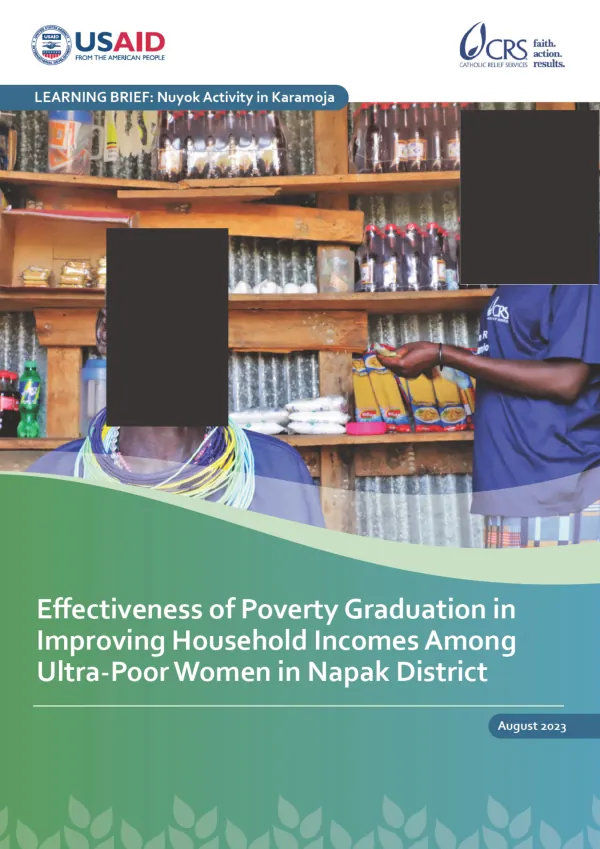
Learning Brief: Effectiveness of Poverty Graduation in Improving Household Incomes Among Ultra-Poor Women in Napak District
Sign inCATHOLIC RELIEF SERVICES ORGANIZATION
Learning Brief: Effectiveness of Poverty Graduation in Improving Household Incomes Among Ultra-Poor Women in Napak District
The Rural Entrepreneur Access Project (REAP) was piloted in Napak District of Karamoja, Uganda, as part of the Nuyok Resilience Food Security Activity (RFSA).
2023 · 9 pages
Sign in to readA free account is required to download.
Abstract
The project aimed to increase household incomes, food consumption levels, savings, and women's agency in household decision-making and ownership and control of assets among ultra-poor women. Funded by the United States Agency for International Development (USAID) Bureau for Humanitarian Assistance (BHA), the activity operated for 6 years (2017–2023) under a consortium of six implementing partners led by Catholic Relief Services (CRS). The REAP model of poverty graduation is specifically tailored to women living in extreme poverty in remote and rural drylands of Africa. The model offers participants a set of sequenced, layered, and integrated interventions, including a cash transfer (Jump Grant) to start a small business group to generate income, a consumption stipend, membership in a savings group, regular mentorship, and training in sustainable agriculture techniques. The project reached more than 2,500 farmers in 15 communities, with demonstration plots showing yield improvements of 60% when applying the recommended practices. The REAP approach was assessed using BOMA's Standard of Living Index (SOLI) survey, which was administered to participants at two key points in the program: the first in October 2019 during enrollment, to gather baseline data, and the second at endline in July 2022. The survey included questions regarding participants' household income, savings, household decision-making influence, livestock ownership, enrollment of children in school, food security, healthcare use, and spending. Results from the endline survey confirmed that since joining REAP in 2019, participants significantly improved their capacity to provide for their families, to ensure food security for their households, and to respond to shocks. The Nuyok REAP cohort reported an increase in average household income from 18,620 UGX ($5 USD) at baseline to 116,704 UGX ($31.50 USD) at endline. Household food consumption scores rose from 19% at baseline to 31% at endline and savings grew more than tenfold. Participants also experienced an increase in decision-making authority and agency within their households and their communities. The passing/graduation rate for food security, based on the two criteria selected, stood at: (a) 62% for the proportion of households that reported no child going to bed without an evening meal; and (b) 72% for the proportion of households that reported adults consuming at least two meals a day in the last week. The REAP model's effectiveness in lifting participants out of poverty and increasing their food and nutrition security was also demonstrated through the significant increase in the proportion of households with two or more sustainable sources of income, which have no negative impact on the environment. Additionally, the proportion of participants participating in a savings group and having savings increased, indicating improved shock preparedness. The proportion of households that reported primary school-age children attending primary school also increased, indicating improved human capital investment. The results of the REAP pilot in Napak District of Karamoja, Uganda, demonstrate the potential of the poverty graduation approach in improving household incomes, food consumption levels, savings, and women's agency in household decision-making and ownership and control of assets among ultra-poor women. The findings and lessons learned from this pilot can inform the planning and allocation of resources for sustainable food and nutrition security among ultra-poor populations.
Related documents
Documents in this collection
 2023
2023USAID DEC
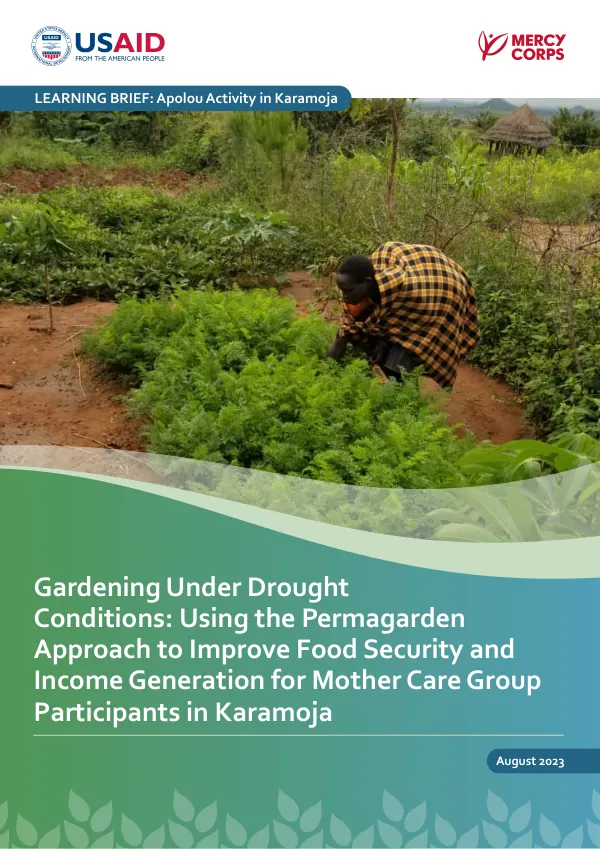
Gardening Under Drought Conditions: Using the Permagarden Approach to Improve Food Security and Income Generation for Mother Care Group Participants in Karamoja
Open record 2023
2023USAID DEC