USAID DEC
Biogeography and Diversification of Rhegmatorherina (Aves: Thamnophilidae)
Amazonian upland forest birds, specifically the endemic genus Rhegmatorhina, have been the subject of a densely sampled analysis to understand the drivers of their diversification.
2018 · 1 pages
Sign in to readA free account is required to download.
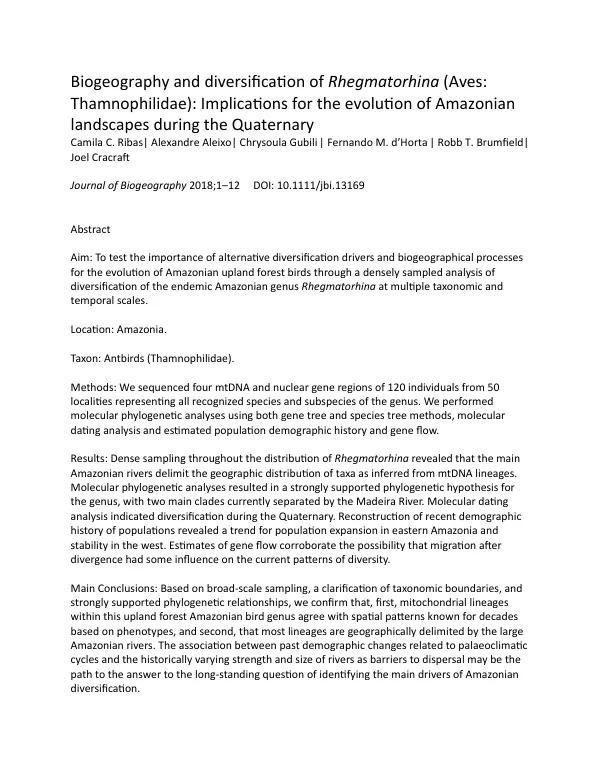
Abstract
The study, conducted in Amazonia, focused on the taxonomic and temporal scales of diversification within the genus. Rhegmatorhina is a member of the antbird family (Thamnophilidae). The analysis involved sequencing four mtDNA and nuclear gene regions of 120 individuals from 50 localities representing all recognized species and subspecies of the genus. Molecular phylogenetic analyses were performed using both gene tree and species tree methods, molecular dating analysis, and estimates of population demographic history and gene flow. The results revealed that the main Amazonian rivers delimit the geographic distribution of taxa as inferred from mtDNA lineages. Molecular phylogenetic analyses resulted in a strongly supported phylogenetic hypothesis for the genus, with two main clades currently separated by the Madeira River. Molecular dating analysis indicated diversification during the Quaternary period. Reconstruction of recent demographic history of populations revealed a trend for population expansion in eastern Amazonia and stability in the west. Estimates of gene flow corroborate the possibility that migration after divergence had some influence on the current patterns of diversity. The study's findings confirm that mitochondrial lineages within this upland forest Amazonian bird genus agree with spatial patterns known for decades based on phenotypes. Additionally, most lineages are geographically delimited by the large Amazonian rivers. The association between past demographic changes related to paleoclimatic cycles and the historically varying strength and size of rivers as barriers to dispersal may be the key to understanding the main drivers of Amazonian diversification.
Related documents
Documents in this collection
 2023
2023USAID DEC
The liver transcriptome of suckermouth armoured catfish (Pterygoplichthys anisitsi, Loricariidae): Identification of expansions in defensome gene families
Open record 2016
2016USAID DEC