USAID DEC
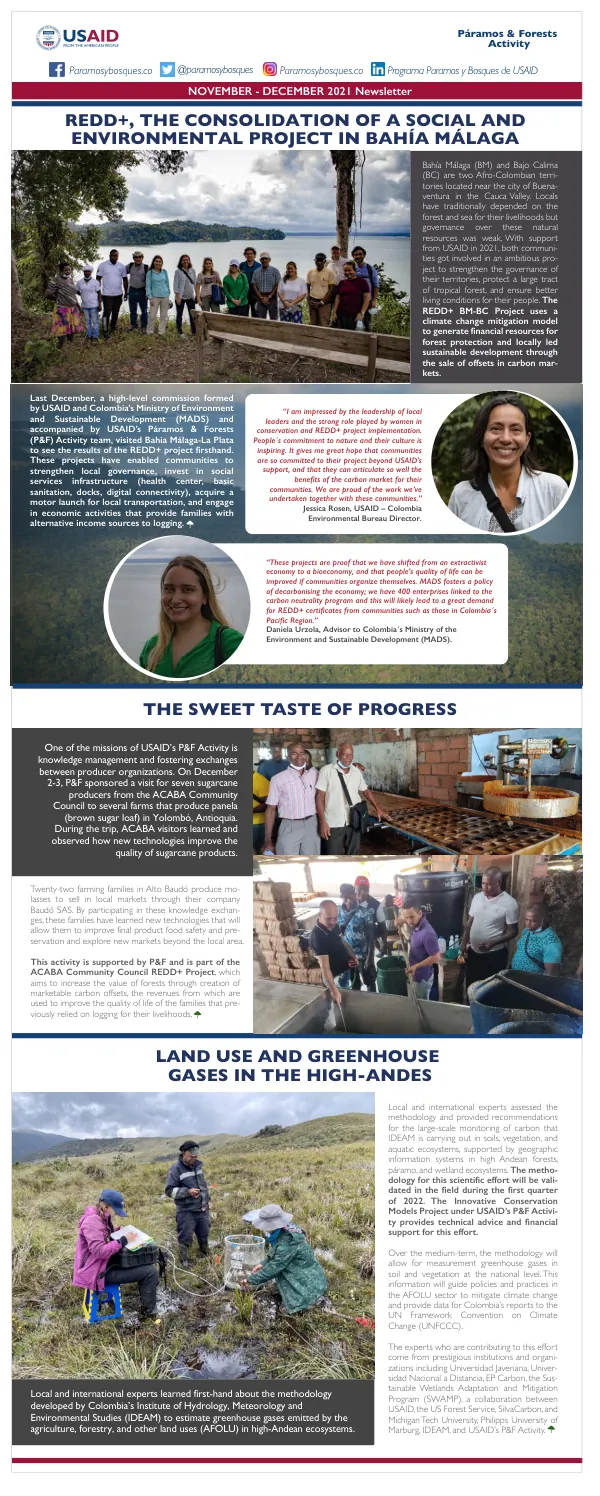
Boletín Noviembre - Diciembre 2019: REDD+ LA CONSOLIDACIÓN DE UN PROYECTO SOCIAL Y AMBIENTAL EN BAHÍA MÁLAGA
Sign inIDEAM
Boletín Noviembre - Diciembre 2019: REDD+ LA CONSOLIDACIÓN DE UN PROYECTO SOCIAL Y AMBIENTAL EN BAHÍA MÁLAGA
In Colombia, the Páramos y Bosques program, supported by USAID, has been working to consolidate a social and environmental project in Bahía Málaga.
2019 · 1 pages
Sign in to readA free account is required to download.
Abstract
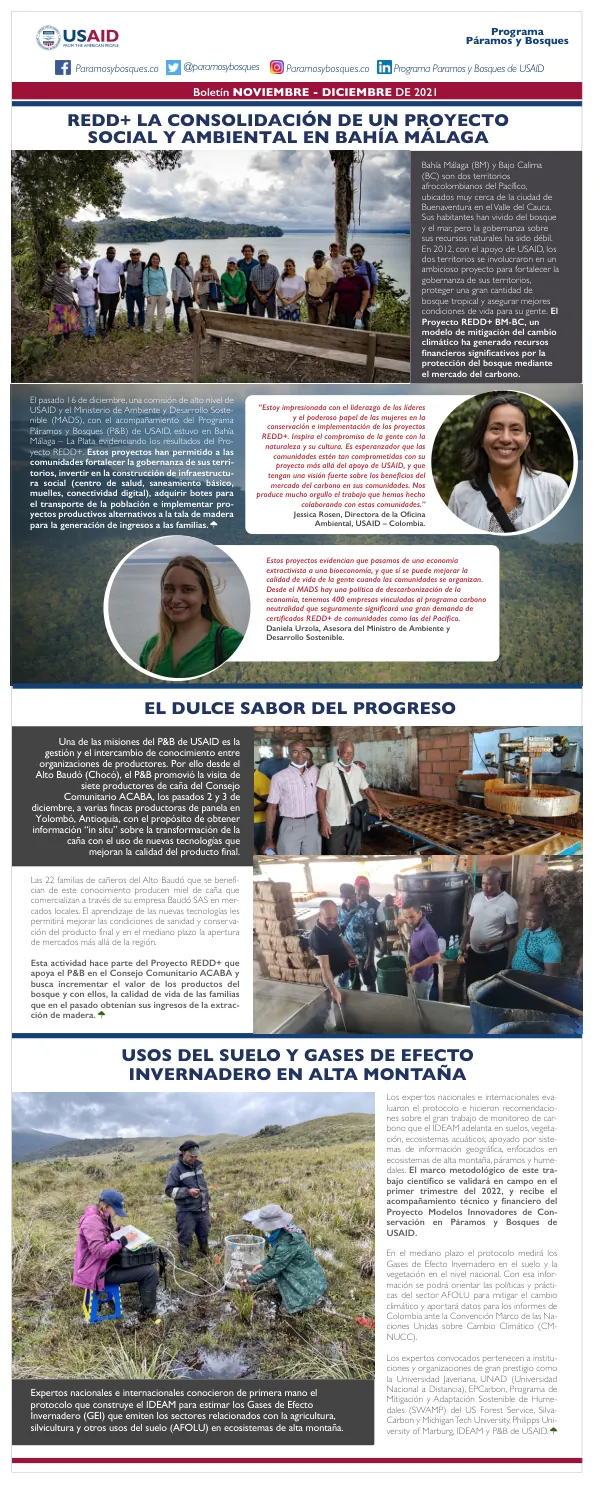
A high-level commission from USAID and the Ministry of Environment and Sustainable Development (MADS) visited the area on December 16, showcasing the results of the REDD+ project. This initiative has enabled communities to strengthen their territorial governance, invest in social infrastructure, and implement productive projects that generate income for families. The REDD+ project in Bahía Málaga and Bajo Calima has been instrumental in promoting the conservation of tropical forests and improving the living conditions of the local population. The project has generated significant financial resources through the carbon market, demonstrating the potential of a bioeconomy to improve the quality of life for communities. The Colombian government has a policy of decarbonizing the economy, with 400 companies linked to the carbon neutrality program, which is expected to create a high demand for REDD+ certificates from communities like those in the Pacific region. The Páramos y Bosques program has also been working to promote the exchange of knowledge between producer organizations. In December 2021, the program organized a visit by seven producers from the Alto Baudó community to panela-producing farms in Yolombó, Antioquia. The purpose of the visit was to gather information on the transformation of sugarcane using new technologies that improve the quality of the final product. The protocol for estimating greenhouse gas emissions (GHGs) from sectors related to agriculture, forestry, and other land uses (AFOLU) in high-altitude ecosystems has been developed by the IDEAM. Experts from national and international institutions evaluated the protocol and made recommendations on the monitoring of carbon emissions in soils, vegetation, and aquatic ecosystems, supported by geographic information systems. The protocol will be validated in the field in the first quarter of 2022, with technical and financial support from the USAID-funded Models of Innovative Conservation in Páramos and Forests project.
Related documents