USAID DEC
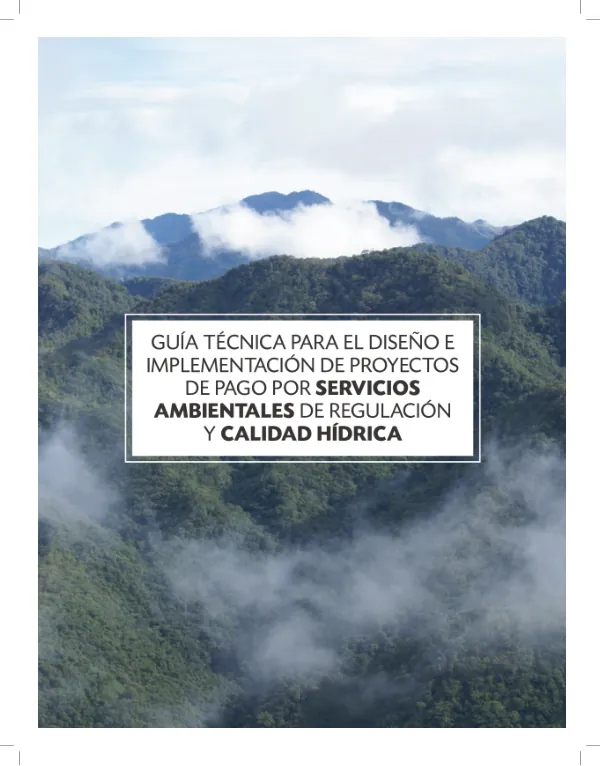
Documento final con la formulación de estrategias nacionales en el marco del Programa nacional de PSA
Sign inMINISTERIO DE AMBIENTE Y DESARROLLO SOSTENIBLE
Documento final con la formulación de estrategias nacionales en el marco del Programa nacional de PSA
The Programa Nacional de Pago por Servicios Ambientales (PNPSA) is a policy instrument aimed at establishing guidelines, strategies, and planning tools to promote the design and implementation of Payment for Environmental Services (PSA) projects in strategic areas and ecosystems.
2020 · 24 pages
Sign in to readA free account is required to download.
Abstract
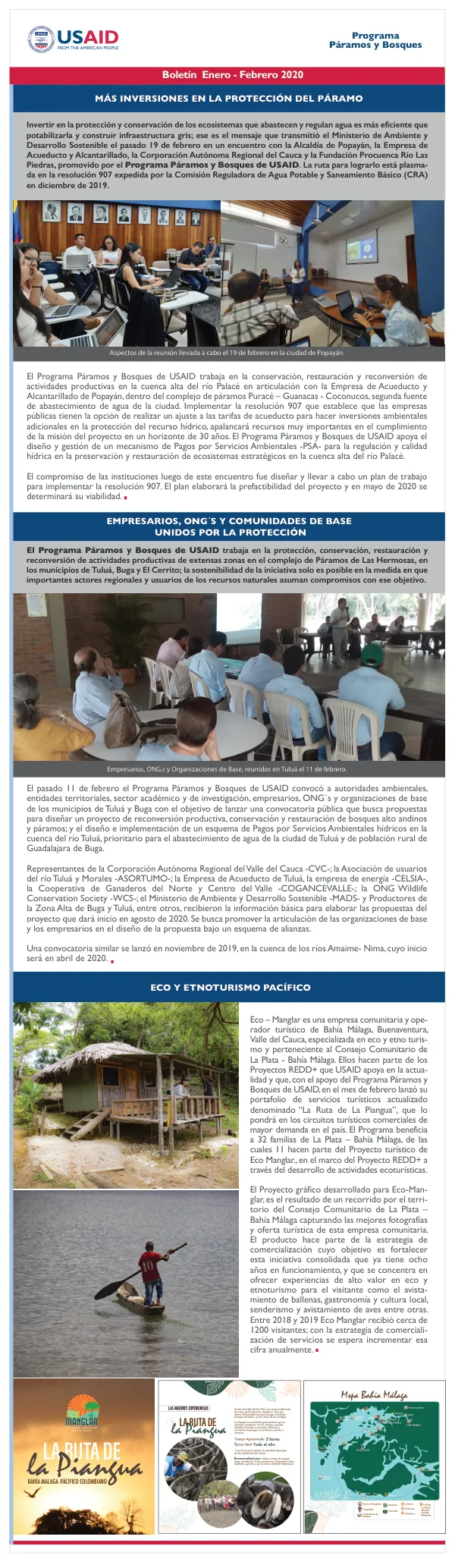
The PNPSA is a key component of the Plan Nacional de Desarrollo 2018-2022 and is being implemented by the Ministerio de Ambiente y Desarrollo Sostenible. The PNPSA is based on five strategic lines: (i) Fortalecimiento de capacidades, (ii) Instrumentación jurídica, (iii) Gestión y articulación institucional, (iv) Evaluación y seguimiento, and (v) Sostenibilidad financiera. The program aims to conserve at least 260,000 hectares through PSA projects by 2020 and at least 1 million hectares by 2030. The PNPSA comprises strategic lines of action for the medium term (2018-2022), which respond to the prioritization of national ecosystems for the implementation of this instrument and the fulfillment of policy objectives. These lines of action include: (i) PSA for the Conservation of the Amazon, (ii) PSA for the Conservation of Páramos Ecosystems, (iii) PSA for the Conservation of Strategic Ecosystems in PDET Municipalities for Consolidation and Stabilization, (iv) PSA for the Conservation of Strategic Ecosystems in Ethnic Territories, and (v) PSA for the Conservation and Recovery of Areas of National Parks with Presence of Illicit Crops. As an input to the PNPSA, the Programa Páramos y Bosques, funded by the Agencia de los Estados Unidos para el Desarrollo (USAID), has developed this document with a proposal for the formulation of the strategic line of action for PSA for the Conservation of Páramos Ecosystems in the framework of the PNPSA. This document also includes a medium-term action plan (2020-2022) for technical, legal, and financial accompaniment to environmental authorities, territorial entities, public service providers, and other public and private actors for the implementation of specific PSA projects in páramos ecosystems. Páramos are considered high-mountain ecosystems, dominated by open vegetation, and are located between the upper limit of the high-altitude forest and the presence of perpetual snow. These ecosystems are characterized by a high degree of endemism, with frailejones being the plants with the greatest adaptations to an extreme climate of any species in the world. Páramos occupy the lower section of the high-altitude belt and form defined vegetation communities; these ecosystems harbor the most diverse mountain flora in the world and present high levels of endemism at the species and genus levels. Although they share some characteristics such as height, vegetation, temperature, and water regulation capacity, páramos relate to society in very different ways. Some páramos have protection as national parks, such as Los Nevados or Iguaque, while others are ancestral territory of indigenous peoples, such as the Sierra Nevada de Santa Marta, El Cocuy, and some páramos in Cauca and Nariño. Additionally, there are páramos where, for various reasons, including violence, campesinos have arrived to make a living with the cultivation of onions or potatoes, and in other areas with livestock. Páramos ecosystems intervene directly in the regulation of the hydrological cycle of the region and particularly in the supply of water resources for countries such as Colombia and Ecuador. It is estimated that up to 85% of the water for human consumption in cities such as Bogotá, Medellín, Bucaramanga, and Cali is associated with the regulation of the hydrological cycle of páramos such as Sumapaz, Chingaza, Cruz Verde, Santurbán, and Farallones. The 53% of the water supply for electricity generation comes from páramos ecosystems, and approximately 150 districts of risk in the country benefit directly from water sources from these ecosystems. Given their regional relevance and the intricate relationship between these ecosystems and regional development, as well as their sensitive fragility in the face of changes in land use and climate change, páramos demand a management approach aimed at conserving their biodiversity and ecosystem functions to ensure the well-being of their inhabitants and sustainable development of the lowlands. Páramos ecosystems are considered key for hydrological and climatic regulation in the mountains and important refuges for biodiversity. In Colombia, they occupy approximately 29,000 km2, equivalent to 2.5% of the continental area of the country, where it is estimated that there are over 4,000 plant species; many of them with limited distribution to a few localities and another significant number of endemic species, that is, exclusive to a single place. This high plant diversity serves as a refuge for many animal species, which are also found in
Related documents