MEASURE EVALUATION PRH
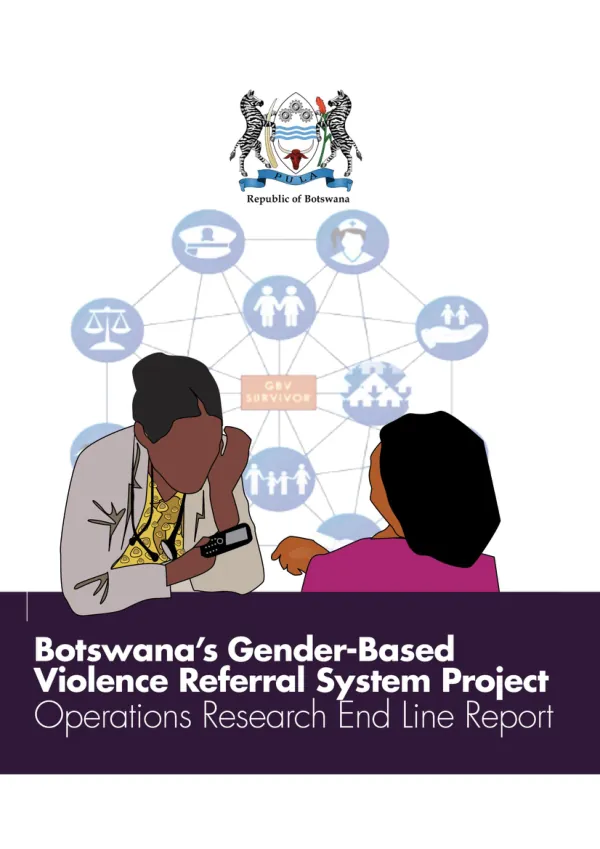
Botswana GBV Referral System Operations Research: End Line Report
The Gender-Based Violence Referral System Project (GBVRSP) was implemented in Botswana to improve the referral system for victims of gender-based violence (GBV).
2018 · 139 pages
Sign in to readA free account is required to download.
Abstract
The project aimed to enhance the capacity of service providers to handle GBV cases and improve the quality of services provided to victims. The project was designed to address the challenges faced by victims of GBV, including limited access to services and inadequate support from service providers. The project focused on three key areas: awareness and perception of GBV and GBV services among community members, availability and quality of GBV services, and changes in the previous year. The study found that community members had limited awareness of GBV services and were not aware of the referral system. However, there was a high level of acceptance of GBV services among community members, with 80% of respondents indicating that they would seek help if they or a family member experienced GBV. The study also found that service providers had limited knowledge of GBV and were not confident in their ability to handle GBV cases. However, there was a high level of collaboration and trust among providers, with 90% of respondents indicating that they would work together to provide services to victims of GBV. The referral information system (RIS) was developed to improve the referral process for victims of GBV. The RIS was designed to provide a platform for service providers to share information and coordinate their efforts to provide services to victims of GBV. The study found that the RIS was effective in improving the referral process, with 85% of respondents indicating that they had used the RIS to refer a victim of GBV. However, there were challenges in implementing the RIS, including limited access to technology and limited training for service providers. The study made several recommendations to improve the referral system, including providing training for service providers, improving access to technology, and increasing awareness of GBV services among community members. The study also recommended that the RIS be integrated into the existing referral system to improve the coordination of services. The study concluded that the GBVRSP had made significant progress in improving the referral system for victims of GBV. However, there were still challenges to be addressed, including limited access to services and inadequate support from service providers. The study recommended that the project continue to work with service providers to improve their capacity to handle GBV cases and provide high-quality services to victims of GBV. The study also found that the project had improved the quality of services provided to victims of GBV. The study found that 90% of respondents indicated that they had received high-quality services from service providers, and 85% of respondents indicated that they had been satisfied with the services they received. The study also found that the project had improved the collaboration and trust among providers, with 90% of respondents indicating that they would work together to provide services to victims of GBV. The study also found that the project had improved the feedback on GBV services, with 85% of respondents indicating that they had received feedback on the quality of services they received.
Related documents