INTERNATIONAL HEALTH AND DEVELOPMENT ASSOCIATES
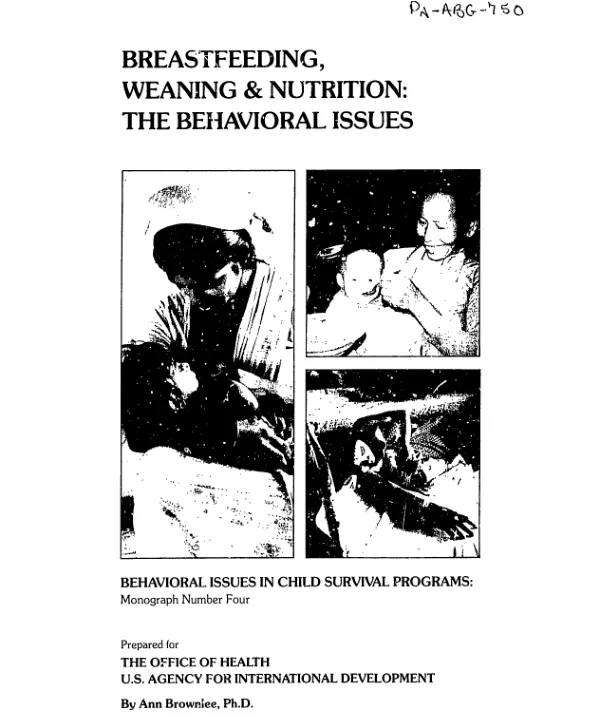
Breastfeeding, weaning and nutrition : the behavioral issues
Besides its direct impact on infants" health, breastfeeding enhances other child survival interventions and could help save 1 million infant lives in developing countries every year.
Brownlee, Ann · 1990
Sign in to readA free account is required to download.
Abstract
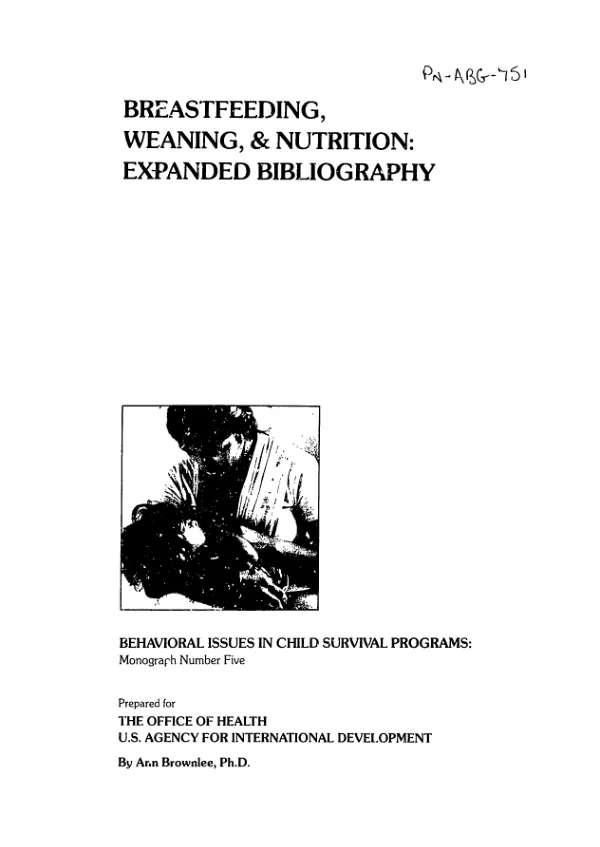
This monograph, the fourth in a series, examines the behavioral aspects of breastfeeding, weaning, and nutrition and their importance for project design and implementation. Major issues covered include: (l) beliefs, practices, and other important factors affecting feeding practices, nutrition, and child survival; (2) health providers and institutions and their effects on feeding practices; (3) infant and child nutrition interventions both at the community level and in health institutions; (4) the process of sustaining and expanding nutrition programs; and (5) qualitative research methods useful for examining behavioral aspects of infant and child feeding. Key conclusions and recommendations are as follows. (1) Planners should examine local beliefs and practices important for infant feeding, e.g., the prevalence of discarding colostrum, the lack of awareness of the health benefits of exclusive breastfeeding during the first 4-6 months of life, the dangers posed by breast milk substitutes. They should also study other major factors such as the importance of social networks, the negative effects of urbanization, the extent to which women"s work deters breastfeeding, etc. (2) Administrators should explore health workers" lack of knowledge of correct practices, as well as the prevalence of common health institution procedures known to be detrimental to proper feeding. (3) Project designers should consider what types of strategies might best improve infant and child feeding at both the community level (e.g., development of support groups, promotion of improved weaning foods) and the health institution level (e.g., training in lactation management, control of infant formula). (4) It is essential to consider and develop strategies for project sustainability early on, as well as to consider behavioral, organizational, and other political factors when attempting to expand small-scale projects. A companion report -- Monograph Five, "Breastfeeding, Weaning, and Nutrition: Expanded Bibliography" (PN-ABG-751) -- presents a more comprehensive bibliography on this subject.
Related documents