USAID DEC
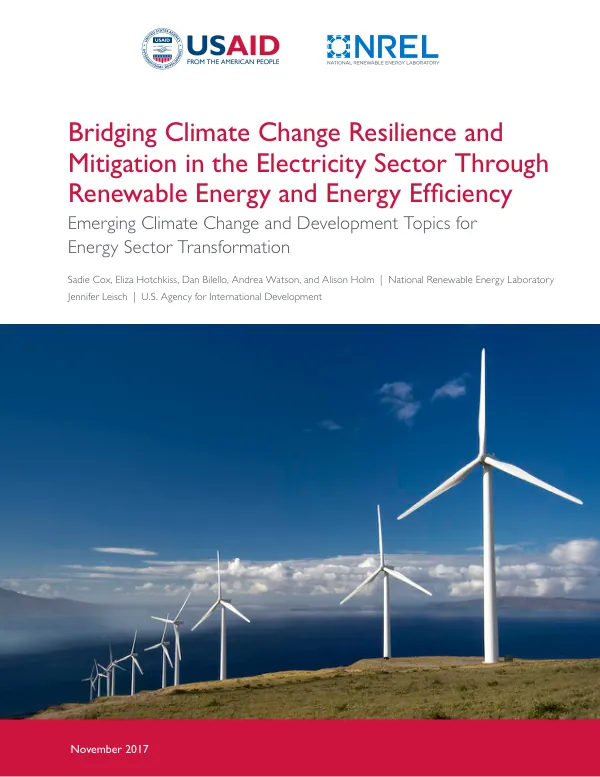
Bridging Climate Change Resilience and Mitigation in the Electricity Sector Through Renewable Energy and Energy Efficiency: Emerging Climate Change and Development Topics for Energy Sector Transformation
Sign inICF
Bridging Climate Change Resilience and Mitigation in the Electricity Sector Through Renewable Energy and Energy Efficiency: Emerging Climate Change and Development Topics for Energy Sector Transformation
The electricity sector plays a critical role in addressing climate change, with both mitigation and resilience being essential components of a comprehensive approach.
2017 · 30 pages
Sign in to readA free account is required to download.
Abstract
Mitigation involves reducing greenhouse gas emissions from power generation, while resilience refers to the ability of the power system to withstand and recover from climate-related disruptions. Power sector climate change vulnerability is a pressing concern, with potential impacts including increased frequency and severity of heatwaves, droughts, and extreme weather events. These events can lead to power outages, damage to infrastructure, and disruptions to critical services. Table 1 highlights potential climate change impacts to power technologies and sectors. To address these challenges, the report focuses on technical solutions, including energy efficiency and renewable energy, to support resilient power systems. Energy efficiency measures, such as demand-side management and combined heat and power, can reduce energy consumption and lower emissions. Renewable energy sources, such as solar and wind power, can provide a cleaner and more reliable source of electricity. Scaling up demand-side energy efficiency is a key strategy for reducing energy consumption and emissions. This can be achieved through utility-led demand-side management and energy efficiency programs, such as those implemented in the United States (Box 4). Passive survivability, as demonstrated in Maine (Box 5), can also play a critical role in reducing energy consumption and improving resilience. Diversifying generation portfolios is another essential strategy for supporting resilient power systems. This can be achieved through the deployment of distributed generation, such as distributed photovoltaics, microgrids, and minigrids (Box 3). Enabling storage solutions, such as batteries, can also help to stabilize the grid and improve resilience. Integrated planning processes are critical for bringing together technical solutions to achieve goals across mitigation and resilience. Climate planning for the electric sector involves assessing climate-related risks and developing strategies to mitigate them. Low emission climate-resilient development strategies, such as those implemented in Kenya (Box 13), can help to reduce emissions and improve resilience. The report also highlights the importance of local climate strategies, such as building codes to support climate resilience and mitigation (Box 6). Addressing climate risks in urban areas, such as Ho Chi Minh City (Box 8), is also critical for ensuring the resilience of the power system. In conclusion, the electricity sector plays a critical role in addressing climate change, and a comprehensive approach that includes both mitigation and resilience is essential. Technical solutions, such as energy efficiency and renewable energy, can support resilient power systems, while integrated planning processes and local climate strategies are critical for achieving goals across mitigation and resilience.
Related documents