TETRA TECH
Building community skills to address corruption
The Access to Justice Initiative (A2JI) is a local civil society organization working to combat corruption in Myanmar.
2018 · 1 pages
Sign in to readA free account is required to download.
Abstract
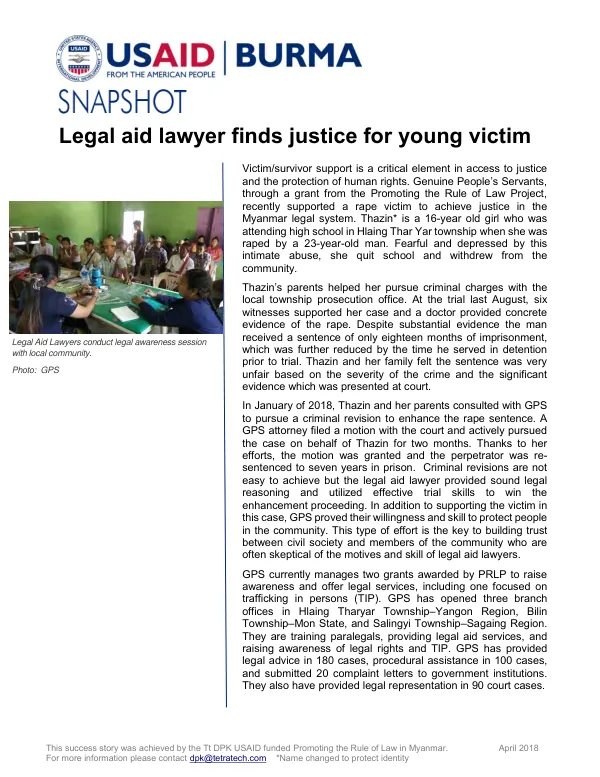
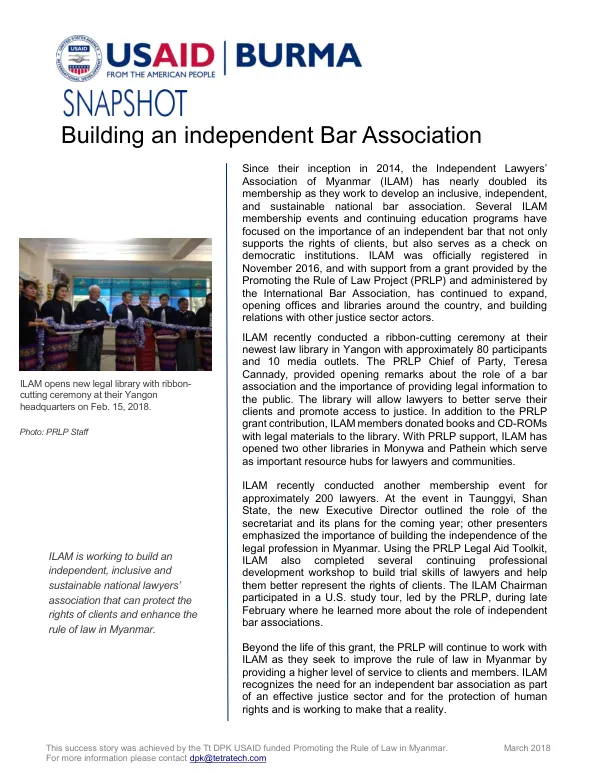
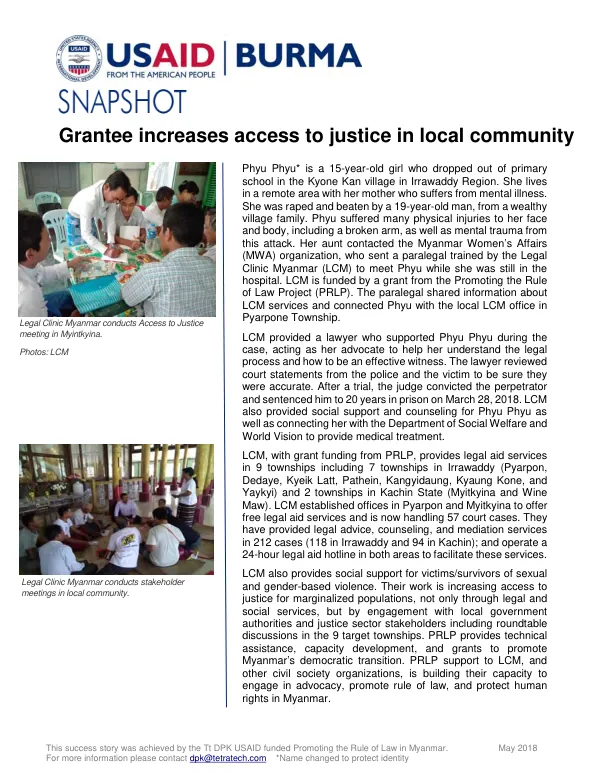
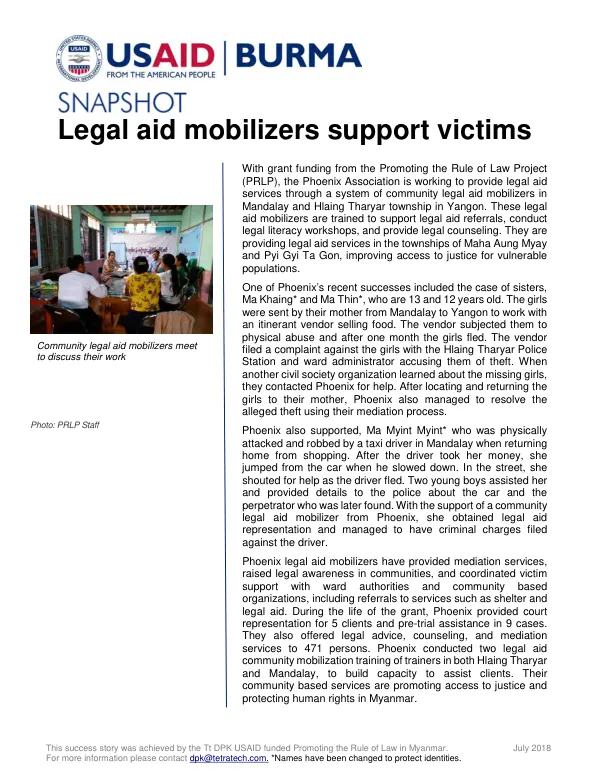
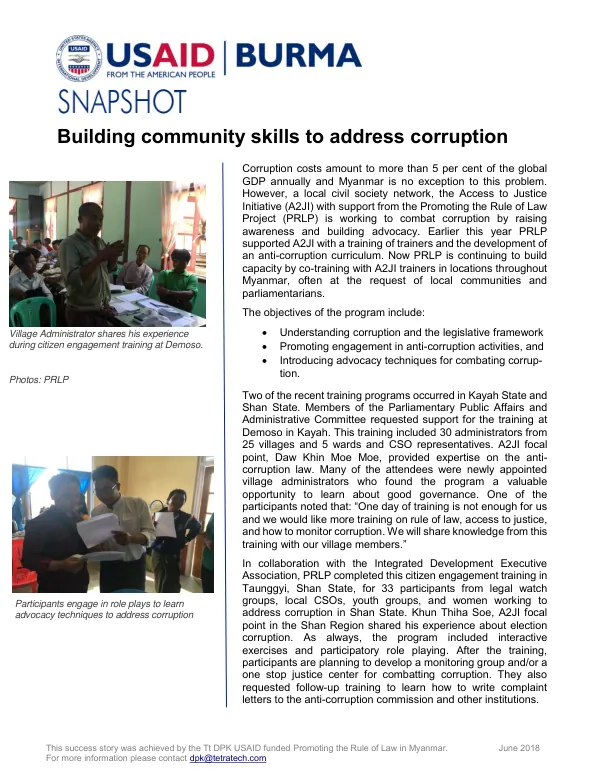
A2JI, with support from the Promoting the Rule of Law Project (PRLP), aims to raise awareness and promote advocacy against corruption. The project's objectives include understanding corruption, promoting anti-corruption activities, and teaching advocacy techniques to combat corruption. PRLP supported A2JI with a training of trainers and the development of an anti-corruption curriculum. The project has been building capacity by co-training with A2JI trainers in locations throughout Myanmar, often at the request of local communities and parliamentarians. Recent training programs were conducted in Kayah State and Shan State, including a training in Kayah State for 30 administrators from 25 villages and 5 villages and CSO representatives. The training included interactive exercises and participatory role playing. Participants learned about anti-corruption laws and advocacy techniques. One participant noted that the training was valuable and expressed a desire for more training on rule of law, access to justice, and how to monitor corruption. The training also included a presentation by A2JI focal point Daw Khin Moe Moe on anti-corruption laws. In Shan State, PRLP completed a citizen engagement training in collaboration with the Integrated Development Executive. The training was attended by 33 participants from legal watch groups, CSOs, youth groups, and women working to combat corruption. The training included a presentation by A2JI focal point in the Shan Region on election corruption. Participants plan to develop a monitoring system and/or a one-stop justice center to combat corruption. The project has seen positive results, with participants expressing a desire to share knowledge with their communities and develop complaint letters to anti-corruption institutions. The project's focus on building capacity and promoting advocacy against corruption is crucial in addressing corruption in Myanmar. Corruption costs more than 5% of the global GDP annually, and the project's efforts aim to reduce this burden.