USAID DEC
Burkina Faso Regional Program (BFRP) Success Story
The Burkina Faso Regional Program (BFRP) was implemented by USAID/OTI in April 2020 to address rising tensions and misinformation in the Nord region of Burkina Faso.
2020 · 1 pages
Sign in to readA free account is required to download.
Abstract
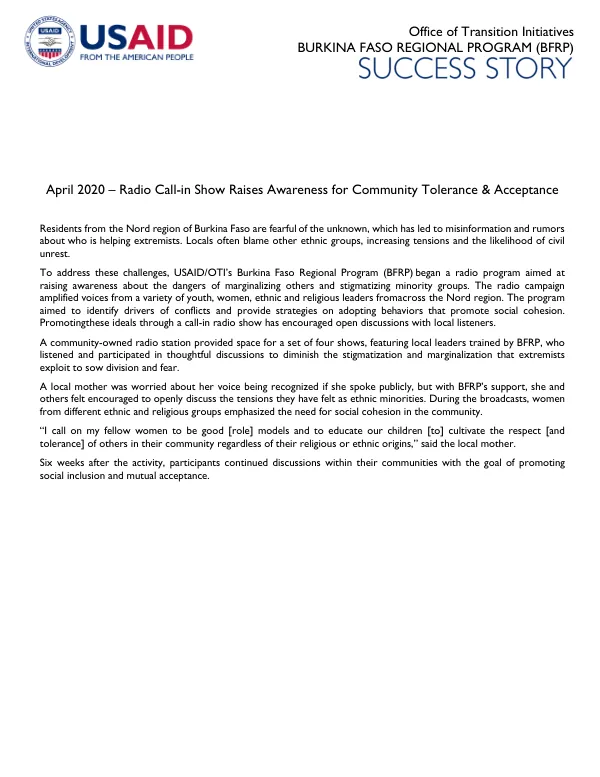
Residents in the area were fearful of the unknown, leading to the spread of rumors and misinformation about who was helping extremists. This climate of fear and mistrust often resulted in locals blaming other ethnic groups, increasing the likelihood of civil unrest. To counter these challenges, BFRP launched a radio program aimed at raising awareness about the dangers of marginalizing others and stigmatizing minority groups. The radio campaign amplified the voices of a diverse group of youth, women, ethnic, and religious leaders from across the Nord region. The program sought to identify the drivers of conflicts and provide strategies for adopting behaviors that promote social cohesion. The radio program featured a series of four call-in shows, hosted by local leaders who had been trained by BFRP. These leaders engaged in thoughtful discussions with listeners, providing a platform for open dialogue and encouraging community members to share their concerns and ideas. The program was broadcast on a community-owned radio station, which provided a safe space for local leaders to express themselves and promote social inclusion. The radio program had a significant impact on the community, with women from different ethnic and religious groups emphasizing the need for social cohesion. A local mother, who had initially been hesitant to speak publicly, felt encouraged to share her concerns and ideas with the community. She called on her fellow women to be good role models and to educate their children to cultivate respect and tolerance for others, regardless of their religious or ethnic origins. Six weeks after the activity, participants continued to engage in discussions within their communities, with the goal of promoting social inclusion and mutual acceptance. The BFRP radio program provided a critical platform for community members to come together and address the root causes of conflict, ultimately contributing to a more inclusive and tolerant society.
Related documents