USAID
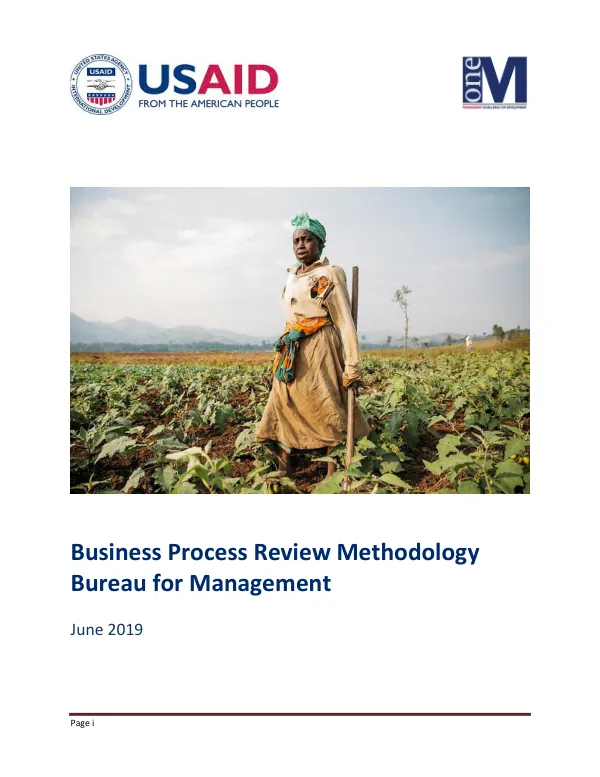
Business Process Review Methodology
The Business Process Review Methodology, written by the Bureau for Management, provides a high-level overview of USAID's approach to business process improvement.
2019 · 101 pages
Sign in to readA free account is required to download.
Abstract
The methodology consists of four phases: Diagnosis, Optimization, Implementation, and Assessment. The Diagnosis phase involves identifying stakeholder needs, determining whether a Business Process Review (BPR) is the correct approach, reviewing end-to-end processes, and seeking inefficient or ineffective practices. The Optimization phase makes recommendations for process, structure, policy, technology, and/or staff skills and training changes to achieve desired outcomes based on empirical evidence about performance. BPR focuses on the diagnosis and optimization phases of process improvement, with an eye to future implementation and assessment. Through BPR teams, ways to eliminate waste, such as unnecessary handoffs, rework, and delays, that slow down and complicate processes are identified. BPR goes beyond identification of issues and lays out recommendations for how to implement improvements and measure both progress and performance excellence after the BPR concludes. USAID employs both a top-down and bottom-up model for identifying topics for BPR. The top-down component is based on organization-level concerns and relies on input from senior officials employing a strategy-driven process selection so BPRs support improvements aligned to the strategic direction the Agency is taking. The bottom-up component relies on a pain-driven approach to process selection taking input from across all levels of the Agency but especially from internal customers and front-line staff. Four factors should drive decision-making about what topics to choose for a BPR: value to USAID, effort required, commitment to implementation, and probability of success. BPRs should not be undertaken lightly as BPRs and subsequent implementation require significant time, effort, and change management. The balance of the three factors above serve as the Agency's guide for determining go or no-go status for any topic being considered for BPR. Key factors commonly distinguish more successful BPR efforts from others, including determining a clear vision, targeting processes where improvement will create a significant benefit for the Agency, gaining commitment from relevant operating unit's top leadership and management team, and identifying a clear scope of work for specific targeted processes or functions. Strong planning of methodology and process is vitally important before collecting data or formulating solutions. The methodology recommends using tools such as the M/CIO Productivity and Efficiency Estimator tool to track the impact of implementation and estimate potential cost savings and cost avoidance of BPR projects. Cost-benefit and cost-savings analysis are beyond the scope of this BPR methodology, but resources are available for those interested, including courses available through USAID University and resources and estimator tools available from M/CIO. The BPR methodology provides step-by-step guidance and tools to make sure the Agency realizes potential gains from the BPR effort. BPRs can drive dramatic improvements in services, but it is all too easy to go back to the way things were before. This methodology will help BPR Analysts think proactively about the implementation phase and provide guidance on how to ensure the Agency realizes potential gains from the BPR effort. The methodology outlines the major process steps of the Diagnosis and Optimization phases, including preparing for BPR, conducting a desk review, documenting and validating as-is processes, conducting synthesis and analysis, drafting reports, and issuing the report and presenting at the Management Operations Council. The methodology also provides guidance on planning for implementation, performance management, and sustainability, including developing overarching performance metrics to track change and enable continuous improvement, impact, and sustainability moving forward.
Related documents