ACDI/VOCA
C-AME COMMUNICATION TOOL Remote Monitoring Pilot AF 02
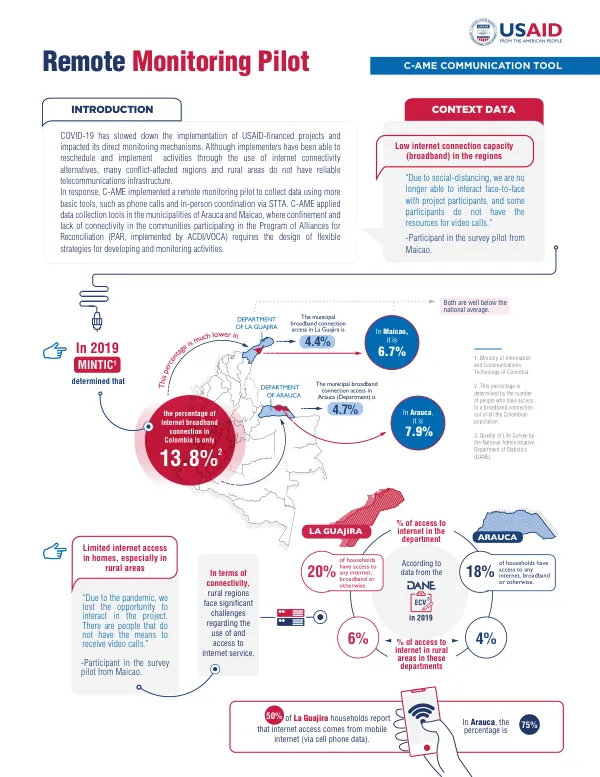
The C-AME Communication Tool Remote Monitoring Pilot was implemented in response to the COVID-19 pandemic, which has slowed down the implementation of USAID-financed projects and impacted direct monitoring mechanisms.
2020 · 2 pages
Sign in to readA free account is required to download.
Abstract
The pilot aimed to collect data using basic tools, such as phone calls and in-person coordination via STTA, in municipalities with limited internet connectivity. The pilot was conducted in the municipalities of Arauca and Maicao, where confinement and lack of connectivity required flexible strategies for developing and monitoring activities. The pilot engaged 34 participants and 12 implementing partners representatives from eight projects as part of PAR's initiatives, with 30 women (61%) and 16 men (39%) participating. The pilot consisted of three phases: adapting monitoring tools, coordination with actors involved in the monitoring process, and survey application. The survey included two questions for implementing partners about how they have adapted their activities during the pandemic to continue the development of activities. The responses identified best practices in formal and informal communication and monitoring mechanisms. Implementing partners and participants demonstrated great adaptability in continuing their activities despite the restrictions generated by the pandemic. They developed alternative work strategies supported by community leaders and/or information and communications technology (ICT), where available. Lessons learned from the pilot include the importance of using simple and comprehensive language in monitoring instruments, adapting to participants' needs, and drafting a script with project implementers to improve trust among participants. The pilot also highlighted the role of community leaders in transmitting project information to their communities. Implementing partners and leaders worked together to send messages about upcoming activities to those who do not have methods of communication. The use of WhatsApp messaging application and internet focal points in settlements and communities facilitated contact between participants and implementing partners. The pilot demonstrated the effectiveness of remote monitoring in collecting participant data despite mobility and connectivity limitations. By conducting participant surveys telephonically, C-AME and implementing partners took into account participants' availability to find the best times to conduct the surveys. The territorial team followed up closely regarding appointments and applied the survey during the agreed-upon time, assuring the best engagement and collecting data properly. The pilot's results showed that simple and familiar language in monitoring instruments facilitates participants' understanding of the questions, allowing for the collection of more precise information and reducing survey times. Adapting to participants' needs leads to more direct and accurate communication and improvement in quality of data. These modifications demonstrate to participants that their contributions are valuable for adaptive management in current projects and can generate recommendations for future interventions. The C-AME Communication Tool Remote Monitoring Pilot has provided valuable lessons for implementing projects in areas with limited internet connectivity. The pilot's results highlight the importance of using simple and comprehensive language, adapting to participants' needs, and drafting a script with project implementers to improve trust among participants. The pilot's success demonstrates the effectiveness of remote monitoring in collecting participant data and improving the quality of data collected.