USAID DEC
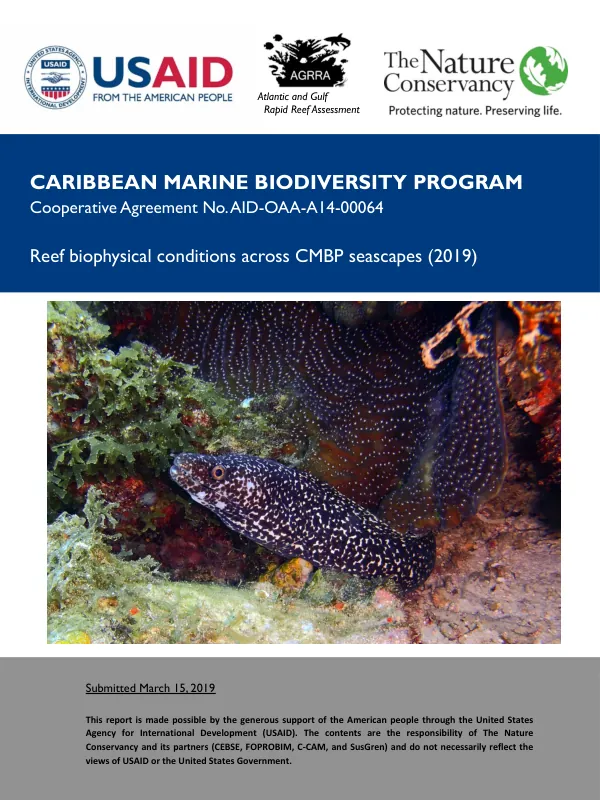
CARIBBEAN MARINE BIODIVERSITY PROGRAM Reef biophysical conditions across CMBP seascapes (2019)
Sign inFOPROBIM
CARIBBEAN MARINE BIODIVERSITY PROGRAM Reef biophysical conditions across CMBP seascapes (2019)
The Caribbean Marine Biodiversity Program (CMBP) conducted a rapid reef assessment in 2019 to evaluate the biophysical conditions of coral reefs across the region.
2019 · 18 pages
Sign in to readA free account is required to download.
Abstract
The assessment focused on four countries: Jamaica, Haiti, the Dominican Republic, and St. Vincent and the Grenadines. The program aimed to identify key indicators of reef health and structure, as well as potential threats to coral reef ecosystems. In Jamaica, the assessment revealed that coral reefs are relatively abundant, with a few instances of disease. However, the reefs are overfished, and herbivorous fish populations have declined significantly since 2015. The scaled cover of reef promoters, such as live corals, is relatively high, but benthic organisms that displace corals are also abundant. The CMBP Reef Condition Index (RCI) averaged Impaired in both 2015 and 2018, indicating a need for conservation efforts. The assessment also identified key indicators of reef health, including the presence of coral recruits, herbivorous sea urchins, and fish biomass. In 2015, the key herbivore, Diadema antillarum, was present in high densities at some locations, but its density decreased in 2018. The growth of cyanobacteria and algae in Bluefields Bay may be stimulated by sediment and nutrients in runoff and groundwater. Improving water quality would enhance the ability of the reef communities to resist and/or recover from the expected detrimental effects of ongoing climate change. In Haiti, the assessment revealed that the scaled cover of reef promoters and benthic organisms that displace corals are both relatively high on the PA3B fore reefs. However, all sites are overfished, and herbivorous fish populations have declined significantly since 2015. The RCI of 12 surveyed sites averaged Impaired in 2015 and Poor in 2018. The assessment identified key indicators of reef health, including the presence of coral recruits, herbivorous sea urchins, and fish biomass. The growth of turf algal sediment mats and peyssonnelid algae increased in 2018, while the biomass of parrotfishes and grunts decreased. The assessment also highlighted the importance of location in determining reef health. In Jamaica, live corals were correlated with location, being greater on the eastern fringing reef sites than the western barrier reef sites. In Haiti, live corals were also correlated with location, being greater on the eastern fringing reef sites than the western barrier reef sites. The assessment recommended that conservation efforts focus on improving water quality, reducing overfishing, and promoting the growth of coral reefs. The CMBP Reef Condition Index (RCI) is a key tool for evaluating reef health and structure. The RCI is based on five indicators that contribute substantially to reef structure and function, including the scaled cover of reef promoters and detractors, fish biomass, and benthic cover. The RCI averaged Impaired in Jamaica and Poor in Haiti, indicating a need for conservation efforts. The assessment recommended that conservation efforts focus on improving water quality, reducing overfishing, and promoting the growth of coral reefs. The assessment also highlighted the importance of monitoring reef health and structure over time. The RCI averaged Impaired in Jamaica and Poor in Haiti in both 2015 and 2018, indicating a need for continued conservation efforts. The assessment recommended that future assessments focus on evaluating the effectiveness of conservation efforts and identifying new threats to coral reef ecosystems.