 1988
1988USAID DEC
USAID. MISSION TO PERU
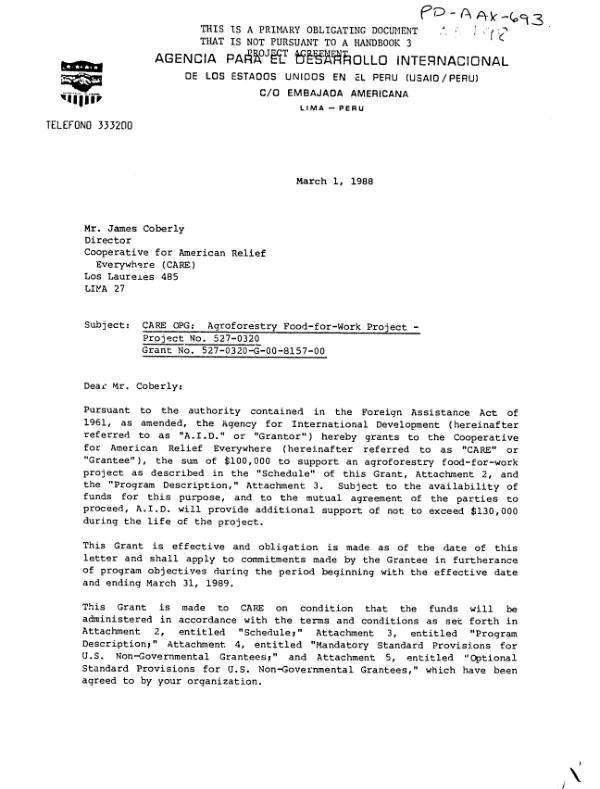
OPG, follow-on to projects 5270180 and 5270196, to enable CARITAS del Peru to expand its Title II Feeding Program for the rural and urban poor.
1984
Abstract
The project will include supplementary feeding programs, especially for those most at risk (mothers and children); Food for Work (FFW) activities; and local educational, health, and sanitation projects. CARITAS will undertake Maternal/Child Health (MCH), Other Child, and Preschool Child Feeding programs. Mothers in the MCH programs will receive courses in such topics as child care, home economics, hygiene, nutrition, community organization, literacy, and crafts skills. These courses will generally take place in mothers" clubs and community centers under the direction of social workers, community promoters, and, where feasible, more specialized personnel (e.g., nutritionists, nurses). Existing pilot programs in nutrition education conducted in the Other Child Feeding programs will be continued and expanded. The FFW component will focus on community development projects in productive infrastructure such as construction of school rooms, irrigation and drainage ditches, wells, farm-to-market roads, flood control structures (dikes and dams), fish farms, and family and community gardens, as well as land clearing and leveling. CARITAS will also support educational, health, and sanitation development projects. These efforts will function basically through mothers" clubs and community centers and will include classes in literacy, manual arts/handicrafts, and small industries training, as well as homemaking, nutrition, health, and sanitation. Over 98,400 pregnant and lactating women and their children under 5 from the poorest urban pueblos jovenes and often remote rural communities will benefit from the MCH program, while the Other Child and Preschool programs will benefit, respectively, 46,800 and 30,300 children at orphanages, day care centers, and community kitchens. Some 55,000 persons will work in FFW projects, which will provide food for a total of 232,000 persons. The total number of beneficiaries represents a 5% drop over the FY84 level, in line with Mission desires to phase-over the supplementary feeding programs to either government agencies or self-sustaining national PVO"s.
Connected topics
Classification