USAID DEC
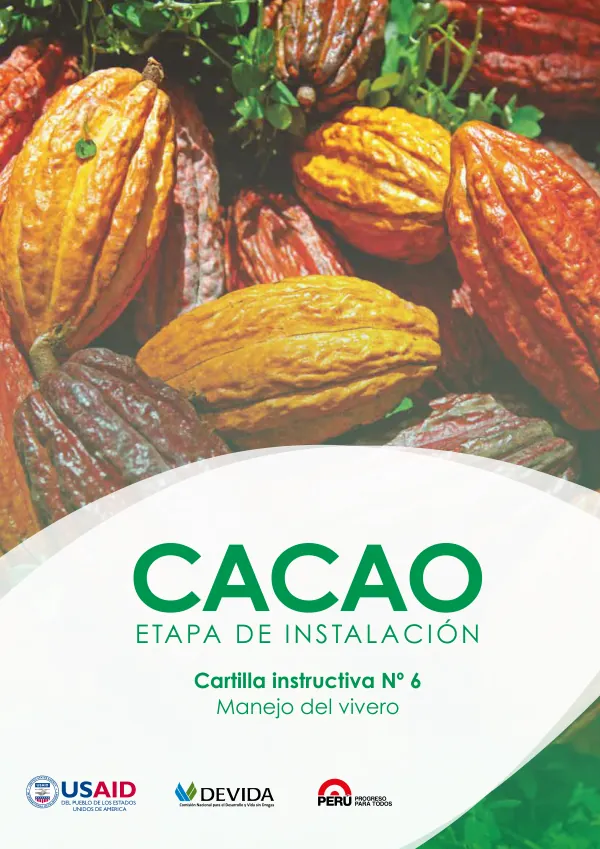
Cartilla Instructiva Nº 6: Manejo del Vivero de Cacao
The agricultural development initiative in cacao production under agroforestry systems is supported by cartillas instructivas, which are part of the technological transfer effort by EX-ACT and local and regional governments for farmers in areas where illicit cacao cultivation was previously prevalent.
20 pages
Sign in to readA free account is required to download.
Abstract
The cartilla instructiva Nº 6 focuses on the management of the vivero, which is essential for maintaining healthy cacao plants. The vivero is a critical stage in cacao production, as it determines the quality and quantity of the final product. The cartilla emphasizes the importance of proper irrigation, pest management, and fertilization in the vivero. It provides detailed guidelines for each of these activities, including the use of integrated pest management (MIP) and the application of organic and inorganic fertilizers. The MIP plan involves monitoring and controlling pests in the vivero, using a combination of cultural, biological, and chemical methods. The cartilla recommends the use of natural pest control methods, such as the application of barbasco, huaca, and hierba luisa, to avoid harming the cacao plants. The cartilla also stresses the importance of controlling weeds in the vivero, as they can compete with the cacao plants for water and nutrients, leading to weak and poorly formed plants. It recommends the use of desherbes every 8 days, after irrigation, to facilitate the elimination of weeds. The cartilla provides a calendar for managing the vivero, including the dates for irrigation, pest control, and fertilization. It also includes a form for recording the activities and observations in the vivero. Overall, the cartilla instructiva Nº 6 provides a comprehensive guide for managing the vivero in cacao production under agroforestry systems. It emphasizes the importance of proper irrigation, pest management, and fertilization in maintaining healthy cacao plants and achieving high-quality yields. The cartilla is a valuable resource for farmers, as it provides practical and accessible information on the management of the vivero. It is an essential tool for ensuring the success of cacao production under agroforestry systems and contributing to the sustainable development of the sector. The cartilla is part of a broader effort to support farmers in areas where illicit cacao cultivation was previously prevalent. By providing guidance on the management of the vivero, the cartilla helps farmers to adopt best practices and improve their yields and income. The cartilla is a testament to the commitment of EX-ACT and local and regional governments to supporting farmers in their efforts to produce high-quality cacao under agroforestry systems. It is a valuable resource for farmers, and its practical and accessible information will help them to achieve their goals and achieve sustainable development in the sector.