USAID DEC
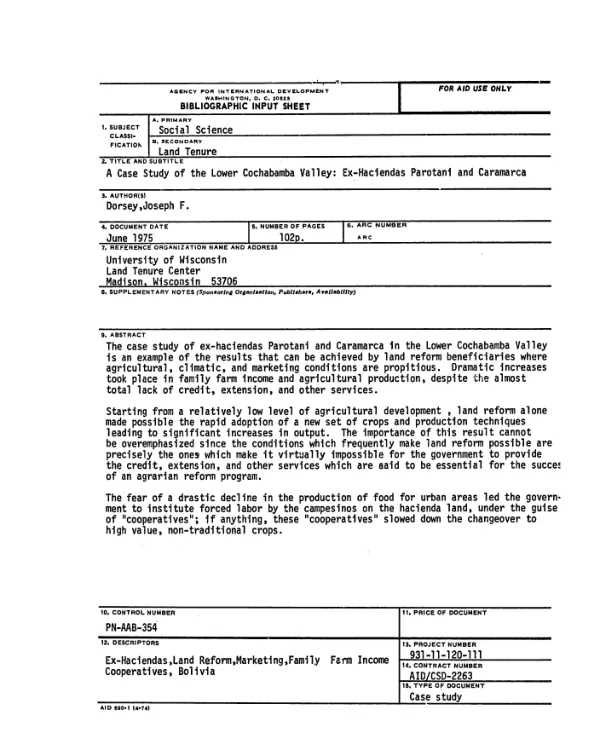
Case study of ex-hacienda toralapa in the Tiraque region of the upper Cochabamba Valley
Sign inUNIVERSITY OF WISCONSIN AT MADISON. LAND TENURE CENTER (LTC)
Case study of ex-hacienda toralapa in the Tiraque region of the upper Cochabamba Valley
Ex-Hacienda Toralapa is located near Tiraque in a predominantly agricultural area, the Upper Cochabama Valley, on the main road between Cochabamba and Santa Cruz.
Dorsey, Jeff F. · 1970
Sign in to readA free account is required to download.
Abstract
At the 9,500 meter elevation of Toralapa, changes in the types of crops which are grown have been limited by the short growing season and the ever-present danger of frost. Despite these limitations, which are found over most of the areas in which the agrarian reform has been most important, dramatic changes have taken place in agricultural production, land ownership, distribution of wealth and income, and the acculturation and integration of Bolivian campesinos into the national society. These changes are the product of an agrarian revolution in which campesinos expelled the landowning class from the Upper Valley and adamantly and successfully opposed their return. The immediate result of the reform was to transfer ownership rights to campesinos over the land they had formerly held as usufruct plots under the colonato system. Within a year or two after the MNR took power in 1952, campesino unions, or sindicatos, were formed throughout the countryside. Sindicatos became the instruments by which the land reform process spread from one area to another. Sindicato organizations were actively involved in bringing individual agrarian reform cases to their successful conclusions with the titling of land to the campesinos by the National Agrarian Reform Service, thus consolidating and expanding on initial gains achieved during the period of agrarian revolution.