UNIVERSITY OF WISCONSIN AT MADISON. LAND TENURE CENTER (LTC)
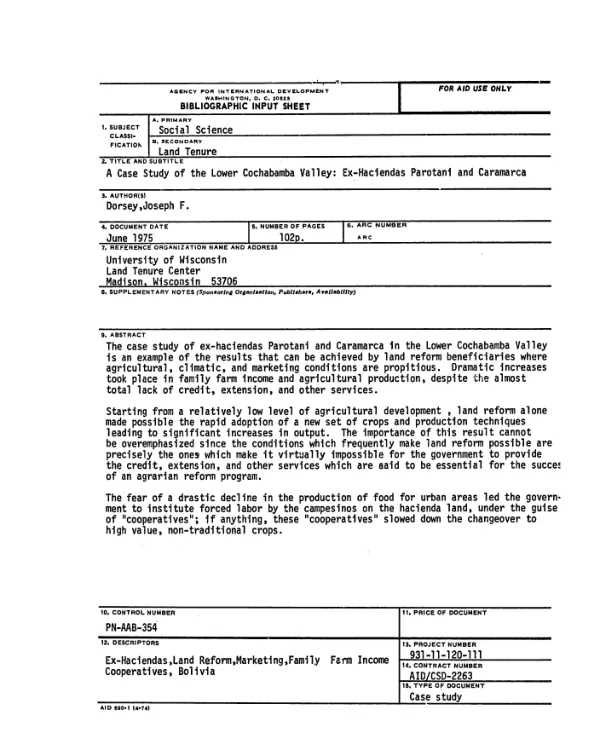
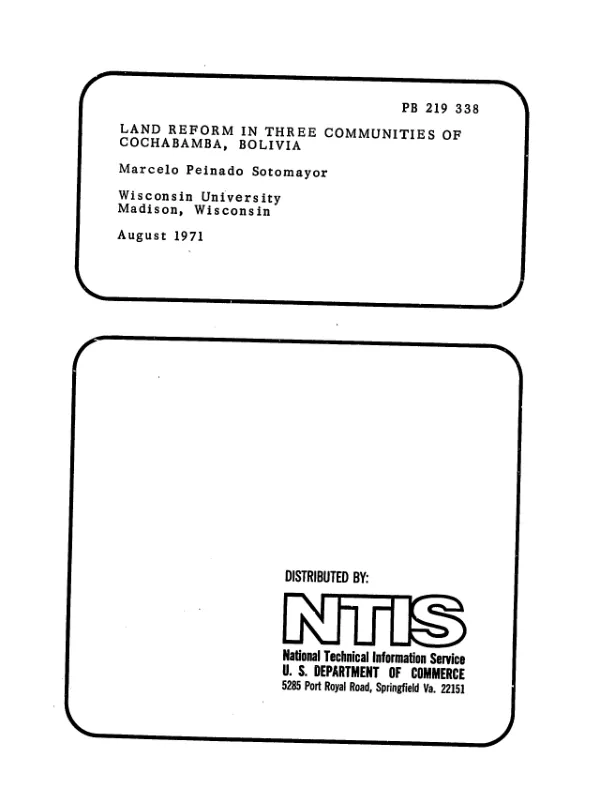
Land reform in three communities of Cochabamba, Bolivia
In an attempt to determine the consequences and accomplishments of Bolivian agrarian reform an area was chosen because it has the desired ecological characteristics, because its rural population has a homogeneous set of social and cultural qualities, and because it produces a significant share of the section"s potatoes.
Sotomayor, M. P. · 1970
Sign in to readA free account is required to download.
Abstract
The author wanted to investigate the living and working conditions of the campesinos and to analyze the economic, social, and political changes after the reform period among different types of rural communities. A 25 percent random sample of the population was taken using interview techniques. The agrarian reform law of 1953 represents the social liberation of more than 2 million persons. In nearly all cases landless farmers acquired land rights over the parcels they farmed before, plus additional land granted by the reform. Now nearly all of them are members of the farmers" unions. The unions have a potential for community development and social change. Crops and methods are traditional except for an increased use of chemical fertilizer. Livestock operations are only complementary to agricultural activities. Improvements in communication and transportation have changed marketing opportunities and costs, creating incentives for expanded production of potatoes.
Connected topics