USAID DEC
LAND REFORM IN PLANTATION AGRICULTURE : AN ANALYSIS OF THE CASE OF SRI LANKA WITH SPECIAL REFERENCE TO THE PLANTATIONS
Sign inUNIVERSITY OF WISCONSIN AT MADISON. LAND TENURE CENTER (LTC)
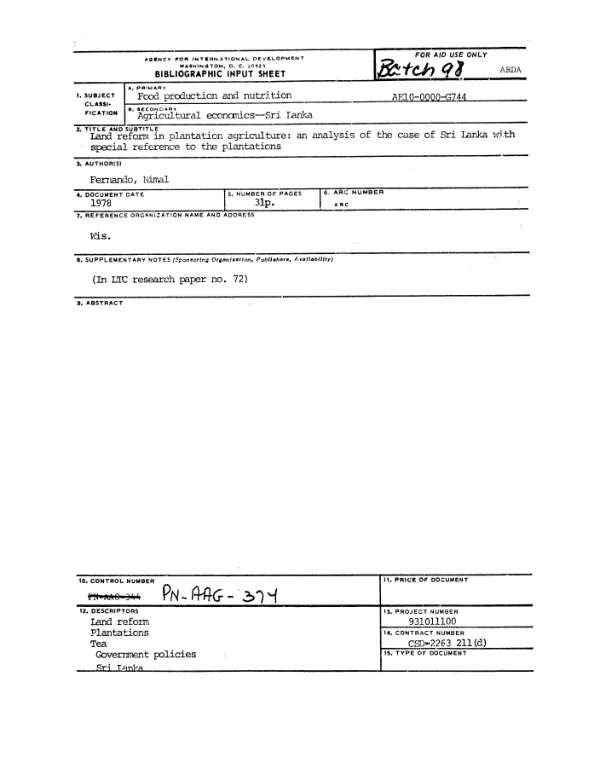
LAND REFORM IN PLANTATION AGRICULTURE : AN ANALYSIS OF THE CASE OF SRI LANKA WITH SPECIAL REFERENCE TO THE PLANTATIONS
Discusses Sri Lanka"s 1972 Land Reform Law and its 1975 Amendment in relation to the country"s tea plantations.
FERNANDO, NIMAL · 1970
Sign in to readA free account is required to download.
Abstract
Exemption of plantations in land reform legislation has been common in many developing countries. While plantation structure impedes economic development in several ways -- including employment (reduced employment per unit of land, seasonality) -- it also may contribute to economic growth by increasing export earnings. This paper examines historical developments of plantation agriculture in Sri Lanka, especially the tea subsector. Agricultural, economic and social aspects are discussed. Described are the major provisions of the Land Reform Law, the expropriation and redistribution of 377,000 acres of tea land, and the institutions which now manage this land. Management of the estate lands since the take-over is reviewed. According to the author, the land reform program in Sri Lanka does not constitute "true land reform" because it has taken the form of nationalization and the state has become the largest landowner in the country. The economic, political and social circumstances of the landless laborers remain virtually unchanged.
Connected topics
Related documents