UNIVERSITY OF WISCONSIN AT MADISON. LAND TENURE CENTER (LTC)
Case study of the lower Cochabamba Valley : ex-haciendas parotani and caramarca
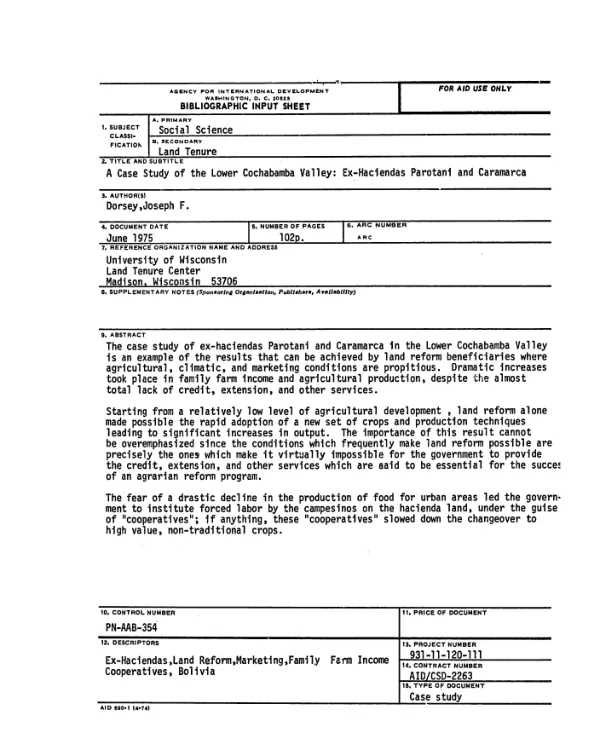
The case study of ex-haciendas Parotani and Caramarca in the Lower Cochabamba Valley is an example of the results that can be achieved by land reform beneficiaries where agricultural, climatic, and marketing conditions are propitious.
Dorsey, Jeff F. · 1970
Sign in to readA free account is required to download.
Abstract
Dramatic increases took place in family farm income and agricultural production, despite the almost total lack of credit, extension, and other services. Starting from a relatively low level of agricultural development, land reform alone made possible the rapid adoption of a new set of crops and production techniques leading to significant increases in output. The importance of this result cannot be overemphasized since the conditions which frequently make land reform possible are precisely the ones which make it virtually impossible for the government to provide the credit, extension, and other services which are said to be essential for the success of an agrarian reform program. The fear of a drastic decline in the production of food for urban areas led the government to institute forced labor by the campesinos on the hacienda land, under the guise of "cooperatives; " if anything, these "cooperatives" slowed down the changeover to high value, non-traditional crops.
Connected topics