KNCV TUBERCULOSIS FOUNDATION
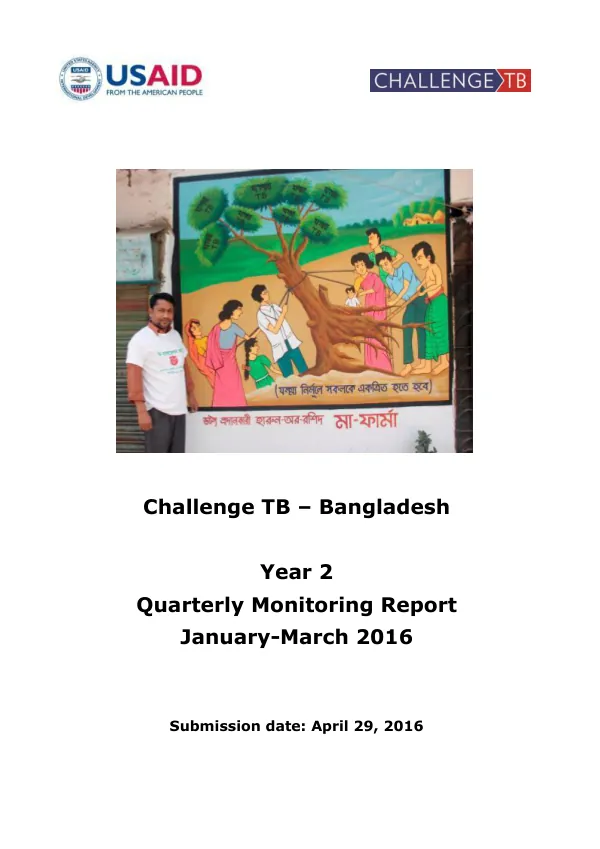
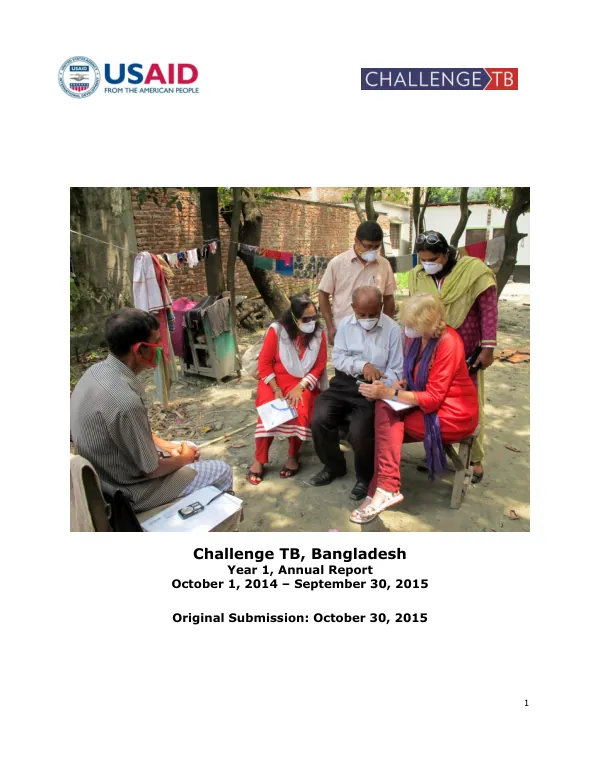
Challenge TB, Bangladesh Year 1, Annual Report October 1, 2014 – September 30, 2015
The National Tuberculosis Program (NTP) of Bangladesh is supported by Challenge TB (CTB), a 5-year cooperative agreement funded by the United States Agency for International Development (USAID).
2015 · 68 pages
Sign in to readA free account is required to download.
Abstract
CTB aims to achieve the goals of the National Strategic Plan by building on the successes of TB CARE II/Bangladesh and other innovative initiatives in the country. The project's coverage is nationwide, covering all 7 Divisions in Bangladesh, with a focus on prioritized areas. CTB's activities are implemented by Management Sciences for Health (MSH) with technical support from KNCV Tuberculosis Foundation (KNCV) and significant local partnerships. The project's goals and objectives for the first year (APA1) include improving access to quality patient-centered care for TB, TB/HIV, and MDR-TB services, strengthening the Programmatic Management of Drug-Resistant Tuberculosis (PMDT) system, and supporting operational research. In the first year, CTB's APA1 work plan was approved in February 2015, and the startup team began recruiting staff. By May 2015, a team of five staff members was ready to start implementing activities. The Country Director was recruited later and joined the team full-time in August 2015. The first year of CTB/Bangladesh was primarily focused on setting up and launching the project, continuing key activities initiated under TB CARE II, and conducting strategic planning and assessments. CTB awarded grants to 6 NGOs, 1 professional body, and 1 trust organization in July 2015 to increase case finding. These NGOs detected a total of 7,356 TB cases and 1 MDR TB case in quarter 4, with treatment initiated for all patients. Additionally, the Bangladesh Diabetes Association screened 236,837 diabetic patients and tested them for TB, resulting in the detection of 1,444 TB cases. The project also strengthened the laboratory network by developing a Laboratory Strategic Plan, improving External Quality Assessment (EQA) of smear microscopy, and planning the accreditation of the National Tuberculosis Reference Laboratory (NTRL). Furthermore, CTB supported operational research, including studies on the 9-month MDR-TB regimen and the development of a national research agenda. CTB's achievements in the first year demonstrate progress towards its goals and objectives, including increased case finding, strengthened PMDT systems, and improved laboratory networks. The project's continued focus on these areas will be crucial in achieving the goals of the National Strategic Plan and improving TB control in Bangladesh.
Related documents