JOHNS HOPKINS UNIVERSITY BLOOMBERG SCHOOL OF PUBLIC HEALTH/INFO PROJECT
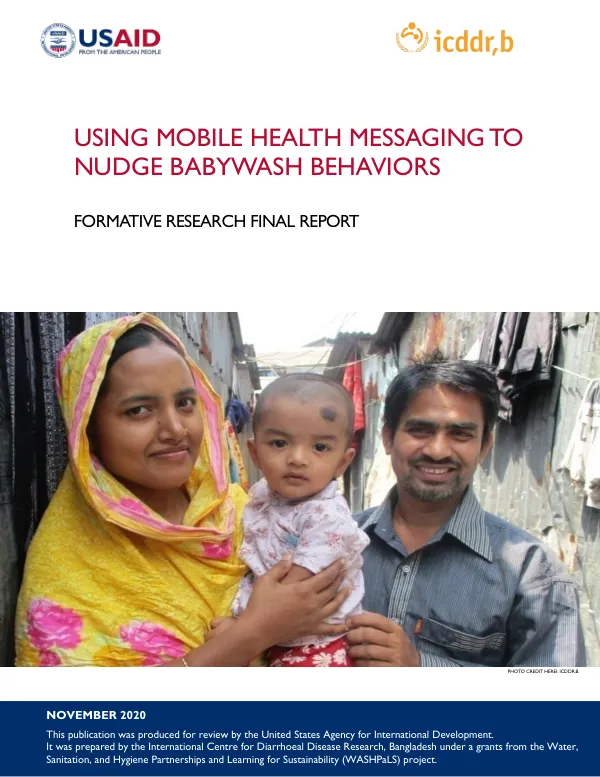
Using Mobile Health Messaging To Nudge BabyWASH Behaviors
The BabyWASH mHealth program was developed to promote safe child feces disposal, improved food hygiene, and reduced childhood mouthing of soil and contaminated fomites.
2020 · 88 pages
Sign in to readA free account is required to download.
Abstract
The program aimed to develop a scalable approach to promote safe child feces disposal, improved food hygiene, and reduced childhood mouthing of soil and contaminated fomites. The research was conducted in urban slums of Dhaka, Bangladesh from July 2018 to March 2020. The study objectives were to develop intervention content for the BabyWASH mHealth modules and to pilot the developed intervention. The formative research and intervention development process followed the Integrated Behavioral Model for WASH (IBM-WASH). The BabyWASH mHealth program consisted of three modules: child feces disposal behaviors, child mouthing behaviors, and food hygiene behaviors. The study settings and participation included caregivers of young children (mothers, fathers, and grandparents) and government stakeholders. The data handling and analysis involved collecting and analyzing data from focus group discussions, surveys, and other sources. Ethical approval was obtained from the relevant authorities. The results of Phase 4 of the study revealed key qualitative findings, including participant recommendations for mHealth messaging. The participant recommendations included the need for simple and clear messages, the use of local languages, and the inclusion of visual aids. The key quantitative findings showed that the BabyWASH mHealth program was effective in improving hygiene behaviors among caregivers. The lessons learned through Phase 4 of the study included the importance of involving government stakeholders in the development and implementation of the program. The study also highlighted the need for ongoing monitoring and evaluation to ensure the sustainability of the program. The discussion section of the report highlights the study strengths and limitations, government acceptability of the BabyWASH mHealth module, and recommendations for future research. The BabyWASH mHealth program has the potential to be a low-cost, reflexive, and scalable approach to promoting safe child feces disposal, improved food hygiene, and reduced childhood mouthing of soil and contaminated fomites. The program can be adapted to different contexts and can be used to promote hygiene behaviors among caregivers of young children. The study was conducted in collaboration with the Ministry of Health and Family Welfare of Bangladesh, the Johns Hopkins Bloomberg School of Public Health, and the International Centre for Diarrheal Disease Research, Bangladesh (icddr,b). The research was supported by a grant awarded to icddr,b through the USAID Water, Sanitation, and Hygiene Partnerships and Learning for Sustainability (WASHPaLS) project. The BabyWASH mHealth program consists of three modules: child feces disposal behaviors, child mouthing behaviors, and food hygiene behaviors. The program aims to promote safe child feces disposal, improved food hygiene, and reduced childhood mouthing of soil and contaminated fomites. The program can be adapted to different contexts and can be used to promote hygiene behaviors among caregivers of young children. The study used a mixed-methods approach, combining both qualitative and quantitative data collection and analysis methods. The study settings and participation included caregivers of young children (mothers, fathers, and grandparents) and government stakeholders. The data handling and analysis involved collecting and analyzing data from focus group discussions, surveys, and other sources. Ethical approval was obtained from the relevant authorities. The results of the study showed that the BabyWASH mHealth program was effective in improving hygiene behaviors among caregivers. The program was also found to be acceptable to government stakeholders. The study highlighted the importance of involving government stakeholders in the development and implementation of the program. The study also highlighted the need for ongoing monitoring and evaluation to ensure the sustainability of the program.