KNCV TUBERCULOSIS FOUNDATION
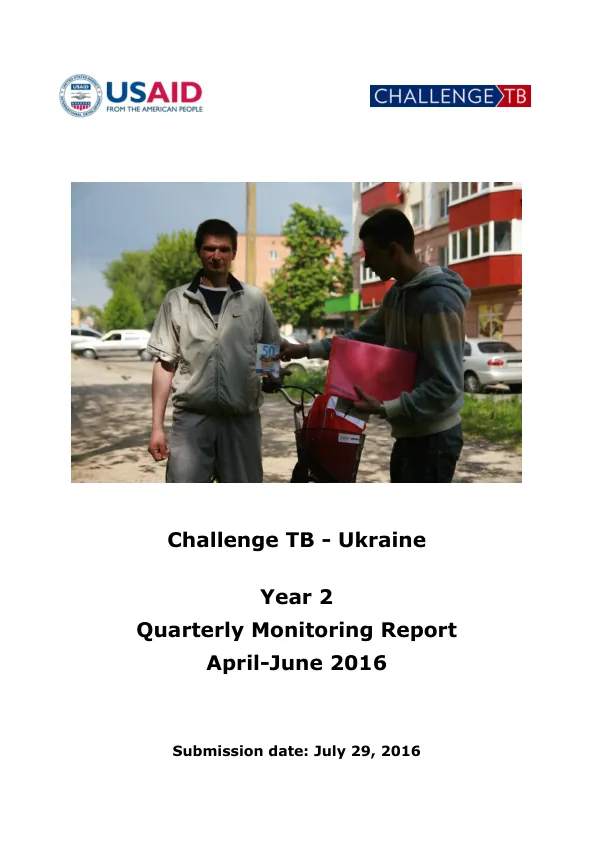
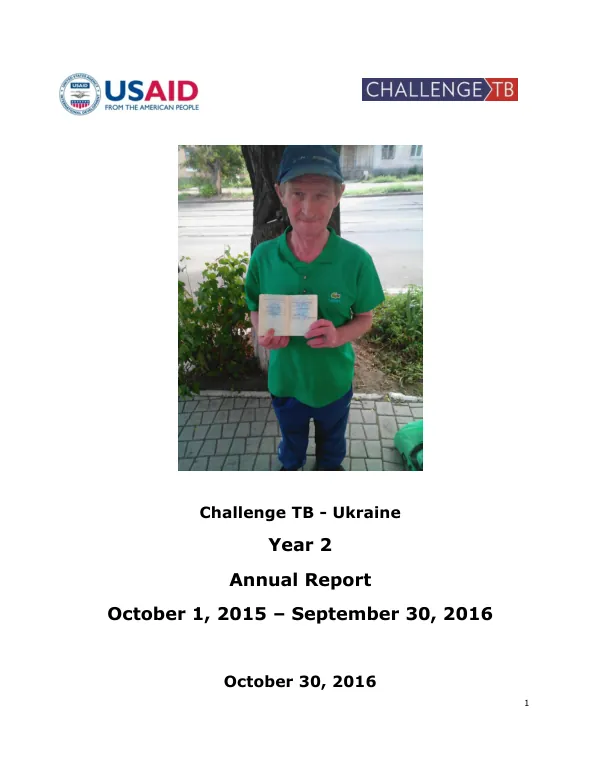
Challenge TB - Ukraine
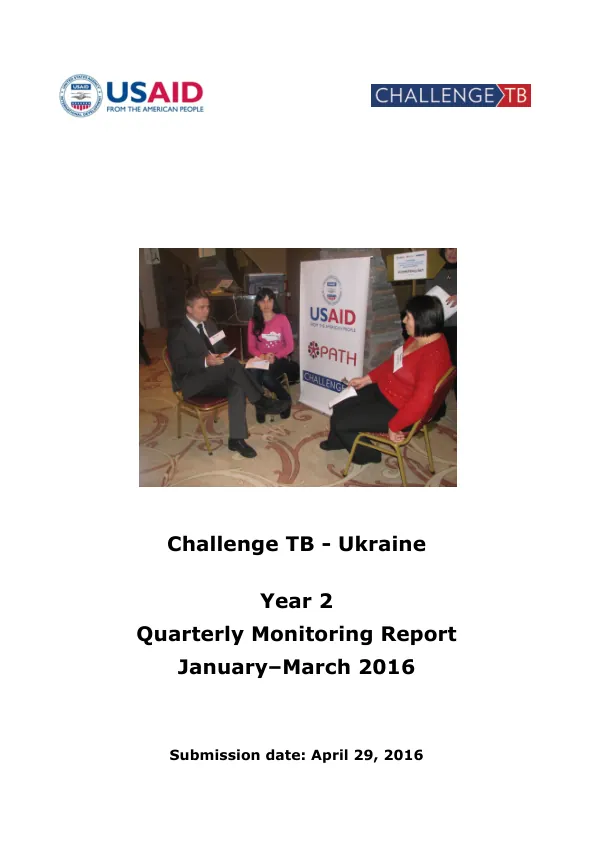
The Challenge TB project in Ukraine, led by PATH, continued to implement its Year 2 work plan from October 2015 to September 2016.
2016 · 23 pages
Sign in to readA free account is required to download.
Abstract
The project's objective was to improve a model for a patient-centered approach to treating drug-resistant tuberculosis (TB) and other MDR-TB control services. Key activities included extending patient-centered activities to a new oblast, developing recommendations for improving active TB case-finding and management, and creating an operational research protocol for introducing new drugs and shortened treatment regimens. The project conducted an assessment of the current system of TB contact investigation, which revealed a fragmented and inconsistent system that requires improvements. To address this, the project conducted roundtable meetings with NTP representatives and other stakeholders to review existing practices, discuss barriers and challenges, and develop recommendations for a strategy to improve TB contact investigation and management. The project also developed a draft clinical guidelines for side-effects management for TB and DR-TB patients, which were finalized and submitted to the Ministry of Health for approval. A workshop on clinical guidelines was conducted, and participants provided positive feedback on the draft guidelines. The project plans to conduct a webinar on the guidelines in the next quarter. In addition, the project provided support to NGOs, such as Light of Hope, Initiative for Life, and Vykhid, which were awarded grants to provide medical, nutrition, transport, and other support to DR-TB patients during the ambulatory phase of treatment. The project staff provided technical assistance and supportive supervision to the NGOs and monitored the implementation of sub-awards. The project faced administrative challenges, including the delayed hiring of two budgeted positions due to the finalist taking another job. The project also encountered challenges in implementing the DR-TB patient psychosocial strategy, including delayed implementation of sub-awards and challenges in providing support to patients. The project's quarterly indicator reporting showed a 27% increase in income among program participants compared to the control group. The project also reported improvements in food security indicators across all target oblasts, with the greatest gains in areas where both agricultural and market interventions were combined. The project's geographic focus was on the Mykolayivska, Poltavska, and Kyivska oblasts, with a focus on improving TB care and treatment services. The project's timeframes were from October 2015 to September 2016, with a reporting period from January to March 2016. The project's recommendations included the need for a holistic, consistent system of TB contacts investigation and follow-up, as well as the importance of improving the process of active TB case-finding and management. The project's implementation plan included the development of a strategy for TB contact investigation and management, as well as the creation of an operational research protocol for introducing new drugs and shortened treatment regimens. The project also planned to conduct a webinar on clinical guidelines and provide technical assistance and supportive supervision to NGOs. The project's budget was managed by PATH, with funding from USAID. The project's reporting period was from January to March 2016, with a focus on quarterly indicator reporting. The project's geographic focus was on the Mykolayivska, Poltavska, and Kyivska oblasts, with a focus on improving TB care and treatment services.
Related documents