KNCV TUBERCULOSIS FOUNDATION
TB CARE Annual Work Plan and Budget
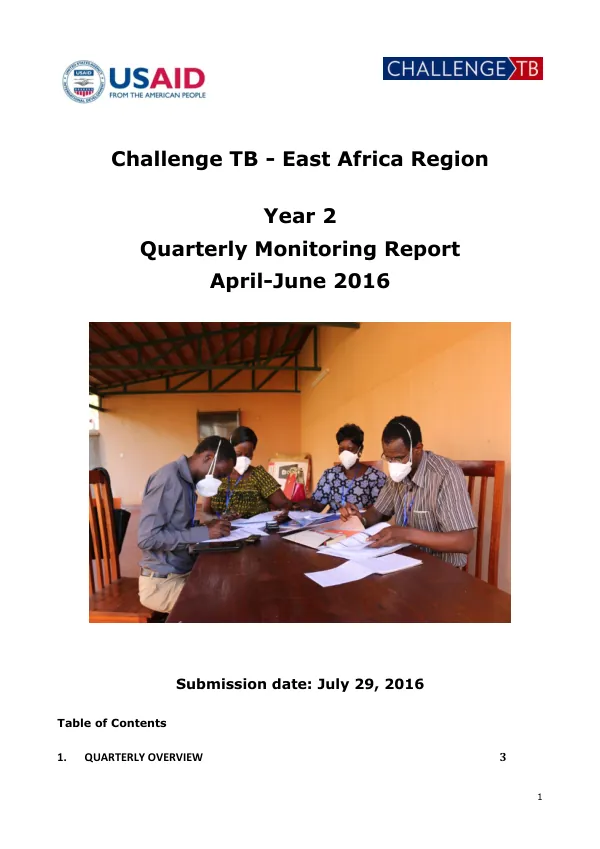
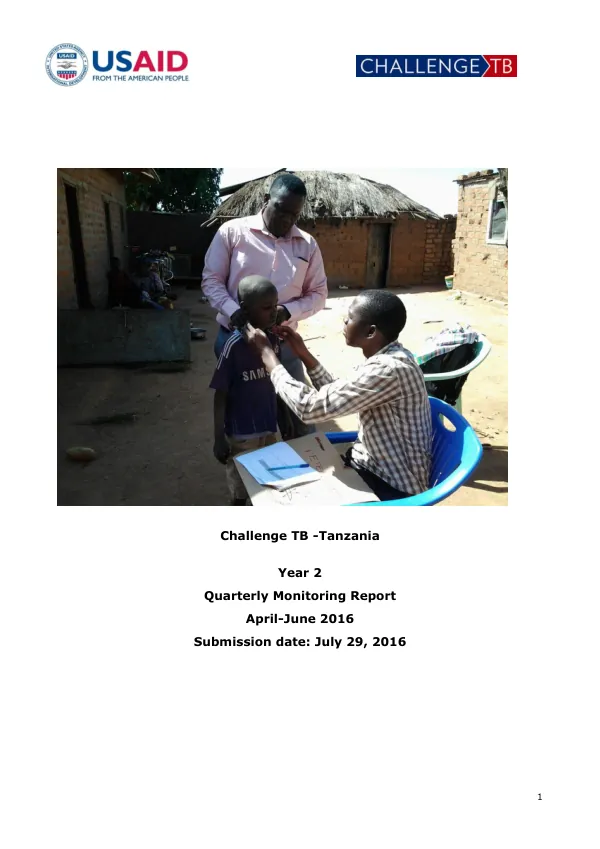
The Challenge TB program in Tanzania continued to make significant progress in the second year of its implementation.
2016 · 53 pages
Sign in to readA free account is required to download.
Abstract
The program's lead partner, KNCV Tuberculosis Foundation, worked in collaboration with other partners, including PATH and ATS, to achieve its objectives. The program's workplan timeframe was from October 2015 to September 2016, with the reporting period covering April to June 2016. One of the most significant achievements of the program was the development of the National Operational Guidelines for Community-Based TB, TB/HIV, and DR-TB interventions, including contact investigations and monitoring tools. These guidelines will enable community interventions to be done in a structured manner and will contribute to improving case detection. To complement the use of the guidelines, a training on Advocacy, Communication, and Social Mobilization (ACSM) was conducted in three districts of Meru, Kinondoni, and Geita, involving 102 participants, including community volunteers, regional, and district TB coordinators. The program also supported the National Tuberculosis and Leprosy Program (NTLP) in reviewing and developing a new national TB Routine Data Quality Assessment (RDQA) tool. This tool will be used at national, district, and health facility levels to ensure the quality of data. The tool has components for system assessment, data verification, and completeness checking and improvement plans. Issues found during the quarter included inconsistency of reported data and source documents, which occurred during transcription of data from patients' files to unit registers and from unit registers to district registers. CTB has started using the tool in 5 CTB districts, and improvement plans were made based on findings of data inconsistencies between unit and district registers. The program continued to consolidate previous achievements in TB/HIV by training 30 district TB and TB/HIV coordinators on the national TB/HIV collaborative services package. Participants were new district coordinators who had never been trained on the package before. This training equipped them with knowledge and skills that will enable them to play their roles with increased confidence and proficiency. CTB also participated in updating the national comprehensive supportive supervision and mentorship training package, which was used to train coordinators in two CTB regions to strengthen their supervisory, coaching, and mentoring skills. To improve Pediatric TB diagnosis, care, and treatment, CTB in collaboration with NTLP and other implementing partners supported the updating of the national Pediatric TB/HIV training package. CTB will use the package to train health care workers (HCW) in all priority regions in APA3 to impact on knowledge, skills, and practices in Pediatric TB case finding and management after an assessment using the KNCV childhood TB benchmarking tool. Contribution of Pediatric notification this quarter was maintained at 11%, which is expected to improve as a result of the planned training. A total of 6,356 TB cases of all forms (pulmonary and extra-pulmonary TB) were notified from the 42 CTB districts, a 5% increase compared to 6,054 last quarter. Out of those notified, 6,177 (99.5%) TB patients were counseled and tested for HIV and received their results, an improvement from 98% last quarter. TB/HIV co-infection rate remained at 33% (2,108), among whom 1,997 (95%) were initiated on antiretroviral therapy (ART) compared to 92% (1,792) last quarter; 2,071 (98%) were started on Co-trimoxazole. Private providers contributed to 14.7% of the total notification compared to 8% last quarter as a result of sensitization of coordinators to include private facilities in supervisory visits. Contact investigation was done for a total of 194 drug-sensitive index cases, 444 of their contacts were screened, and a total of 27 were confirmed to have drug-sensitive TB out of the 215 that were presumptive. For 8 DR-TB cases, we had a total of 51 contacts, and all were screened, 6 were presumptive TB, whereby 1 was confirmed RR, and 1 was found with Mycobacteria other than Tuberculosis (MOTT). All were started on treatment, signifying the opportunity for detecting TB cases through systematic contact investigation. CTB has continued to strengthen TB surveillance among HCWs in all priority regions, whereby a total of 2,747/17,008 (16%) HCWs were screened for TB, and 17/2,747 (0.6%) were confirmed to have TB and started on treatment. This is a significant improvement compared to last quarter where 760 HCWs from all CTB regions were screened for TB, with 7 (0.96%) HCWs diagnosed to have TB, none were screened in the preceding quarter. Technical/administrative challenges and actions to overcome them included: * Community: An ACSM training package was developed targeting HCWs and Community Health Care Workers (CHCW), however, during the training, it was noted that most of CHCW