USAID
Champion Community Approach Implementation Manual
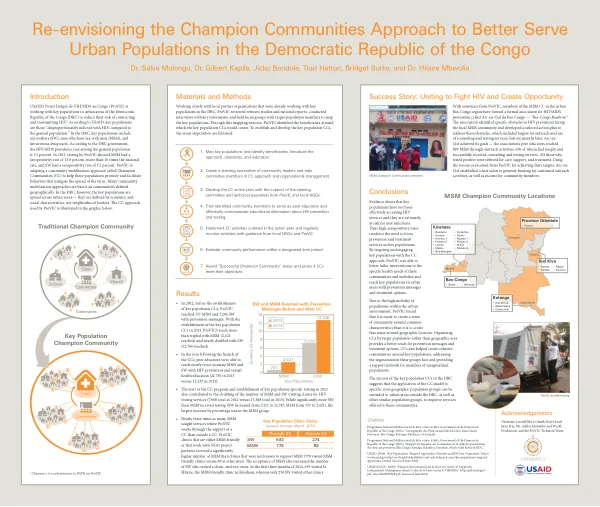
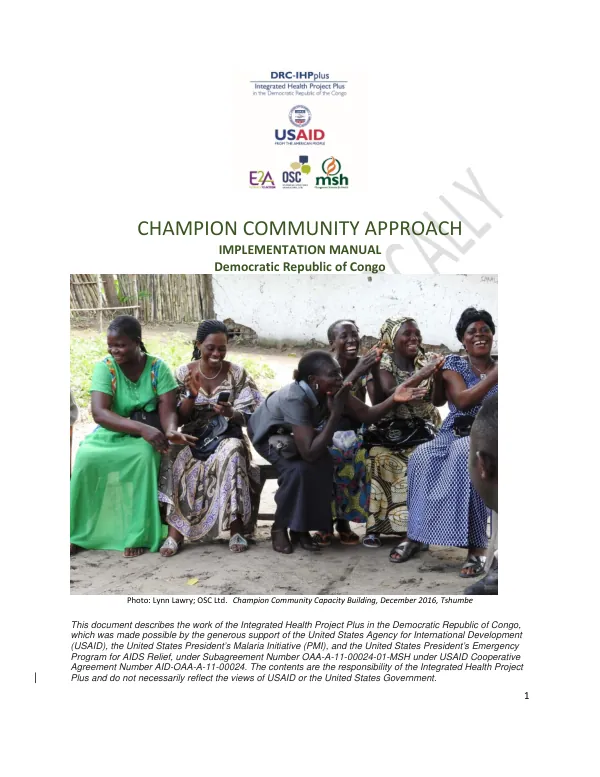
The Champion Community Approach is a community-led initiative aimed at improving health outcomes in the Democratic Republic of Congo.
2018 · 127 pages
Sign in to readA free account is required to download.
Abstract
The approach focuses on empowering local communities to take ownership of their health and well-being, with a particular emphasis on maternal, newborn, and child health (MNCH). The initiative is supported by the United States Agency for International Development (USAID), the United States President's Malaria Initiative (PMI), and the President's Emergency Program for AIDS Relief (PEPFAR). The Champion Community Approach is based on a community-led total sanitation (CLTS) approach, which aims to promote behavior change and behavior change communication (BCC) at the community level. The approach involves the establishment of a Champion Community Steering Committee, which is responsible for overseeing the implementation of the initiative. The committee is composed of local community members, health center staff, and other stakeholders. The Champion Community Approach focuses on several key areas, including community mobilization, social and behavior change communication (SBCC), and health service delivery. The approach also emphasizes the importance of community-led health initiatives, community health volunteers (CHVs), and community health workers (CHWs). The initiative aims to improve health outcomes by promoting healthy behaviors, increasing access to health services, and strengthening community health systems. The Champion Community Approach has been implemented in several districts in the Democratic Republic of Congo, including Kamina, Kole, and Tshumbe. The initiative has reported several successes, including improved health indicators, increased community participation, and enhanced community capacity. However, the approach has also faced several challenges, including challenges related to remote communities, skills utilization, women's participation, and the use of local languages. The Champion Community Approach has been successful in promoting behavior change, improving health indicators, and increasing community participation. The approach has also demonstrated the importance of community-led health initiatives, community health volunteers, and community health workers. However, the initiative has faced several challenges, including challenges related to remote communities, skills utilization, women's participation, and the use of local languages. The Champion Community Approach has been implemented in several districts in the Democratic Republic of Congo, including Kamina, Kole, and Tshumbe. The initiative has reported several successes, including improved health indicators, increased community participation, and enhanced community capacity. The approach has also demonstrated the importance of community-led health initiatives, community health volunteers, and community health workers. The Champion Community Approach has been implemented in several districts in the Democratic Republic of Congo, including Kamina, Kole, and Tshumbe. The initiative
Related documents